
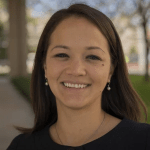


Giovannina Anthony has spent the last four years juggling her work as a gynecologist and abortion provider in Wyoming with the new task of suing state lawmakers to keep abortion legal.
Four years after the Supreme Court overturned Roe v. Wade, the fight over abortion access continues to rage.
At least four states will ask voters in November to enact or repeal constitutional amendments protecting abortion access. Earlier this year, the Supreme Court rejected another attempt by abortion opponents to make pills for abortion more difficult to access — though more challenges are ongoing.
The Food and Drug Administration is doing a safety review of mifepristone — one of two drugs used in medication abortions — and President Donald Trump’s nominee for attorney general said he’s open to reviewing whether a 19th-century law could effectively prevent women nationwide from receiving abortion pills in the mail via telehealth.


These perpetual abortion battles have consumed Giovannina Anthony’s life for the last four years. Anthony runs a primary care and gynecology clinic in western Wyoming, about 60 miles south of Yellowstone National Park near the Idaho border. Her clinic is one of just three practices that offer abortions in the deep red state.
Anthony was one of the plaintiffs in a series of lawsuits that successfully prevented Wyoming from banning abortion outright after Roe fell, and she is involved in several active cases over new restrictions state lawmakers have passed, including requiring transvaginal ultrasounds before an abortion and banning one of the pills used in medication abortions.
“I get little comments here and there,” Anthony said of the response to her activism, “but not as many as you would think. I take care of a lot of women who don’t necessarily share my politics, but on this issue, a lot of these conservative women do not believe their pregnancy should be a political issue.”
Abortions have become more common in Wyoming in recent years, rising from an estimated 100 in 2020 to more than 500 in 2025. Anthony says that’s thanks in large part to increased access to abortion pills via telehealth, which data show have helped keep total abortion numbers steady nationwide since Roe fell, even with more than a dozen states implementing total bans.
Despite her success so far, Anthony says she knows the work to protect abortion access in Wyoming and across the country is far from over. She says she’s committed to continuing to do what she can to keep this care available for the women she sees every day.
“They are savvy, they are strong-willed, and they do not want the government in their doctor’s office,” Anthony said of her patients. “And so I think we will prevail. But it won’t be without a fight.”
Episode Transcript and Resources
Episode Transcript
DG: Since the Supreme Court overturned Roe v. Wade four years ago, the fight over abortion access has shifted.
Battle lines are now being drawn at the state level, in legislatures…
Newsclip: The state senate medical affairs subcommittee continuing discussions today on a controversial proposed total abortion ban.
DG: Courts.
Newsclip: Wyoming’s Supreme Court has struck down the state’s near-total abortion ban.
DG: The ballot box.
Newsclip: Some Idaho voters want to see reproductive issues up for a vote in 2026.
DG: And nationally, abortion opponents have waged a campaign to limit access to abortion pills.
Newsclip: Louisiana has filed a case against the Food and Drug Administration calling for an end to the mailing of the abortion pill mifepristone.
DG: Today, we talk with a doctor in Wyoming about what it’s like to have a front-row seat to the ongoing abortion clashes.
From the studio at the Leonard Davis Institute at the University of Pennsylvania, I’m Dan Gorenstein. This is Tradeoffs.
******
DG: Giovannina Anthony moved to Wyoming for love.
Giovannina Anthony (GA): I came out to Wyoming to go to a wedding, and I met a guy here. And next thing you know, I was in a long distance relationship.
DG: Giovannina had grown up in Southern California.
She started practicing medicine out East. Boston, Pittsburgh, New York.
This relationship, though, was exciting enough that she was willing to make a pretty big leap.
GA: I thought, you know, worst case scenario, I’d love to live in the mountains. I love to ski. I love to climb. And I’ll go live out there for a little while. And then, you know, when that breakup finally happens, then I’ll head back to Southern California. And I never left.
DG: That was 20 years ago.
Today, Giovannina runs GMA Health, a primary care and gynecology clinic in western Wyoming.
She also does something less common for her field — abortion.
Surveys have found that fewer than one in five private practice OB/GYNs offer abortion services.
GA: It’s made abortion feel like this rogue sort of underbelly of my field, when it really is just a normal part of gynecology.
DG: Giovannina practices in Jackson, a small town about 60 miles south of Yellowstone, near the Idaho border.
The respect she has for her patients is clear.
GA: It sounds so cliche, so out of a movie. But these gals are tough. I traveled long distance to some clinics, and I would see these tough ranchy gals on a horse herding cows over a highway at 20 below zero, or even then in the summer herding cattle, and it’s really an impressive bunch of women, and I have loved taking care of them.
DG: There was obviously a lot of fear for some about abortion access going away after the Supreme Court overturned Roe v Wade back in 2022. But we’ve seen total numbers of abortion in the U.S. stay steady in the years since.
And in Wyoming, in your state, they’ve actually gone up a bunch. In 2020, there were an estimated 100 abortions in your state. Fast forward to 2025, there were more than 500. That number is according to the Guttmacher Institute, which supports abortion access and is a nonprofit. Giovannina, what’s driving that uptick at a time when, at least on paper, abortions are supposed to be harder to come by?
GA: Absolutely. So in 2020, all 100 of those abortions provided in Wyoming were from my office. And these were medication abortions provided by myself and one of my family practice partners.
DG: You say medication abortion. Can you explain what that is real quick?
GA: Yes. So medication abortion is the induction of a miscarriage with medicine as opposed to a procedure in an office or surgical setting. And medication abortion is a great option in the rural West because it does not require a lot of infrastructure or an office setting that can be expensive or difficult to staff.
But the uptick that you mention in the number of abortions in Wyoming has been largely due to the availability of telemedicine that was initiated by an organization called justthepill.com. And they came on the scene right around the time of the Dobbs decision. And the other reason for the uptick was the opening of a clinic in Casper. And they provide both types of abortion medication and surgical.
DG: So the vast majority of abortions in Wyoming are these ‘medication abortions,’ something like 95% in 2023, according to Guttmacher.
And those have really been a target of abortion opponents since Roe fell … with several lawsuits threatening this care.
Giovannina, one of the reasons we wanted to talk to you was because we wanted to understand what it’s like to offer this care when so much is in flux.
For example, there were a few weeks in April 2023 when it looked like the Supreme Court was going to let traditional medication abortion become illegal in a matter of days.
Do you have a story of one patient that you cared for during this time, and how all of this kind of tumult affected them and their care?
GA: Sure. So I can remember one particular young woman who was not a candidate for a telehealth abortion encounter because she was having some issues such as bleeding and a little bit of pain, and this young woman lives several hours away from my office on a Native American reservation.
And the logistics for these young women is already super tricky and complex. Often they don’t own a vehicle. They have a lot of mistrust. But I worked with a local abortion access organization to try to get her into our office. And we got that all set up. And then the craziness of the back and forth decision started to occur.
Newsclip: As a conservative, Trump-appointed federal judge in Texas has ruled to suspend the FDA’s approval of mifepristone, a medication abortion pill.
Newsclip: A judge in Texas gave the Biden administration seven days to appeal his decision.
Newsclip: The Supreme Court today has extended access yet again to that abortion pill until at least Friday.
GA: Now we’re canceling, rescheduling, trying to find a new person to give her a ride. And then it’s the patient on the phone with my front office freaking out. Some family member chimes in and is super upset. “And don’t we know what we’re doing?” And you essentially have an hysterical young woman who doesn’t trust us, doesn’t trust the system, is scared out of her mind. She’s pregnant and bleeding. She doesn’t want to be pregnant.
We had at least three back and forths on how do we get you here? And, this young woman, we could not get to our office. And we never saw her in the end.
DG: What was this like for you and your staff and her, as much as you could tell?
GA: It’s helpless. You feel completely helpless and frustrated. And we’re having to call attorneys to say, hey, can we do this tomorrow? Is that okay? So, you know, it really affects people’s lives. It’s disruptive. It’s absolutely tragic that now we have a young now potential mother who has complications of her pregnancy and is unable to access care.
DG: And as the doctor, the physician, the person arguably most in charge of this, this has got to eat deep at you.
GA: It feels like such a failure
DG: You felt like such a failure.
GA: Yes, absolutely. Absolutely. I have chosen a career in which women’s health is my life and my priority. And I can’t, you know, provide evidence-based care in a legal environment like this that pays no attention to real lives on the ground. It’s incredibly disheartening and very frustrating. And you go home at night and just wonder, what the hell am I doing?
DG: There are fears that we could see access to abortion medications get restricted again. The FDA is conducting a safety review of one of the drugs included in medication abortion, mifepristone, despite decades of evidence showing it to be highly safe and effective. Anti-abortion activists hope the outcome to all this is going to be to further restrict or even prohibit the use of abortion medications.
If that happens, what would that mean for women in Wyoming? How much would that threaten the expanded access to abortion care that you have described happening in your state?
GA: So what will happen if the FDA fails to approve mifepristone as it currently is utilized. We will all, and this will be nationwide, but we will all go to a misoprostol-only regimen, which works but has a little bit less efficacy and also is, you know, suboptimal because the process of the of the miscarriage that is induced by the medication is prolonged, more difficult and less comfortable for the patient.
So we’ll still provide the service. But, you know how depressing is it that the FDA, for purely political reasons, would force us into a less effective protocol that causes more cramping, bleeding and pain? You know, that’s, that’s where we’d be at.
DG: When we come back, we zoom in on Giovannina’s leading role in the fight to keep abortion legal in Wyoming.
BREAK
DG: Welcome back. We’re talking with Dr. Giovannina Anthony, an OB/GYN and abortion care provider in Jackson, Wyoming.
Giovannina, you are one of the people that has actually sued the state over its attempts to ban and restrict abortion care since the Dobbs Supreme Court case that overturned Roe.
Wyoming was one of 13 states that had a trigger law that was supposed to ban abortion if Roe ever fell. But you and others have successfully prevented that, and other potential bans, from going into effect.
Much of your success on the legal front is thanks to a 2012 amendment to Wyoming’s state constitution that says adults have a right to make their own health care decisions.
What has it been like to be at the center of that fight?
GA: The abortion fight since Dobbs, honestly, has consumed my life. There’s the dealing with the attorneys and writing up declarations and participating in the legal process. And then on the clinical side, I’m seeing the patients on the ground and talking to them about what they’re going through and, also talking to my colleagues in health care. Can we do this? Is this legal? Is this not? That’s been part of my role in this, is to just also try to keep my colleagues in the know on what’s going on in this scenario. But it’s been wild.
DG: Giovannina, are people mad? There are people who really believe abortion is inappropriate, wrong, immoral, whatever you want to say. There’s more abortions happening in Wyoming now than there was before Dobbs, and I would guess they’re pretty pissed. And you’re one of the big faces of pro-abortion access in your state. What are the people who believe abortion is immoral saying to you?
GA: Oh, I’ve been called a murderer. I get some nasty emails. I get little comments here and there, but not as many as you would think. I take care of a lot of women who don’t necessarily share my politics, but on this issue, a lot of these conservative women do not believe their pregnancy should be a political issue.
I think the other thing that is really interesting is I cannot tell you how many people have shown up in my office and they say I’m pro-life, but blah, blah, blah. I will provide abortion services to anyone who asks for it, but I don’t hesitate to remind them that if you have the power to choose, you cannot dictate what your neighbor, your mother, your sister. Their reasons are irrelevant in this scenario because you made that choice. And I just want you to think about that when you go to vote, when you talk to people, when you are out in the community. So, you know, that’s a complicated answer.
DG: It’s a complicated issue.
GA: It’s a complicated issue, and I don’t want to call it hypocrisy. It’s just that I think a lot of even very religious people don’t know how they will respond to the scenario when they’re actually the ones in it. And it’s been really interesting to observe that over the last 30 years.
DG: Wyoming lawmakers have been unable to ban abortion outright.
So the strategy, at least as far as we can tell, appears to have shifted to focus on just making it harder, impossible, in some cases, to provide abortion care and one example from last year, women who wanted medication abortion and were early in pregnancy had to have a heartbeat check with a transvaginal ultrasound. Can you paint a picture of what it was like to provide abortion care during this time?
GA: Sure. And fortunately, it was really only a matter of days because we obtained a temporary restraining order on House Bill 64, which is what you’re referring to. And the intent of that bill was to make telemedicine abortion next to impossible to provide right because the patient had to be there in person.
And I cannot tell you how awful, how uncomfortable it is to tell someone that they need a probe in the vagina because the state says they need it. Not being able to provide abortion care to someone who wants it is bad enough, but to tell someone that they need an invasive procedure like that, when it is completely unnecessary from a medical point of view, is really horrible. I felt like an agent of the state, you know? I felt like I can’t provide evidence based health care to this person. I have to do something that is completely against my ethos, my personal, you know, Hippocratic oath. And that is a horrible feeling. It is really Orwellian, honestly.
DG: The latest legal battle in Wyoming involves three different laws. They all aim to restrict abortion. A Wyoming judge ruled in June that those laws violate the state constitution, and now the state says they’re appealing the Wyoming Supreme Court. How do you feel as an abortion provider in Wyoming, in July of 2026? Do you feel like the care you provide is strongly protected Giovannina or do you still feel that uncertainty, that things could change at any moment?
GA: Well, I’m always looking over my shoulder a little bit because we also have another active case to follow that that’s ongoing. So you know, it ain’t over till it’s over. But I feel like I really trust the voters here. You know, um, this is not a Bible belt state. This is not the Deep South. This is the Rocky Mountain West where, you know, my patients are practical, they are savvy, they are strong willed, and they do not want the government in their doctor’s office. And so I think we will prevail. But it won’t be without a fight.
DG: So what makes you stay, Giovannina? You could be practicing in New York or California where you don’t need to look over your shoulder, where you don’t need to take time away from caring for patients to be a plaintiff in lawsuits. Why are you staying?
GA: You know I did a lot of testifying at public hearings in Cheyenne during the legislative sessions. And I remember I needed, I wanted to get to this hearing and I had been on call all night and I’d had an extremely complicated delivery in a cesarean section that was so difficult.
And I was still in my scrubs and I had blood all over my pants. And I ran home and got on my laptop to testify in a hearing against one of these bills, and the legislator implied that I was harming people, that I was, you know, a bad person. And I just remember looking down at the blood on my pants and thinking, I am not going anywhere. I’m going to keep taking care of these gals because I know it’s the right thing to do. I’m true to the patients. And by being true to the patients, I’m true to myself.
DG: Giovannina, thanks so much for taking the time to talk to us on Tradeoffs.
GA: Oh, you’re so welcome. Thank you for having me.
DG: Despite its unique legal protections, the increased access Giovannina has seen in Wyoming is happening in other red states too.
Guttmacher found that last year in the 13 states with total bans, the number of abortions via telehealth went up, from 74,000 to 91,000.
I’m Dan Gorenstein, this is Tradeoffs.
Episode Resources
Additional Reporting and Resources on abortion in the U.S.:
- Full-Year 2025 Estimates Show Overall Stability in Abortion Incidence, Decreased Travel and Increased Telehealth Provision (Isaac Maddow-Zimet and Kimya Forouzan, Guttmacher Institute, 3/2026)
- Explainer: US Supreme Court ruling preserves abortion pill access for now as other challenges loom (Daniel Wiessner, Reuters, 5/14/2026)
- Here’s how medication abortion works with just one drug (Mara Gordon, Selena Simmons-Duffin, Diane Webber, NPR, 5/4/2026)
- Key Facts on Abortion in the U.S. (Usha Ranji, Karen Diep, Bryana Castillo Sanchez, and Alina Salganicoff; KFF; 1/7/2026)
- Abortion providers: Wyoming’s heartbeat law creates untenable hardships (Katie Klingsporn, WyoFile, 3/13/2026)
Episode Credits
Guests:
- Giovannina Anthony, OB-GYN, GMA Health
This episode was produced by Christine Herman, edited by Ryan Levi and Dan Gorenstein, and mixed by Cedric Wilson and Andrew Parrella.
The Tradeoffs theme song was composed by Ty Citerman. Additional music this episode from Blue Dot Sessions and Epidemic Sound.