


Dr. Lisa Fitzpatrick believes plainspoken information from trusted messengers can help shrink health disparities, and some insurers are buying in.
Note: This episode was originally published Feb. 2, 2023. The transcript was updated on Dec. 25, 2025 when the story re-aired. No other episode details have been updated.
Dr. Lisa Fitzpatrick has spent her entire adult life answering people’s questions about health care — and not just for her patients.
“My family, [my] friends would leave the doctor’s office and then send me a text message: ‘Here’s what he said. Like, what does that mean?’” Fitzpatrick said.
Over her decades in government, academia and hospital medicine, she’s witnessed the consequences of people in her community not understanding or trusting their health care provider: Black people report higher levels of mistrust in the health care system than white Americans and suffer worse outcomes in everything from maternal mortality to mental health to life expectancy.
Fitzpatrick has long believed those disparities could be shrunk if the health care community did a better job of explaining health information in simple terms and engaging trusted messengers — in other words, sending better messages from better messengers.
She found early in her career that she had a gift for breaking down complex health care ideas, and as a Black physician, Fitzpatrick’s friends and family often trusted her more than their own usually white doctors.
“I was always thinking about, ‘How can I reach more people?’ Because if you don’t understand something, it can be very scary. And when you’re afraid, you avoid, you delay. And that leads to worse health outcomes, it leads to death,” Fitzpatrick said.
That’s why she founded Grapevine Health, a startup she believes can help more people understand their health care. Grapevine creates short videos featuring Black and other doctors of color explaining everything from kidney disease to how to sign up for Medicaid.
In the last 20 months, Grapevine has landed contracts with two Medicaid managed care plans and one public employee health plan in the Washington D.C. area, and Fitzpatrick is in talks with four national insurers.
“We can introduce Grapevine as a bridge between the member and the health plan,” Fitzpatrick said. “We can help people understand. We can answer questions. We can alleviate fear.”
Inspiration from an unlikely source
Fitzpatrick has been thinking about how to reach more people with plainspoken, trusted medical information for more than 15 years, going back to her time as a medical epidemiologist at the CDC and professor at Howard University College of Medicine.
But it was in 2013, while working as an administrator for a hospital in Washington D.C., that she figured out how it might work. It started as so many great health care ideas do: with late night comedy.
“One day, I was watching Jay Leno Jaywalking,” Fitzpatrick said.
The classic segment featured Leno taking to the streets of Los Angeles to ask people questions about geography, history and politics — questions they would inevitably fumble, to great comedic effect.
“It was educational, but it was also entertaining. And I thought, ‘What if I can do that with health?’” she said.
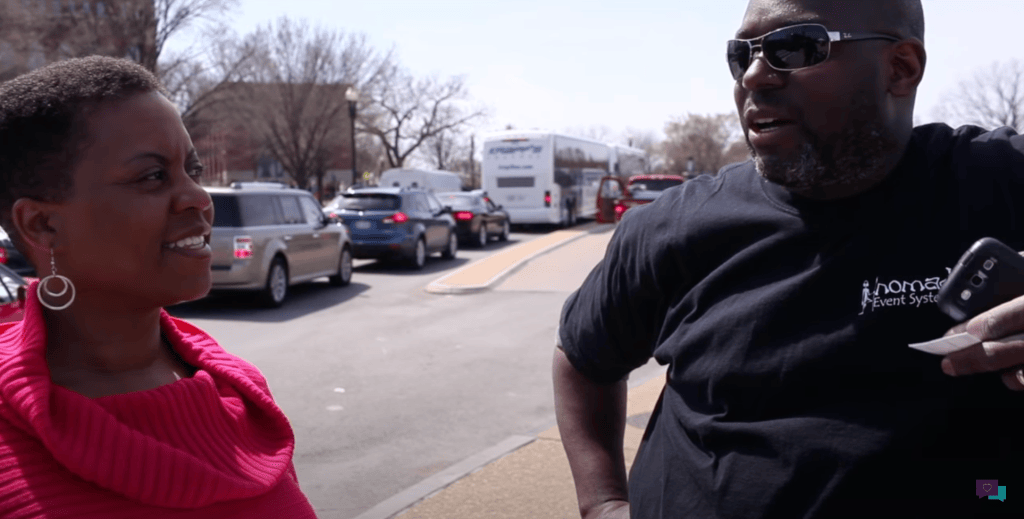
A few months later, Fitzpatrick went onto the National Mall with a cameraman she’d met at her local bike club and started asking and educating people about the flu. They edited the footage and put a short video on YouTube. They did the same thing for the human body, talking with your doctor and diabetes.
She called it “Dr. Lisa on the Street.”
“People in the community loved it,” Fitzpatrick said. “They wanted more. They gave suggestions: Can you make a video about this and that?”
Unlike Jay Leno, Fitzpatrick never made fun of the people she interviewed. There were no punch lines, just someone taking the time to explain things in a simple and non-judgmental way.


Fitzpatrick remembers one woman who was hovering nearby while she was filming near a hospital. She told Fitzpatrick she’d just been discharged from the hospital after having a blood clot in her lung, but she was still feeling short of breath and unsure what to do.
“She was scared,” Fitzpatrick said, “but [her discharge paperwork] didn’t give her any instructions. So she was asking me like a stranger on the corner, ‘What do I do now?’”
Fitzpatrick spent 30 minutes with the woman, and after she walked away, Fitzpatrick was left in a daze.
“I felt profoundly sad,” she said. “I felt angry that we have all of this lip service around helping people, yet people feel forgotten. They feel like they’re on their own, all alone. And with as many resources as we are pouring into health care, I think there’s no excuse for that.”
That woman and all the others Fitzpatrick met on the street helped crystalize this foundational but often invisible problem: The health care system was failing to give people — especially Black people — the information they needed, and that was part of why people were suffering.
So she kept making videos, but “Dr. Lisa on the Street” remained a side hustle — something squeezed between board meetings and grand rounds — until March 2019.
“I just decided to take a leap,” Fitzpatrick said.
‘She knows the environment we’re living in’
Fitzpatrick left her job as chief medical officer for Washington, D.C.’s, Medicaid program and founded Grapevine Health. She moved from her swanky condo in downtown Washington to one of the city’s poorest neighborhoods, Congress Heights. Living alongside the people she hoped to help opened her eyes even more to the struggles they faced.
“[They’re] being bombarded with chronic stress because of the trauma. And I’m not talking about gun violence necessarily, or carjackings. I’m talking about just the trauma associated with being poor, living in scarcity, having to fight for everything,” she said. “Why would you prioritize your health if it’s not bothering you right now?”
The experience made it easier for Fitzpatrick to craft messages she hoped could break through all that stress and trauma, and it resonated for people like 70-year-old Yvonne Smith.
“Grapevine Health and Dr. Lisa are the best kept secret that I wish everyone knew about,” said Smith, who lives just a few minutes from where Fitzpatrick moved.


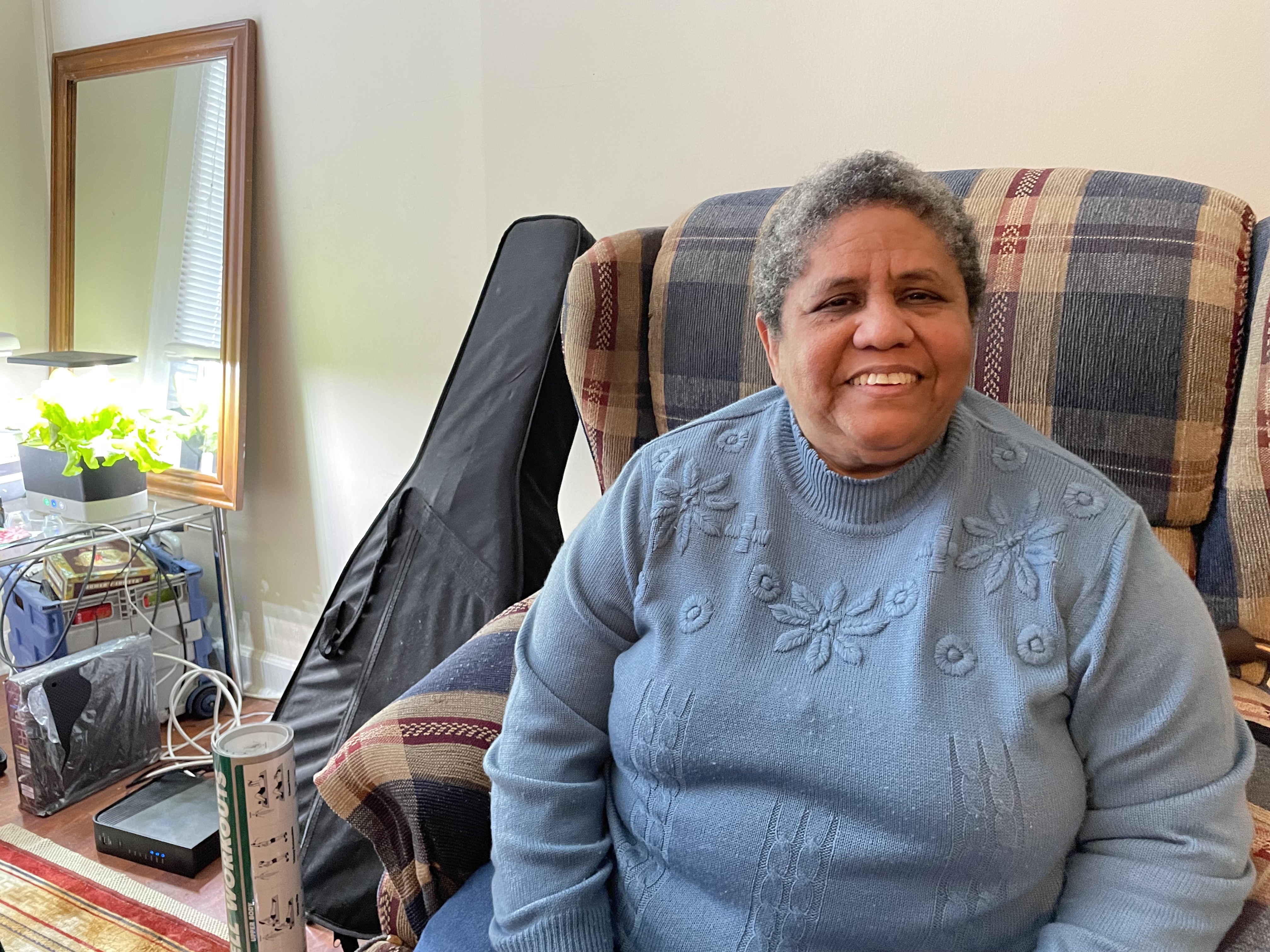
When Smith first encountered Fitzpatrick in early 2020, Grapevine Health was still a scrappy startup looking for its big break. But the burgeoning COVID-19 pandemic gave Grapevine an opening.
Fitzpatrick posted COVID-related videos on Grapevine’s social media accounts and offered virtual information sessions to community groups, including the senior center Smith attended. Smith appreciated Fitzpatrick’s plainspoken explanations and actionable advice.
“She knows the environment we’re living in. She knows we don’t have one grocery store,” Smith said. “So she understands that it might be difficult for you to get the things you need to be healthy. And she would [suggest] common sense things that are doable.”
Smith credits Fitzpatrick and Grapevine’s videos for helping her cut her blood sugar to below diabetic levels, discovering she was at risk for heart failure and changing how she interacts with her doctors.
“I try to ask three questions for the doctors. I say, ‘What’s wrong with me? What’s our plan? And what else do I need to know that you didn’t tell me?’ So I could hear her voice in my head,” Smith said.
Insurers are taking an interest
Fitzpatrick points to the impact Grapevine has had on Smith’s health as she pitches insurance companies to take a chance on her young company. She’s particularly focused on Medicaid managed care companies, the private health plans that states pay to cover around 70% of Medicaid beneficiaries nationwide.
A recent report found Medicaid managed care plans regularly connect with just 30 to 60 percent of their members. That lack of engagement can lead to patients not attending regular check-ups, getting important screenings or managing chronic conditions, which can make them sicker over time.
In Washington, D.C., 80% of people on Medicaid are Black, and they are 7 times more likely to have diabetes and more than twice as likely to die from heart disease than their white neighbors.
“Frankly, many of the things that we’ve been doing haven’t been working,” said Keith Maccannon, director of marketing for AmeriHealth Caritas DC, which covers 120,000 Medicaid beneficiaries in Washington, D.C. Maccannon said they’re lucky if 1 in 4 people pick up when they call to remind members to get needed care.
In addition to pushing good health practices, insurers have a financial incentive to improve engagement. Plans can face fines if too few of their members get certain screenings or too many people end up in the hospital.
In 2021, AmeriHealth Caritas DC became the first health plan to bring Grapevine Health on to try to improve their connection with their members.
“Once we connected, it was like kindred spirits,” said AmeriHealth Caritas DC CEO Karen Dale, on her first meeting with Fitzpatrick. “She was saying, ‘I want you to think differently, approach things differently. I can help you with that.’”
Grapevine’s first assignment is working with AmeriHealth Caritas DC members with diabetes. They interviewed patients who do things the insurer wants them to do — like get eye exams to prevent blindness — and those who don’t. Then, Fitzpatrick and her team used that information to make videos they believe will convince more people to take preventative steps. The last step will be texting the videos to AmeriHealth Caritas DC members and measuring their impact on engagement, outcomes and cost savings.
Fitzpatrick said the expectation is not that every person who sees a Grapevine video will immediately do the best thing for their health. Other factors like lack of transportation, child care or access to a doctor who takes Medicaid present barriers Grapevine alone can’t overcome.
But if these videos improve people’s well-being and save AmeriHealth Caritas DC money, Fitzpatrick will be able to take that evidence to more health plans. She said she’s pitched around 20 insurers, and most of them so far have said no, citing the company’s youth and lack of proven results.
“To me, it’s so clear all roads lead to trusted health information and understanding health and health care,” she said. “But the challenge is how to make it obvious to everybody else.”
This story was reported as part of a collaboration with WHYY’s The Pulse, and was made possible in part with support from the Commonwealth Fund. Additional funding was provided by the National Institute for Health Care Management Foundation.
Episode Transcript and Resources
Episode Transcript
Note: This transcript has been created with a combination of machine ears and human eyes. There may be small differences between this document and the audio version, which is one of many reasons we encourage you to listen to the episode!
Dan Gorenstein (DG): Hello and Merry Christmas to those of you celebrating.
We’re wrapping up our series of profiles featuring people with innovative fixes to some of health care’s most stubborn challenges.
This week, we’re bringing you a story we first aired in 2023.
It’s about a doctor in Washington D.C. who’s hitting the streets and social media to get people more engaged and active in their health care.
We’ll have some updates at the end of the episode.
ORIGINAL STORY:
DG: Dr. Lisa Fitzpatrick has done a lot in her career.
There are the usual things…
Lisa Fitzpatrick (LF): I’ve worked for Medicaid. I’ve been a clinician, a researcher.
DG: There are the really cool jobs…
LF: I’ve served as a global health diplomat. I was an epidemic intelligence service officer, and some people refer to that as the medical CIA.
DG: But a few years ago, Lisa set her sights on something that to her was even bigger, tougher and more urgent.
LF: People feeling disconnected, people feeling unheard, people fearful of things they don’t know.
DG: Today, one doctor’s crusade to help more people understand their own health care, and why insurers are starting to buy in.
From the studio at the Leonard Davis Institute at the University of Pennsylvania, I’m Dan Gorenstein. This is Tradeoffs.
******
DG: I’ve talked with a lot of insurers in my years as a health care reporter, and I’ve rarely heard them get this pumped about one person.
Karen Dale (KD): Dr. Lisa is so awesome.
Keith Maccannon (KM): I think it’s very powerful.
KD: She had these awesome ideas.
KM: We want to do that. We need that.
KD: I was sold. I was sold.
DG: They’re excited because Lisa Fitzpatrick is offering them a solution to a problem that has plagued them for decades.
KM: Helping people become activated and engaged in their health care.
DG: Keith Maccannon is an executive with AmeriHealth Caritas DC, a private health insurance plan that Washington DC’s Medicaid program pays to cover the city’s low-income and disabled residents.
Keith has spent the last decade trying to figure out how to make sure the 120,000 people on his plan take advantage of their insurance: meet with specialists, take their meds, manage their chronic conditions like congestive heart failure and diabetes.
KM: Frankly, many of the things that we’ve been doing haven’t been working.
DG: Keith’s team sends reminders in the mail, posts on Instagram and Facebook, calls people at home.
Keith says they’re lucky if one out of every four people answer.
KM: Sometimes I think we’re viewed as like a telemarketer.
DG: Engaging Medicaid patients is a national challenge.
A recent report found that Medicaid insurance companies like AmeriHealth regularly connect with just 30 to 60 percent of their members.
Insurers have a financial incentive to close that gap.
State Medicaid programs typically pay plans a lump sum for people’s care. Any savings leftover, insurers get to keep a chunk.
Plans can also face fines if too few of their members get certain screenings or too many people end up in the hospital.
And of course, if patients miss appointments or don’t get screenings, small issues can morph and people can get sicker.
KM: There isn’t any evidence out there that anybody kind of found that magical crystal ball that’s going to address some of these things that we’re trying to move forward.
DG: But Keith hopes he and AmeriHealth may have an answer.
Lisa Fitzpatrick (LF) clip: When we buy stuff in the grocery, we just eat it.
Person: That’s true.
KM: What Dr. Lisa does, which I think is unique, is talk to people in a way that they understand it.
LF clip: So all I’m saying is millions of people, especially Black people, were dying from COVID-19
KM: And just keep it very real.
LF: And we saw the rates of death drop dramatically once the vaccines were available.
KM: And how it will make a difference in their lives.
DG: Lisa Fitzpatrick is the founder of Grapevine Health a startup she believes can help insurers establish that illusive connection with the people they cover.
She pitches her company as a bridge.
LF: We can help people understand. We can answer questions. We can make it more accessible for people.
DG: Lisa’s starting to make headway.
In just the last 20 months, Grapevine has landed contracts with two Medicaid managed care plans, one public employee health plan, and Lisa is in talks with four national insurers.
Lisa thinks her business is gaining traction because Grapevine answers a two-fold problem.
First, bad messages: Doctors and insurers talk about complex medical issues in ways that fly over the heads of most people.
And second, bad messengers: busy stressed-out docs, cold calls from an insurer, mailers that go straight in the trash.
DG: Lisa knows all too well the disparities that these issues help fuel.
Black people report higher levels of mistrust in the health care system than white Americans, and suffer worse outcomes in everything from maternal mortality to cancer deaths to life expectancy.
LF: When a relative dies in the hospital and you don’t get a satisfactory explanation for why, or you feel as if someone gave you inferior care, but you don’t know who to talk to, what happens? It creates a lot of fear, a lot of distrust. And that information is passed on throughout the family from generation to generation.
DG: As a Black physician, Lisa’s spent her entire career being that trusted, plainspoken messenger for her friends, family and patients.
LF: People desperately sending me, text messages to help them understand the information that’s being given to them. I was always thinking about how can I reach more people? Because if you don’t understand something, it can be very scary. And when you’re afraid, you avoid, you delay.
DG: Then one night, she turned on NBC.
Jay Leno Jaywalking: What countries make up Great Britain?
LF: One day I was watching Jay Leno Jaywalking.
Leno: If someone said they were going to Great Britain, what language would they speak when they get there?
Person: British?
Leno: They speak British, okay.
LF: What he would do is go out on the streets of L.A. and he would talk to people usually about geography, history, politics.
Leno: What is the world’s tallest mountain?
Leno: Do you ever rest?
Person: Do I what?
Leno: Ever rest?
Person: I really don’t know.
Leno: I said do you ever rest, and you said…
Person: Mt. Everest!
LF: So it was educational, but it was also entertaining. And I thought, What if I can do that with health?
Dr. Lisa clip: Have you guys had the flu vaccine?
Person: Yes, I’ve had the flu vaccine.
DG: Back in 2013, while Lisa was working as a hospital administrator, she went onto the National Mall in Washington DC with a cameraman she’d met at her local bike club and started talking to folks about the flu.
LF: And what if I gave you antibiotics, would that help?
Person 1: It would.
Person 2: Is that okay? Your body can get immune to that, can’t it?
LF: That’s true, but antibiotics don’t treat the flu because the flu is a virus.
DG: They edited down the footage and put a short video up on YouTube.
Then, they did the same thing for the human body, talking with your doctor…
LF: What if the doctor tells you you have lumbar strain?
Person: I’d tell him to explain it, I would tell him to explain exactly what it is.
DG: and diabetes.
Person: Do you know why they call it soul food?
LF: Why?
Person: Because that’s the food that will get your soul to heaven as fast as it can there.
DG: She called it “Dr. Lisa on the Street.”
LF: People in the community loved it. They wanted more. They gave suggestions. Can you make a video about this and that?
DG: Unlike Jay Leno, Lisa didn’t play the interviews for laughs. No punch lines, just answering real questions in simple, non-judgmental ways.
LF: The key is to make sure it’s relatable, the people in the content look like the people we’re trying to reach and that the messages are resonating.
DG: Lisa remembers one woman hovering close by while she filmed near a hospital.
LF: When we wrapped up the shoot, she came over and she said, Are you a doctor? And I said, Yeah. She said, Well, I wonder if you could help me. They just discharged me from the hospital, but I don’t feel good. And they gave me this paper and I’m not sure what I’m supposed to do.
DG: She’d been diagnosed with a blood clot in her lung, but the woman told Lisa she was still feeling short of breath.
LF: She was scared, but the paper didn’t give her any instructions. So she was asking me like a stranger on the corner, What do I do now?
DG: Lisa spent 30 minutes with the woman.
After she walked away, Lisa stood there in a daze.
LF: I felt profoundly sad. I felt angry that we have all of this lip service around helping people, yet people feel forgotten. They feel like they’re on their own. All alone. And with as many resources we are pouring into health care, I think there’s no excuse for that.
DG: This woman and all the others like her that Lisa talked to on the street helped confirm for Lisa that she had zeroed in on a foundational but often invisible problem.
The health care system was failing to give people — especially Black people — the information they needed, and it was part of why people were suffering.
Black Washingtonians, who make up 80% of the city’s Medicaid population, are 7 times more likely to have diabetes and more than twice as likely to die from heart disease than their white neighbors.
LF: Very bad health disparities, like striking health disparities.
DG: Lisa spent 20 years working at all levels of health care.
She was a medical epidemiologist for the CDC, taught at Howard and George Washington universities, worked as an administrator at a large hospital and Chief Medical Officer for DC’s Medicaid program.
Dr. Lisa on the Street was a side hustle — something squeezed between board meetings and grand rounds.
But then…
LF: I just decided to take a leap.
DG: Lisa left her job at DC Medicaid and, in March 2019, she founded Grapevine Health.
Four years later, she’s got contracts with three health plans, and she’s in talks with four of the biggest insurers in the country.
But if Grapevine is going to take off, Lisa’s team has a lot to figure out and a lot to prove.
When we come back, Lisa tries to get Grapevine off the ground and make an impact.
BREAK
DG: Welcome back.
Lisa Fitzpatrick has taken the leap.
She walked away from two decades of working in some of the most respected institutions of health policy to launch a health information startup geared toward marginalized communities of color.
To really understand how to create more effective messages and become a better messenger, she took one more step.
LF: I moved into Congress Heights, which is one of the poorest zip codes in Washington, D.C.
DG: Lisa knew about the barriers people faced from when she worked at DC’s Medicaid program and hospitals treating low-income patients.
But seeing it up close, living it, was different.
LF: You’re being bombarded with chronic stress because of the trauma. And I’m not talking about gun violence necessarily, or carjackings. I’m talking about just the trauma associated with being poor, living in scarcity, having to fight for everything.
DG: Unreliable bus service across town. Few places to buy healthy food or exercise safely.
Living with that same scarcity helped her see why it was so hard for her neighbors to prioritize their health in a community with lots of problems.
But the experience made it easier for Lisa to craft messages that she hoped could break through all that stress and trauma.
And it resonated for people like Yvonne Smith.
Yvonne Smith (YS): Grapevine Health and Dr. Lisa are the best kept secret that I wish everyone knew about.
DG: Yvonne is 70. She lives alone on the second floor of a pale yellow apartment building a few minutes from where Lisa moved.
Three huge binders sit on floor to ceiling bookshelves in Yvonne’s living room filled with her family history.
YS: I have a tree on both sides of my family that goes back seven generations. So I’m trying to beat the history of blindness, diabetes, heart problems.
DG: Those are the same conditions that plague many Black Americans, and Yvonne is doing her best to keep them at bay.
She’s got a long list of specialists — some of whom she’s seen for more than 30 years — often traveling at least an hour across town to see them.
She likes many of her doctors, but she’s also dealt with challenges many Black patients face with non-Black doctors: bias, assumptions, dismissal.
YS: Sometimes I think the doctors may think we’re going to tell her to do this, but, you know, she’s not going to lose any weight or anything. Or we’re going to give her the prescription, but, you know, she’s not going to take it.
DG: When Yvonne first encountered Lisa in early 2020, Grapevine Health was still a scrappy startup looking for its big break.
But the pandemic gave Grapevine an opening.
Clip: Hi everybody. It’s Dr. Lisa Fitzpatrick…
DG: Lisa posted COVID-related videos on Grapevine’s social media accounts.
Clip: I just wanted to spend a few minutes talking about the most common questions I’m hearing about COVID.
DG: Lisa also offered virtual information sessions to community groups, like the senior center Yvonne attended.
Yvonne loved how Lisa broke down information.
YS: She doesn’t overwhelm you with big words. She talks plain language that I can understand, and she’s genuine, authentic.
DG: Yvonne started sending questions to Lisa and Grapevine through her senior center and checking out their social media posts.
That’s where she picked up the tip to sweeten her food with dates instead of sugar.
Yvonne cut back on the carbs and filled her fridge with veggies.
A dozen doctors had told Yvonne to lose weight over the years, but it was Lisa’s videos that unlocked something for her.
YS: She knows the environment we’re living in. She knows we don’t have one grocery store. And she moved to this community and she was having a weight problem. So she understands that it might be difficult for you to get the things you need to be healthy. And she would do common sense things that are doable.
DG: Helpful, relatable advice.
Grapevine took the time to answer her questions and tailor messages for people like her.
It all gave Yvonne a sense that she was worth being taken seriously.
Yvonne credits Grapevine with cutting her blood sugar below diabetic levels, discovering she was at risk for heart failure…and inspiring her to bring little notebooks to her appointments.
YS: I try to ask three questions for the doctors. I say, What’s wrong with me? What’s our plan? And what else do I need to know that you didn’t tell me. So I could hear her voice in my head.
DG: Yvonne is a case study for the potential of Grapevine.
Lisa points to the impact Grapevine has had on Yvvone’s health as she pitches insurers to take a chance on her young company.
AmeriHealth Caritas DC was first to sign up, inking a contract in the summer of 2021.
Karen Dale (KD): Once we connected, it was like kindred spirits. We just had an amazing conversation.
DG: Karen Dale has been the plan’s CEO — and Keith Maccannon’s boss — for about 10 years.
KD: It was just, “Karen, what about if you had different conversations with people?” It’s not about, well, we need you to go get your eyes checked, your foot checked, you know what I mean? Don’t start there. Start with simply understanding a bit more.
DG: Still, Karen had questions. Namely, did this approach work with lots of people, more than just a few here and there?
Could Grapevine improve the health of their members and save them money?
Grapevine’s track record was thin. The company had helped a few businesses convince employees to get vaccinated during the pandemic and worked with a hospital to get diabetic patients to schedule primary care follow-ups.
But Karen was desperate to connect with members, and that’s why she brought Lisa on.
KD: She was saying, I want you to think differently, approach things differently. I can help you with that. For me, it’s important to step outside of what we’re always doing, which isn’t giving us overwhelmingly awesome results to say, let’s invest in the research and the body of work to be done to get better because who we serve deserve it.
DG: Grapevine’s first job: working with AmeriHealth members with diabetes.
Lisa and her team interview patients who do things like get eye exams to prevent blindness and the patients who don’t.
Then…
AmeriHealth video: Now it’s time for us — diabetics and pre-diabetics — to start getting our regular check-up.
DG: They make videos to convince more people to take preventive steps.
Video: Go to your doctor, get the correct information. It will save your life.
DG: And then, Karen says, AmeriHealth will measure to see what works.
KD: Did people open the message? How long did they watch it? You know, there are all those kinds of statistics that will help us to understand which messages are more sticky, worth repeating, taking to scale.
DG: Lisa is excited.
If these videos improve people’s well-being and save AmeriHealth money, that’s the kind of quantitative evidence that Lisa needs to land more contracts.
She says she’s pitched around 20 different insurers, and most of them so far have said no.
LF: Their concerns are primarily that we’re a young company and that we don’t have the proof points that tell them, can this health information keep people out of the hospital. So really linking our intervention to their ROI.
DG: Even if Lisa can deliver that proof, she’s also clear that Grapevine has its limits.
LF: The expectation is not that every person who comes in contact with Grapevine will automatically have an aha moment and they do the next best thing we need them to do. That’s not how it works.
DG: Some people need more than a video to make a change.
People may be in crisis, or struggle with transportation, child care, or just can’t find a doctor who takes Medicaid.
The task for Lisa is convincing the health care world that Grapevine is part of the solution.
LF: To me, it’s so clear all roads lead to trusted health information and understanding health and health care. But the challenge is how to make it obvious to everybody else.
DG: When doubts do creep in, Lisa thinks of all the people she’s talked to the past 20 years.
Friends and family, confused and frustrated.
Yvonne Smith trying to beat her family’s history of disease.
That woman outside the hospital, totally lost.
They’re why Lisa left her prestigious health policy career.
She wants to give them what they deserve: clear answers from someone they can trust.
UPDATE:
Lisa has been busy in the last three years.
She’s stayed in touch with Yvonne Smith, whose diabetes is still under control thanks, she says, to the tips she got from Lisa and Grapevine.
Lisa herself is exploring another project with AmeriHealth Caritas after Grapevine’s videos persuaded some hard-to-reach folks to make appointments for their diabetes.
Grapevine has inked four more Medicaid managed care contracts, and Lisa is in talks with other companies who want her help talking about big Medicaid changes coming in 2027.
In this upcoming year, 2026, Lisa says her top priorities include finding partners to distribute Grapevine’s videos and collecting more data to show that this work can save insurers money.
I’m Dan Gorenstein, this is Tradeoffs.
Episode Resources
Selected Reporting and Research on Health Literacy, Disparities and Lisa Fitzpatrick:
- Racist Doctors and Organ Thieves: Why So Many Black People Distrust the Health Care System (Joanne Kennen and Elaine Batchlor, POLITICO Magazine, 12/18/2022)
- Health plans say texting could help reach underserved patients. But a federal rule is getting in their way (Mohana Ravindranath, STAT News, 10/7/2022)
- The Public-Health Value of Speaking Plainly (Conor Friedersdorf, The Atlantic, 12/20/2020)
- KFF/The Undefeated Survey on Race and Health (Liz Hamel, Lunna Lopes, Cailey Muñana, Samantha Artiga and Mollyann Brodie; Kaiser Family Foundation and The Undefeated; 10/13/2020)
- The Time Is Now: The Case for Digital Health Innovation for the Poor and Underserved (Lisa Fitzpatrick, Commonwealth Fund, 12/18/2018)
- Low Health Literacy and Health Outcomes: An Updated Systematic Review (Nancy D. Berkman, Stacey L. Sheridan, Katrina E. Donahue, David J. Halpern, and Karen Crotty; Annals of Internal Medicine, 7/19/2011)
- Health Literacy: A Prescription to End Confusion (Institute of Medicine, 2004)
Episode Credits
Guests:
- Lisa Fitzpatrick, MD, MPH, MPA, Founder and CEO, Grapevine Health
- Keith Maccannon, Director of Marketing, Outreach and Community Relations, AmeriHealth Caritas District of Columbia
- Yvonne Smith, Grapevine Client
- Karen Dale, RN, MSN, Market President, AmeriHealth Caritas District of Columbia
The Tradeoffs theme song was composed by Ty Citerman, with additional music this episode by Blue Dot Sessions and Epidemic Sound.
This episode was reported by Ryan Levi and mixed by Andrew Parrella. Editing assistance from Cate Cahan.
Additional thanks to: Lindsey Browning, Roslyn Hopkins-Fernandes, Tameeka Smith, Rima Rudd, Jeff Van Ness, the Tradeoffs Advisory Board and our stellar staff!
You must be logged in to post a comment.