


Note: This story was originally published July 17, 2025. The transcript was updated on Aug. 13, 2026, when the story re-aired. No other episode details have been updated.
It’s been a hard year for transgender Americans and their supporters.
President Trump has issued numerous executive orders targeting transgender people and their health care. The administration has threatened hospitals, shuttered the federal suicide and crisis hotline for LGBTQ+ youth and, just last week, the Department of Justice subpoenaed confidential patient information from doctors who treat transgender young people.
As a result of this federal pressure, some hospitals have stopped providing certain medications and surgeries for trans patients — elements of what’s known as gender-affirming care.
And in June, the Supreme Court upheld Tennessee’s right to ban that care for transgender minors. An estimated 112,000 transgender teens live in Tennessee or one of 24 other states with similar bans. This Supreme Court decision means those young people will continue to either have to travel out of state or go without care — care that the American Medical Association, American Academy of Pediatrics and other major medical groups in the United States consider medically necessary and potentially lifesaving.
Eighteen-year-old Harleigh Walker is one of the young people who has to drive hours across state lines for health care. Even though her home state of Alabama was one of the first to ban gender-affirming care for minors, Harleigh told Tradeoffs that the new administration has made life much harder for her and her family.

“There’s really no safety in the country [for transgender people],” Harleigh said. “I feel unsafe almost everywhere. It’s really scary.”
It’s been scary for her dad, Jeff Walker, too.
“After the inauguration,” Jeff told us, “with every car that drove down the street, I had this crazy fear that it was someone coming to try and take Harleigh away from us as parents. Because that’s kind of some of the stuff you were hearing, right? ‘These parents should be put in jail. These parents should be gone after for what they’re doing to these kids.’ ”
The Walkers spoke with Tradeoffs from the family’s home just a few miles from Auburn University, and shared how life has changed for them this year.
The following highlights from that conversation have been edited for length and clarity:
On how life feels different under the second Trump administration:
Harleigh: I always said that no matter how unsafe I felt in my home state or how many states passed this anti-trans legislation or spewed this rhetoric, I felt a safeguard in the federal government. And having a president that would get out on Transgender Day of Visibility and say, “Transgender Americans, I see you, I’m here for you, I support you.” Even though there wasn’t federal legal protection or anything like that, I knew that the federal government wasn’t going to come after me and my community.
And then, as soon as Trump won the election, I knew that was all going to change. And so there’s been a shift — and a lot more focus now on trans people. … People are [allowed] to have more hate, to spew their hate.
On the ways her perspective has shifted since a 2023 hearing where she testified before the U.S. Senate Judiciary Committee on transgender rights:
Harleigh: So much has changed. I had so much hope back then. If I could tell that Harleigh, from two years ago, what has happened with Trump winning the election and the Supreme Court case that just came out, she’d be devastated. It’s not to say I don’t have hope anymore, but it’s to say that my attitude has changed in a lot of regards. I feel a lot more pressure to act individually, and I don’t feel like I have the same amount of support at my back as I did in that moment.

Jeff: When Harleigh gave that [testimony], she could still get health care in the state of Alabama at that time. It was not until about six months later that the injunction was lifted and they fully banned health care here in the state. So I think Harleigh is right that since she [took part in] that discussion at the Senate Judiciary, so much has changed for us as a family, for her as an individual. And it’s gone the opposite direction we were hoping for.
On the ways anti-trans laws limit Harleigh’s college choices:
Jeff: I’ve always wanted one of my kids to go to Auburn. But we knew pretty quickly that that wasn’t an opportunity for Harleigh. It’s not safe for her in this state. Our state leaders don’t want her in this state, and they’ve made that abundantly clear. Lots of kids go far away for college, and I know that’s pretty normal. But for me, my kid didn’t have a choice to go here locally. So she’s moving over 10 hours away from us to go to college. And that kind of sucks.
Harleigh: Almost 90% of my graduating class is going to Auburn University. My best friend, she’s going to Auburn University. I could never think about going to college with my best friend because of how the state legislators have forcibly shut out trans people and their families.
I love living in Alabama. I’ve grown up here all my life. And I couldn’t think about going to Auburn University at all. I couldn’t think about continuing on that life here. I’m going to go live my life wherever I end up happy — and continue being who I am. But that place, unfortunately, won’t be Alabama. And that’s the product of the state legislators here at home.

On their advice to parents struggling with how best to help and support a child who is transgender:
Jeff: One of the statistics we read early on was there was a high suicide rate for trans youth, especially trans youth who didn’t have supportive families. So Harleigh’s mom and I very quickly made sure not just that she knew that we supported her, but that everyone knew we were all going to support Harleigh — or you’re not going to be a part of this family. To me, it’s not hard to do. You love your kid. Just listen to what they have to say and support them. I know it seems much harder than it really is, but it really is that simple.
Harleigh: We honestly really didn’t know what to expect [when we went to our first doctor’s visit after I came out]. We were all kind of nervous. But then we sat down with the doctors and immediately felt comfortable. It often gets [portrayed] that you immediately go to the doctor and it’s hormones, puberty blockers, surgeries. That’s so far from the truth. Those first few visits are just [the doctors] getting to know you. [They ask], “What can we do to help you with your journey?” and “What’s the best thing for you and your family going forward?” And so I think we left that first meeting feeling really affirmed and like I was seen as a person.
I think the biggest thing is just listening. A lot of people don’t listen like my parents did. My dad grew up in the South — Christian, small town. He didn’t know what being transgender meant. But he was still willing to listen. And now my dad is my biggest supporter. And just seeing his growth the past few years since I’ve come out has been truly inspiring. And I’m forever grateful.

On the importance of seizing happiness, even in the midst of increased political attacks:
Harleigh: Whenever people talk about trans youth, people get caught up in the negativity and the sorrow. And I think there’s a lot of joy. I always say, “I’m Harleigh, I’m not trans Harleigh, I’m just Harleigh.” I have so many other parts of my life other than being transgender. I’m not miserable. I live a great life. I live a happy life. And a lot of people don’t know that. That’s why I wish people would not look at trans people as a talking point, but as people.
On what is bringing them joy right now:
Jeff: Harleigh is so busy with her friends all the time. A lot of times they come here to the house, and I’ll get pizza or whatever, and they’ll sit downstairs and watch movies. When I’ve got a house full of kids that are downstairs giggling and doing karaoke and cackling and cutting up — you can’t help but be happy, to see your kids happy like that. So I’m really enjoying that.
Harleigh: We’re going to be traveling up to Maryland soon for my college orientation. And I always love traveling with my dad. Every time we travel, he’ll always take a selfie of us before we leave and be like, “Jeff and Harleigh going on a new adventure. Where are we going now?” I’m just excited to spend the last few months home in Auburn with my family — and soak it all in before I leave.
Episode Transcript and Resources
Episode Transcript
Dan Gorenstein (DG): The Trump administration took another major step this week to make it harder for transgender young people to access health care.
On Tuesday, officials announced that federal Medicaid dollars can no longer be used to pay for gender-affirming care for people 18 or younger.
That includes hormone therapy, medications that pause puberty as well as surgeries.
The new rule, which is set to take effect on October 13, allows kids currently receiving this care a 6-month grace period.
States can still use their own money to pay for this through their Medicaid programs.
Today, we’re re-airing a conversation I had last July with a transgender teen and her dad about what life has been like for them since President Trump returned to office.
From the studio at the Leonard Davis Institute at the University of Pennsylvania, I’m Dan Gorenstein. This is Tradeoffs.
*****
Jeff Walker (JW): Hi, Dan.
Harleigh Walker (HW): Hello.
DG: Hey, you two. Thank you so much for taking the time to talk to us.
HW: Of course.
DG: To better understand the impacts of the federal government’s anti-trans policies and rhetoric … I got on Zoom last week to talk with the Walkers.
HW: My name is Harleigh Walker. My pronouns are she/her. I’m 18 years old.
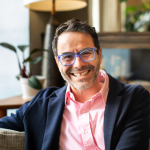
JW: Jeff Walker. I live in Auburn, Alabama. I have two kids. I have a son who’s 24, and my daughter, Harleigh, who is 18.
DG: Harleigh told Jeff and her mom that she was transgender eight years ago, when Harleigh was 10.
Jeff has been by Harleigh’s side for all the tough moments of growing up trans in the South: bullying, switching schools, losing friends and family.
JW: It’s hard to be a parent to see Harleigh have gone through the thing she’s gone through over the past several years – to see people attacking her and attacking this community.
DG: All that said, the two agree things have been much worse since Donald Trump re-entered the White House.
HW: I always said that no matter how unsafe I felt in my home state or how many states passed this anti-trans legislation or spewed this rhetoric. I knew that the federal government wasn’t going to come after me and my community. And then as soon as Trump won the election, I knew all of that was going to change. Now instead of being condemned by the federal government, it’s now enabled, by the federal government. And so there’s really no safety in the country. I feel unsafe almost everywhere. It’s really scary.
JW: You know, after the election and after the inauguration, I didn’t sleep well for a very long time. Every car that drove down the street, I had this crazy fear that it was someone coming to try and take Harleigh away from us as parents, because that’s kind of some of the stuff you were hearing, right? These parents should be put in jail. These parents should be gone after for what they’re doing to these kids. It’s been really tough.
DG: Jeff and Harleigh told me the future looks a lot darker to them today than it did just two years ago … when Harleigh – as a 16 year old – was invited to testify before the U.S. Senate at a hearing on transgender rights.
HW: I want to thank you all for the opportunity to tell you more about myself and what it’s like to be a trans person.
HW: If I could tell that Harleigh two years ago what has happened in the past few years with, you know, Trump winning the election and, you know, a lot of failures in the federal government and the Supreme Court case that just came out, she’d be devastated.
HW: I’m hoping to share what my journey has been like and clear up some of the false information that I’ve heard coming out of Congress and state legislatures including the Alabama state legislature.
HW: it’s not to say I don’t have hope anymore, but it’s to say that my attitude has changed. I feel a lot more pressure to act individually, and I don’t feel like I have the same amount of support on my back as I did in that moment.
JW: Even when she gave that speech, she could still get health care in the state of Alabama at that time. And it was not until about six months later that they fully banned health care here in the state of Alabama. So I think Harleigh is right so much has changed for us as a family, for her as an individual, and it’s gone the opposite direction. We were hoping for it to go in.
DG: Is there a moment for either of you, a story that captures what it has felt like for your family in 2025?
JW: So, you know, one of the things right now for us is around Harleigh getting ready to go off to college. I’ve always wanted one of my kids to go to Auburn. But we knew pretty quickly that it’s not safe for her in this state. Our state leaders don’t want her in this state. And they’ve made that abundantly clear. So, you know, lots of kids go far away for college. And I know that’s pretty normal. But for me, it was: My kid didn’t have a choice. So she’s moving, you know, over ten hours away from us. And that kind of sucks.
DG: Harleigh, do you share your dad’s kind of regret, lament, sadness, sense of loss? Whatever it is about not being able to go to school in your home state?
HW: I do. Almost 90% of my graduating class is going to Auburn University. My best friend, she’s going to Auburn University. I could never think about going to college with my best friend. I love living in Alabama. I’ve grown up here all my life. And I couldn’t think about continuing on that life here. And, you know, I’m going to go live my life wherever I end up happy and continue being who I am. But that place unfortunately won’t be Alabama. And that’s the product of the state legislators here at home.
BREAK
DG: Jeff, a study last year in the journal Nature found that suicide attempts among transgender teens went up after anti-trans laws passed in their states. Other research suggests that one of the most important things that can protect trans youth against some of these negative mental health impacts is having a supportive family.
You’ve clearly been supportive of Harleigh, you and your wife. As both of you know, there are lots of parents out there whose kids are telling them that they’re trans and the parents are scared. They’re genuinely worried that supporting them in their gender transition could actually permanently harm their child. Jeff, as a father, what would you say to these worried, scared parents?
JW: I think even when Harleigh first came out, that was one of the statistics we kind of read early on was there was a high suicide rate, especially trans youth who didn’t have supporting families. So, Harleigh’s mom and I, we very quickly made sure that everyone knew we were all going to support Harleigh, or you’re not going to be a part of this family. To me, it’s not hard to do. You love your kid. Just listen to what they have to say and support them. I know it seems much harder than it really is, but it really is that simple.
DG: Jeff, for you, I mean, I’ve gotten I’ve got a 19 year old, I’ve got a 17 year old I could imagine myself going to a doctor, being scared that my kid would be vulnerable that professional medical professionals might in some way be prejudiced or discriminate against my kid. Was that present for you at all?
JW: it was pretty gut-wrenching. You know, when you take your kid. They have strep throat or they break their arm. You know when you go, you’re gonna get, here’s antibiotics, here’s a cast. This was something very foreign to me as a parent, what are they going to do to my kid? Right? What are these doctors going to prescribe or, um, want us to have as treatment? Um, so there was a lot of nerves around that.
HW: We honestly really didn’t know what to expect going into it. We were all kind of nervous but then we sat down with the doctors and immediately felt comfortable. It often gets lost in translation that you immediately go to the doctor and it’s hormones, puberty blockers, surgeries, etc. It’s so far from the truth. It’s really just those first few visits are kind of getting to know you. What can we do to help you with your journey and what’s the best thing for you and your family going forward?
And so I think that, you know, we left that meeting feeling really reaffirmed and like, you know, I was seen as a person. Um, and we actually celebrated by getting Cheesecake Factory afterwards. … So that was great.
JW: We just all felt so good afterwards that we wanted to go celebrate somewhere.
DG: [laugh] Cheesecake factory, what did you guys have?
JW: I’m sure I had Snickers cheesecake.
HW: I don’t know what I had meal wise, but I know I had red velvet cheesecake.
DG: Harleigh, we’ve been talking a lot about how much your parents took clear steps to support you. And have – seemingly – walked with you through your transition.
How do you feel about how your mom and dad treated you?
HW: I think that, you know, I’m incredibly grateful to have such a supportive family. I think the biggest thing is just listening. Um, and a lot of people don’t listen like my parents did. and like my dad said, he grew up from the South, Christian, small town. And, you know, he didn’t know what being transgender meant. But he was still willing to listen. And now my dad is my biggest supporter there is and just seeing his growth the past few years since I’ve come out has been truly inspiring. And I’m forever grateful.
DG: I’d like to go back to your testimony, Harleigh, before those senators one more time. Because even as you were describing how hard Republican legislation has made your life, you made something in that testimony very clear.
HW: I want all of you to look at me, here and now, and hear my words. I am a VERY happy 16-year-old. I have wonderful friends who accept me fully for who I am. I’m active in my school’s debate team and other curricular activities. I love to travel. I enjoy concerts and music like Taylor Swift, and listening to my record collection in my room. I get all As in school and I’m looking forward to college. I am not miserable in my life, I’m not depressed. I’m just trying to be a teenager in America.
DG: Harleigh, why was it so important for you to tell those senators that you were happy? Why did you want them to know and understand that you were happy?
HW: Because often whenever, you know, people talk about trans youth, people get caught up in the negativity and the sorrow and I think there’s a lot of joy. I always say, you know, I’m Harleigh, I’m not trans Harleigh, I’m just Harleigh. Um, and that I have so many other parts of my life other than being transgender. And so I think that that’s why I wanted to highlight that I’m not miserable. I live a great life. I live a happy life. and a lot of people don’t know that. And so that’s why I wish people would not look at trans people as, you know, a talking point, but as people. And I think if you do that, you’ll realize that trans people have a lot more to offer than just being trans.
DG: And obviously, right now, the political environment for transgender Americans is pretty hard. What right now, Harleigh, makes you happy?
HW: What makes me happy is right now I’m watching the new season of RuPaul’s Drag Race, and that’s really fun. I’ve been listening to a lot of Fleetwood Mac recently. That’s a lot on my summer playlist. “Say That You Love Me” by Fleetwood Mac is really good. What makes me happy is just having a group of friends that I can laugh with, um, have a good time with, um, and feel like I can be authentically myself. I love that.
DG: Jeff. What’s something that’s making you real happy about your daughter?
JW: She’s so busy with her friends all the time. A lot of times they come here to the house and, you know, I’ll get pizza or whatever, and they’ll sit downstairs and watch movies. When I’ve got a house full of kids that are downstairs giggling and doing karaoke and cackling and cutting up, you can’t help but be happy, right, to see your kids happy like that. So I’m really enjoying that.
DG: What’s something that you and your dad are going to do before he drops you off of college that you’re looking forward to?
HW: We’re going to be traveling up to Maryland soon for my college orientation. And I always just love traveling with my dad. Every time we travel, he’ll always take a selfie of us before we leave and be like “Jeff and Harleigh going on a new adventure. Where are we going now?” So I love traveling with my dad. I’m just excited to spend the last few months home in Auburn with my family and soak it all in. Before I leave.
DG: I can imagine on the road trip, as y’all go up, maybe there’ll be a little Fleetwood Mac.
HW: Yes. There will, he always will, play my playlist whenever we go on road trips.
DG: Harleigh and Jeff, thank you both for taking the time to talk to us on Tradeoffs.
HW: Thank you so much for having us.
JW: Hey, thanks for the opportunity. We appreciate it.
DG: Harleigh is loving college in Maryland.
She says she’s made friends and met faculty members who make her feel “welcome and celebrated every day.”
She testified in front of the Maryland General Assembly this spring on anti-trans legislation.
Jeff is excited for Harleigh, but misses her back in Alabama.
In terms of the new federal ban on gender-affirming care in Medicaid, Jeff sympathizes with parents who are now scrambling to figure out what’s next for their kids.
Harleigh says she’s disappointed, but not surprised.
Both continue to feel targeted by the administration.
I’m Dan Gorenstein, this is Tradeoffs.
Episode Resources
Additional Reporting on Federal Restrictions on Transgender Health Care Access:
- Justice Dept. Demands Patient Details From Trans Medicine Providers (Azeen Ghorayshi and Glenn Thrush, New York Times, 7/10/2025)
- Trump administration probes lead to trans care cutbacks (Maya Goldman, Axios, 7/9/2025)
- Trump Administration Weighs Eliminating Funds for Hospitals Offering Gender Care to Minors (Liz Essley Whyte, Wall Street Journal, 6/30/2025)
- US Supreme Court tosses rulings that favored transgender people (Andrew Chung, Reuters, 6/30/2025)
- The door to fight gender-affirming care bans isn’t closed, LGBTQ+ rights attorneys say (Orion Rummler, The 19th, 6/25/2025)
- Trump administration to shutter specialized LGBTQ+ suicide lifeline option, sparking backlash (Sara Moniuszko, CBS News, 6/20/2025)
- Supreme Court ruling on gender-affirming care delivers major setback for transgender rights (Theresa Gaffney, STAT News, 6/18/2025)
- Overview of President Trump’s Executive Actions Impacting LGBTQ+ Health (Lindsey Dawson and Jennifer Kates, KFF, 6/10/2025)
- Health Care for Transgender Youth Goes to the Supreme Court (Ryan Levi, Tradeoffs, 11/14/2025)
- Trump admin cuts Medicaid funds for youth trans care (Maya Goldman, Axios, 8/11/2026)
Episode Credits
Guests:
- Harleigh Walker
- Jeff Walker
This episode was produced by Ryan Levi, edited by Dan Gorenstein and mixed by Cedric Wilson and Andrew Parrella.
The Tradeoffs theme song was composed by Ty Citerman. Additional music this episode from Blue Dot Sessions and Epidemic Sound.
Special thanks to Orion Rummler.
You must be logged in to post a comment.