


People leaving jail and prison are at extremely high risk of hospitalization and death, and policymakers from deep blue California to solidly red Utah think bringing Medicaid behind bars could help.
Lee Reed spent his first night after getting out of prison sleeping in the stairwell of a parking garage in downtown San Francisco.
Just a few days shy of his 62nd birthday, Reed had nowhere else to go. During his two decades in prison, his mom and wife had died, and he’d lost touch with most of his family.
“I had nothing. I had nobody,” Reed said.
But he wasn’t alone on that first night. He had the same companion he’d had for years: agonizing back pain.
“Imagine somebody standing on your foot, and you can’t stop that pain,” Reed said. “It’s going to be there when you wake up. It’s going to be there when you go to sleep. Half the time I never even got out of bed while I was in prison because I couldn’t stand up, it was so painful.”

Reed’s doctors in prison told him he needed back surgery, but because he was so close to his release date, they said he’d have to get it done on the outside. Reed saw that surgery as his ticket to being able to get a job and effectively reenter society.
But without health insurance or a support network, being able to do any kind of work seemed impossible as he laid down in the concrete stairwell, his prison-issued walker his only blanket.
“I was tired, and I was literally ready to give up,” Reed said.
Turning to Medicaid as a bridge
Around 600,000 people leave prison in the U.S. every year, and another 10 million are released from county jails. Like Reed, many of them suffer from chronic physical, mental and substance use conditions. Research shows they are also at an extremely high risk of hospitalization and death; one study from Washington state finding that recently incarcerated people were 12 times more likely to die in their first two weeks after release than the general population.
That’s why in January, federal health officials for the first time signed off on having Medicaid pay for services for some people in jail, prison or a juvenile facility. The goal is to use the time before someone leaves incarceration to connect them with medical providers in the community and limit any disruption in their care.
Most people who are incarcerated are eligible for Medicaid based on their low income, but a provision known as the “inmate exclusion policy” prohibits federal Medicaid dollars from being spent on their care. (The only exception is for an overnight hospital stay.) Many counties and states try to connect people to Medicaid as soon as they’re released, but it can be a bureaucratic nightmare, and even if it works, people often have other priorities like finding a job, food and a place to live.
Some states like Arizona require private Medicaid plans to connect with incarcerated people before they are released, which state officials say helps individuals get care more quickly when they get out. And small pilot programs in California and New Mexico showed offering care coordination before release led to more primary care visits, less recidivism and fewer ER trips. But the inmate exclusion policy remains a significant barrier.
In 2018, Congress directed federal health officials to help states figure out a better transition plan for people leaving incarceration. Since then, 15 states from across the political spectrum have asked the Centers for Medicare and Medicaid Services (CMS) to let them test what would happen if they turned Medicaid on before people leave jail, prison and juvenile facilities. In January, California became the first state to get the green light.
“We hope that what we are approving today is an exciting model for what we are able to partner [on] with states across the country,” said Dan Tsai, Deputy Administrator and Director of the Center for Medicaid and CHIP Services at CMS.
States taking differing approaches
All of the proposals pending before CMS share a common goal: bridging care between incarceration and the community for the more than 10 million people who leave incarceration each year. Many policymakers also see this as a way to improve health equity — people of color are disproportionately incarcerated in the U.S.
In theory, getting people connected to care sooner and keeping them on their medications should improve health outcomes and save state Medicaid programs money over time because fewer people will end up needing expensive hospital and ER visits. But with limited previous experience to guide them, states are having to guess at the best way to use finite Medicaid dollars when it comes to who should receive these new benefits, what benefits they should receive and when those benefits should start.
“If you are providing and paying for the Medicaid services, you want to ensure that you are focused on those that truly need it,” said California Medicaid Director Jacey Cooper.
Most states, including California, would limit eligibility to incarcerated people with documented health needs, such as chronic physical and mental health conditions and substance use disorder. Cooper estimates around 70% of people incarcerated in California meet this criteria.
 In West Virginia and Kentucky, only people with a substance use disorder would be eligible, as part of those states’ broader efforts to address addiction. Research shows drug overdose is one of the most common ways people die after leaving prison, with studies suggesting returning prisoners are 40 to 129 times more likely to fatally overdose in their first two weeks after release.
Rhode Island, Vermont, Washington and Oregon would offer pre-release services to everyone in jail and prison who is eligible for Medicaid.
“The odds are so high that people in that situation are going to need the support that it didn’t seem to make sense to us to be trying to distinguish who did and who did not meet some threshold or have a particular condition,” said Amy Katzen, the director of policy and strategy for Rhode Island’s Medicaid program.
Rhode Island is one of four states – along with Massachusetts, Utah and Vermont – that would offer people in jails and prisons the same Medicaid benefits as anyone else in the community.
“This is going to be so complicated to implement,” said Mike Levine, director of Massachusetts’ Medicaid program MassHealth. “When we finally do, there’s something to be said for just if you are a MassHealth member, you’re getting the MassHealth benefit.”
The other 11 states would offer a more limited set of services for people in weeks or months before they leave incarceration, focused on transitioning someone back into the community, including connecting them to new doctors, making sure they can get their prescriptions filled and helping them find housing.
In most of the states’ proposals, services like addiction treatment and daily medications would continue to be provided and paid for by the jail or prison. However, Rahul Gupta, the director of the White House Office of National Drug Control Policy, said on Tuesday that states would be required at a minimum to provide mental health and drug treatment services in this pre-release period. CMS would not confirm Gupta’s statement and said the agency plans to release further guidance for states soon.
Some advocates believe Medicaid should take a larger role in health care during incarceration, pointing to numerous reports of inadequate and negligent health care behind bars.
“I’ve seen people wither away, literally, people who were 280 pounds solid, healthy-looking individuals, wither all the way down to skin and bones. And that was because something that they had was diagnosed late or was misdiagnosed in the beginning,” said Khalil Cumberbatch, who served 6 ½ years in a New York prison before becoming the director of strategic partnerships at the Council on Criminal Justice.
For now, states are unwilling to go that far. Most are asking for Medicaid to start paying for services 30 days before someone is released, but a few have asked for more, including California, which has been approved to start coverage 90 days pre-release. Medicaid Director Cooper said that’s a more realistic window to build a trusting clinical relationship with someone, get all their appointments set up and make sure they have everything they need before they’re released.
Medicaid experts suggested the quickest way for the other 14 states to win CMS approval may be to follow California’s lead on these questions, but they believe federal health officials might want to let states make different choices so they can gather more evidence about what works best.
Implementation challenges await
In California, Cooper said the first incarcerated people won’t receive Medicaid services until April 2024, with full implementation expected to take until 2026. That’s in part due to the daunting task of integrating the health care and criminal justice systems. California asked for and received $561 million from the federal government to help providers and correctional facilities build up the infrastructure to do things like share data and bill appropriately.
Massachusetts’ Mike Levine said his team has been working closely with law enforcement and corrections officials for years. “You can’t wait to engage correctional partners when it’s time to implement,” Levine said. “They have to be involved in the policy design because this is going to require so much change within their workflows and their daily business that they have to be at the table.”
Advocates argue people who are incarcerated or formerly incarcerated need to be included in these conversations too. “If we want people to use that Medicaid card to engage in services in the community, we need to ask them, what is it you need? How can we support you best in coming home?” said Shira Shavit, a professor of family and community medicine at the University of California San Francisco and executive director of the Transitions Clinic Network, which specializes in caring for people post-incarceration.
Including those perspectives, Shavit said, could prevent unintended consequences, like people becoming less likely to engage with Medicaid because they see it as a part of a criminal justice system they don’t trust.
Hope for the future
This entire conversation is coming too late for Lee Reed. No one reached out to him before he got out of prison. He spent two days sleeping in that parking garage stairwell before a security guard pointed him toward a nearby homeless shelter.
A few weeks later, a doctor at the shelter restarted Reed’s medications for diabetes and high blood pressure, and referred him to a specialist who scheduled his back surgery for early 2023 – more than six months after Reed had been released.

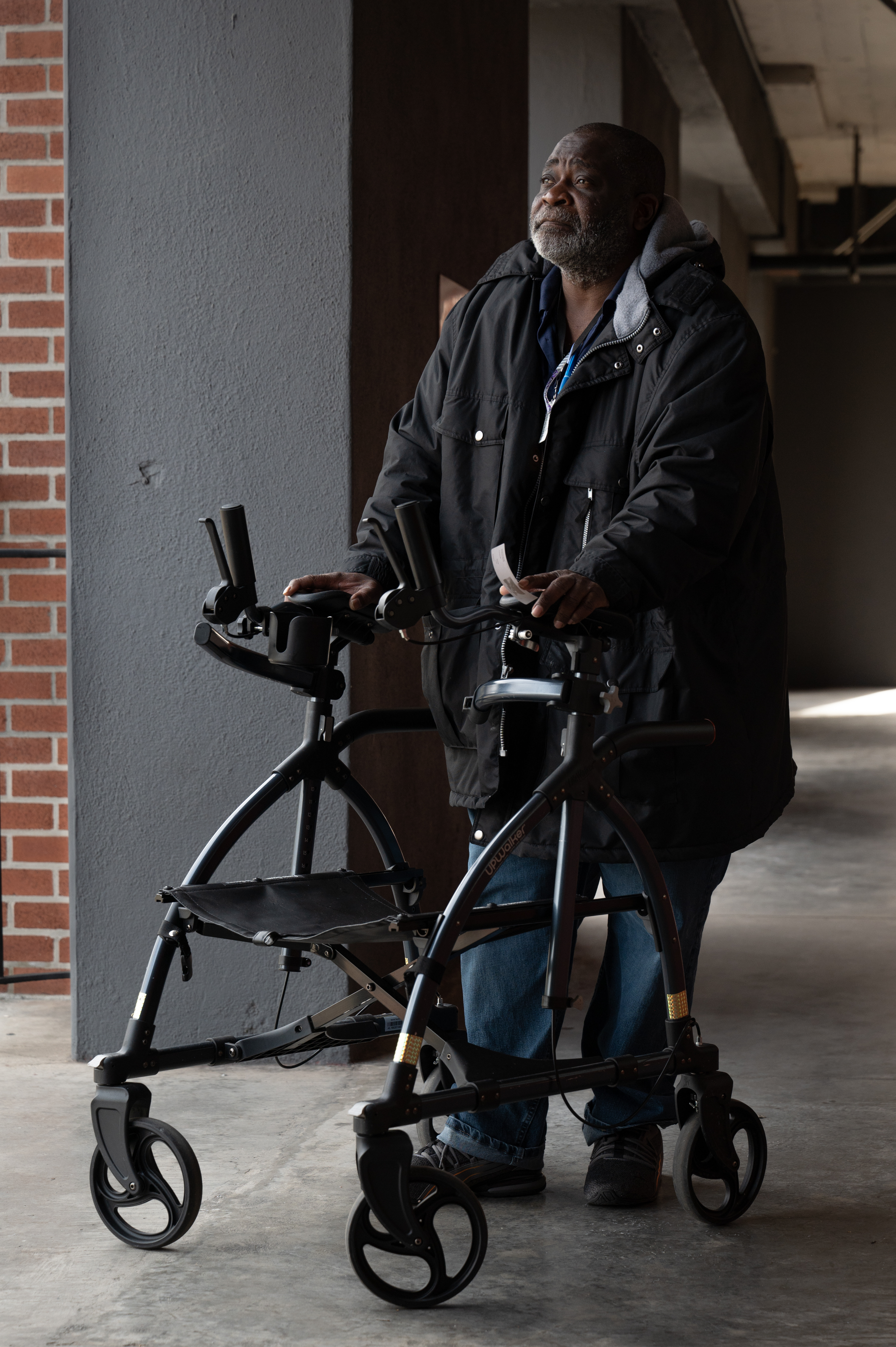

But his pain continued to get worse. The constant agony and Reed’s inability to support himself took a toll on his mental health, occasionally making him wonder if his life was worth living.
“Who would want to live this? This is horrible, man,” he said. “I can’t do anything to protect myself. I can’t do anything to feed myself. How the hell am I a man?”
The doctor at the shelter referred Reed to Shira Shavit’s Transitions program at the Southeast Family Health Center, a community clinic run by the San Francisco Department of Public Health. Shavit prescribed a medication patch for Reed’s back and scheduled follow-up appointments for his diabetes. The program also gave him a bag of groceries, a bus card and ordered him a winter coat.
“When people come out of prison, they have so many needs,” Shavit said. “[We’re] just trying to bring people to the starting line to kind of get them to where they need to be to then even start to be able to become successful in the community.”
Reed finally got his surgery at the end of January, the day after CMS approved California’s request to bring Medicaid behind bars. He’s in less pain now and dreams of moving back to Arkansas to spend time with his grandchildren.
But his challenges are far from over. He’s still living at the homeless shelter without a job and struggling to find purpose. He said if someone had reached out to him before he left prison and helped him get his surgery sooner, there’s a better chance he’d be supporting himself by now.
“I’m trying to keep a positive attitude on everything because my whole world feels like it’s falling apart,” he said a week after his surgery. “I have no control over my own life right now. I’m just like a child. I’m just helpless.”
Episode Transcript and Resources
Episode Transcript
Dan Gorenstein: When someone is incarcerated, jails and prisons must provide them with medical care.
But when a person gets out, all that goes away.
Left to fend for themselves, many fall through the cracks.
Shira Shavit: People lose their care, they lose their medications, and they get sick. They go to the hospital and too often they die.
DG: But now, for the first time, the federal government has opened the door to a solution that’s been forbidden: paying for Medicaid coverage before people leave jail or prison.
Today, why states from deep blue California to solidly red Utah want to bring Medicaid behind bars, and the tough policy choices states are facing.
From the studio at the Leonard Davis Institute at the University of Pennsylvania, I’m Dan Gorenstein. This is Tradeoffs.
****
DG: After more than 20 years, Lee Reed was a free man.
Lee Reed: It’s a good feeling, but you don’t know what to feel because you don’t know what to expect coming around the corner next.
DG: It was a warm, sunny day in California’s Central Valley at the end of July 2022.
Lee was just a few days shy of his 62nd birthday dressed in a clean white T-shirt, gray sweatpants and white tennis shoes.
Hunched over his walker, Lee shuffled to the prison’s front gate and got in a white van that would take him to the next phase of his life.
LR: We’re in the van. And reality sets in. Fear sets in. My mom had died. My wife died. I didn’t know where my son was. I had no place to go. I was really lost.
DG: Everything Lee owned in the world sat next to him in the van: $200 cash, his walker, his release paperwork, and two plastic bags filled with a month’s worth of medication.
Pills for his diabetes, high blood pressure and agonizing chronic back pain.
LR: Imagine somebody standing on your foot and you can’t stop that pain. And they’re just going to stand there. They’re not going to get up off of it. It’s going to be there when you wake up. It’s going to be there when you go to sleep. Half the time I never even got out of the bed while I was in prison because I couldn’t stand up, it was so painful.
DG: Lee’s doctors in prison told him he needed back surgery, but because he was so close to his release date, he’d have to get it done on the outside.
Finding a way to get that surgery and work again was Lee’s top goal as he left the van and got on a train for the 6 hour trip to San Francisco.
LR: I’m a country boy. I don’t expect much, you know, you just put the meat and potatoes on the table and I can go to work. That’s all I want to do.
DG: Lee prides himself on his work.
As a kid, he picked cotton with his mom and grandma in Arkansas. After moving to San Francisco, he spent decades as a carpenter, landscaper, teamster and pipelayer.
Doing anything like that was impossible as he stepped off the train in San Francisco stooped over his walker.
With nowhere to go, Lee ended up downtown looking for a place to sleep.
LR: One of the big high rise buildings. It was a parking lot garage that had the stairs going down. And that’s where I slept on the stairs. Me and the walker.
DG: Lee had finally left behind decades of prison life.
But to what?
He was homeless, no one to help him. The thing he could rely on was his constant, shooting pain.
Resting on the concrete steps, Lee felt defeated.
LR: It broke me.
DG: In many ways, Lee’s story mirrors the experience of many of the roughly 600,000 people who are released from prison every year.
Data show people who are incarcerated have higher rates of chronic medical issues like hypertension and diabetes, and significantly higher rates of serious mental illness.
They’re also much more likely to struggle with addiction.
Those health needs often make the transition out of incarceration treacherous.
SS: The studies show that people who are returning from incarceration are at very high risk of death upon release.
DG: Shira Shavit is a primary care physician at the University of California San Francisco. She’s also the executive director of the Transitions Clinic Network, which specializes in caring for people post-incarceration.
Shira points to an often cited study from Washington state that found in the two weeks after leaving prison, people were 12 times more likely to die than the general population.
SS: Things like drug overdose, cardiovascular disease, suicide and cancer.
DG: Drug overdose is the biggest danger.
A more recent study in North Carolina found people were 40 times more likely to die of an overdose in those first two weeks post-release.
Former prisoners who do survive are much more likely to end up in the hospital or emergency room.
Shira says that’s what happens when someone goes from relying on a jail or prison for their health care needs to having to figure it out on their own.
SS: There’s a major disruption in coverage of care. And that disruption leads people to becoming sicker and potentially dying in the community.
DG: More than a dozen states and some members of Congress want to smooth that transition by connecting folks to health care more quickly.
But until now, states have been barred from using federal Medicaid dollars to cover people who are incarcerated.
It’s called the “inmate exclusion policy,” and it was written into the statute to keep the federal government from footing the bill for health care behind bars.
Many counties and states try to connect people to Medicaid as soon as they’re released, but it can be a bureaucratic nightmare, and even if it does work people often have other priorities.
SS: Where you’re going to live and how you’re going to get food. Those basic needs sometimes take precedence over the medical needs and sometimes people’s medical needs get put on the back burner.
DG: Competing needs are one reason policymakers have reconsidered the inmate exclusion policy.
In 2018, Congress directed federal health officials to help states figure out a better transition plan.
Since then, 15 states have asked Washington to let them turn Medicaid on before people leave jail, prison and juvenile facilities, and last month, California became the first to get the green light.
DG: This all came too late for Lee Reed.
Lee was on his own that first night he left prison.
He slept in a parking garage stairwell: his walker for a blanket, his back pain for company.
After his second night, Lee found his way to a nearby shelter.
That’s where a few weeks later, he met with a doctor who restarted Lee on all his medications and referred him to a specialist who scheduled his back surgery.
LR: Everything just started coming together. Slowly, slowly, slowly.
DG: Too slowly in many ways.
The specialist scheduled the operation for early 2023 — more than six months after Lee had been released.
LR: I’m in agony every day. You can’t stand up. You can’t sit down. You can’t lay down. Wherever you’re at, you’re in pain.
DG: And his pain was getting worse.
Bad enough he was in and out of the ER more than once a month.
It was weighing on him mentally.
LR: It’s just tearing me apart. And I don’t know what to do. So I just pray and just hold on.
DG: The pain, the waiting, the poverty, the loneliness — Lee questioned whether he wanted to be alive.
LR: Who would want to live this? This is horrible, man. I’m at the bottom. I can’t do anything to protect myself. I can’t do anything to feed myself. How the hell am I a man?
DG: In November — nearly four months after he got out of prison — the doctor at the shelter referred Lee to Shira Shavit at the Transitions program hoping she could better manage his pain.
The minute he walked into the exam room at a San Francisco Department of Public Health Clinic, Shira could see the toll that not getting care had taken on her new patient.
SS: He was visibly in pain. Just getting on the exam table was really challenging. It was hard for him to focus, and the pain was really wearing him down. He was feeling really hopeless about the future.
DG: Even after nearly two decades of caring for people coming out of prison, Lee’s pain made an impression on Shira.
She sat with Lee for an hour, examining him, taking stock of his various needs.
She prescribed a medication patch for his back and scheduled follow-up appointments for his diabetes.
The clinic also gave him a bag of groceries, a bus card and ordered him a winter coat.
SS: When people come out of prison, they have so many needs. This is just trying to bring people to the starting line to kind of get them to where they need to be, to then even start to be able to become successful in the community.
DG: Policymakers know there are a lot of people like Lee coming out of incarceration suffering as they wait for care.
And they hope that turning Medicaid on before people are released will make a difference.
But to do that, states have to make some tough choices.
We’ll dig into those, after the break.
MIDROLL
DG: Welcome back.
For the first time ever, the federal government is allowing some people in jails, prisons and juvenile facilities to get Medicaid coverage.
The Centers for Medicare and Medicaid Services — CMS — approved California’s request for this in January, and 14 other states are also hoping to get approval.
All these proposals share one goal: to bridge care between incarceration and the community for the more than 10 million people who leave jail and prison each year.
Many also see this policy as a way to improve health equity as people of color are disproportionately incarcerated in the U.S.
That said, Tradeoffs producer Ryan Levi is more interested in how these proposals are different than similar.
Ryan, how’s it going? Thanks for being here.
Ryan Levi: Doing well, Dan.
DG: Why focus on the differences, Ryan?
RL: Well this is brand new territory for Medicaid, Dan, so there are a lot of choices states have to make without a lot of guidance or evidence.
And as a result, we’ve seen states go in different directions, which reflect different priorities, and that could end up having major implications for the people states are hoping to help.
DG: You say there’s not a lot of evidence or data here, so what do we know?
RL: Well states that connect folks to insurers prior to release have seen more people get care more quickly.
And there have been a few pilot programs in California and New Mexico that showed offering care coordination to people before they left jail led to more primary care visits, less recidivism and fewer ER trips.
So it’s something, but hardly definitive in helping answer some of the major questions states are gonna have to wrestle with.
DG: Questions like what?
RL: After talking to officials in a bunch of these states, Dan, I think there are three big ones worth walking through: who to cover, what to cover, and when to start covering it.
DG: You’re talking about which people in jail and prison would get this new coverage, what services they’d actually get, and when those services would start.
So let’s take these one by one starting with who.
What makes this such a tough question for states to answer?
RL: It’s the classic Medicaid conundrum, Dan. The more people you cover the more it’s gonna cost states.
Now, the theory behind getting people connected to care sooner and keeping them on their meds is that states will save money over time because fewer people will end up needing expensive hospital and ER visits.
But because, again, this is all brand new, states are having to guess at whose health will benefit most and by extension where their Medicaid dollars will do the most good.
DG: Okay, since California has gotten its proposal approved, let’s talk about who they’ve decided to cover to start this off.
RL: Sure. California’s policy will cover incarcerated people with conditions like substance use issues and chronic mental and physical health problems.
Jacey Cooper, the state’s Medicaid director, told me they’re focused on the folks they see as the most vulnerable.
Jacey Cooper: We really try to zero in on those with health conditions because that is essentially our intersection with this, right? If you are providing and paying for the Medicaid services, you want to ensure that you are focused on those that truly need it.
RL: This is the most common answer, Dan, that I got to the “who to cover” question: folks with significant, documented health needs.
Now, of course, in prisons and jails this is actually a pretty big group.
Jacey estimates around 70% of people incarcerated in California fit this criteria.
DG: So if that was the most common answer, what are some of the outliers?
RL: Well, on one side you’ve got a state like West Virginia which is only looking to cover people with substance use disorder.
Cindy Beane, who runs West Virginia’s Medicaid program, told me her state’s been hit really hard by the opioid crisis, so it feels personal.
Cindy Beane: We’ve all had friends that unfortunately have lost that battle and have died. And so those are the individuals that we feel that we could really make a huge impact on having this service available prior to release.
RL: The best evidence we have really backs Cindy up here, Dan.
There are treatments, specifically for opioid use, that are proven to reduce overdose deaths, and the limited data we have suggests overdose is the most common way people die after leaving prison.
DG: Got it, so if Medicaid coverage could even put a dent in those overdose deaths, that could potentially save a lot of lives just focusing on this one group.
RL: Exactly.
But then you have a state like Rhode Island that wants to cover everyone.
Amy Katzen: The odds are so high that people in that situation are going to need the support that it didn’t seem to make sense to us to be trying to distinguish who did and who did not meet some threshold or have a particular condition.
RL: Amy Katzen is the director of policy and strategy for Rhode Island Medicaid.
Basically she says so many people who are incarcerated have serious health needs that it’s simpler just to offer this to all of them.
AK: Have you moved and tried to find a new PCP? Is that a fun experience? It’s so frustrating and hard and that’s not as stressful a situation. So any time you can reduce the barriers for someone getting into care, that’s going to have benefits down the line.
DG: So Ryan, it sounds like this question comes down to who states think is “sick” enough to make it worth spending finite Medicaid dollars on.
And without much evidence to guide them, some states are casting a really wide net while others are going much more narrow.
So let’s move on to what services states are willing to pay for before someone is released.
What’s the core tension here, Ryan?
RL: Part of it, Dan, is the same as the last question: more services means more help, more care, but also more money.
But interestingly, the bigger motivation I heard from state officials was around simplicity.
DG: What does simplicity mean?
RL: Well, everybody kept telling me how complicated it’s going to be to turn Medicaid on.
You’ve gotta get the criminal justice system and health care system to work together, to integrate, to share data, Dan. It’s going to be a huge lift.
So policymakers want to make this as easy as possible.
For someone like Mike Levine, the director of Massachusetts’ Medicaid program MassHealth, that means incarcerated people who qualify for Medicaid in his state will have access to the same services as any other person on Medicaid.
Mike Levine: This is going to be so complicated to implement. When we finally do, there’s something to be said for just, if you are a MassHealth member, you’re getting the MassHealth benefit.
RL: That feels like the simplest way to do this for them.
But in Arizona, they’re thinking about simplicity differently.
Dana Flannery, a former senior policy advisor for Arizona’s Medicaid program, says her state wants to offer a much more limited set of services, Dan, that is laser focused on transitioning someone back into the community.
Dana Flannery: We’re not trying to take over all the health care by any means. This is literally a warm handoff.
RL: So Arizona is only looking to cover things like connecting a person to new doctors, making sure they can get their prescriptions filled and helping them find housing, while the jails and prisons continue to provide and pay for things like addiction treatment and medications in the lead up to someone’s release.
And I should be clear, Dan, every state I talked to said they are just focused on the transition, not trying to overhaul the whole corrections health care system.
DG: Based on these two examples, it seems like states are thinking about “transition” in a few ways.
RL: I think that’s right, Dan.
If you’re Massachusetts, all health care a person gets in the weeks leading up to release is related to transition.
And then in Arizona, they’re more interested in isolating the services that are specifically about setting up someone’s care post-release.
DG: Okay. Let’s move to our final big question you laid out, Ryan, when should states turn Medicaid on in jails and prisons.
RL: Right, this question really comes down to how much time states think they need to set someone up for success on the outside.
Most states picked 30 days pre-release, but California actually got approved for 90.
They believe that’s a more realistic window to build a trusting clinical relationship, make sure someone as all their appointments set up and really get them everything they need.
DG: Thanks for laying out some of the differing philosophies and policy priorities, Ryan, it’s helpful.
I do have to wonder, though, given that CMS has already given California the thumbs up for how they are answering these three big questions, how likely do you think it is that the agency will steer states to copy California?
RL: It’s a good question, Dan.
It took over a year for CMS to approve California’s request, so if a state wants to avoid waiting that long, just copying California’s answers may be the quickest option.
But after reading through all 15 of these applications and talking with a lot of the people who helped write them, my bet is that these other states will want to pursue their own path.
DG: And this could actually be a good thing, right?
We’ve talked about how little evidence there is, and so letting states experiment here could help us learn what works best. It’s that whole “states as the laboratories of democracy” thing.
RL: That’s absolutely right.
DG: There’s also the question of whether there could be a disconnect between the Medicaid officials designing the policy and the people it’s designed to help.
I know you’ve spoken with some of those folks who’ve been incarcerated about what they think it’s gonna take to make this all work. Ryan, what have you learned?
RL: Sure, so one person I talked with is Khalil Cumberbatch.
Khalil Cumberbatch: I am the director of Strategic Partnerships at the Council on Criminal Justice, a non-for-profit policy think tank organization.
RL: Khalil spent six and a half years in a New York prison before getting out and becoming an advocate.
And Khalil says health care behind bars is often insufficient, something that numerous reports and court cases backs up.
KC: I’ve seen people wither away, literally, people who were 280 pounds solid, healthy looking individual, wither all the way down to skin and bones. And that was because something that they had was diagnosed late or was misdiagnosed in the beginning.
RL: From his perspective, states focusing just on the transition misses the broader need.
KC: The ultimate goal should be to have Medicaid cover the cost of services given to a person medically, substance abuse treatment, mental illness, and other services for the entire duration of a person’s incarceration.
DG: It seems like what Khalil is talking about obviously goes much further than where states are at right now.
And so given that, what does he think should be states’ top priority if they’re just gonna really focus on helping people in the transition phase?
RL: He thinks California has the right idea: helping people who have clear documented health needs. They’re the ones who need this most, he says.
DG: And what about when states should turn Medicaid on?
How long does he think it will take to help someone transition?
RL: He says California’s 90 days is a good start, but he would set the standard at 180 days or 6 months.
I think Khalil’s takeaway here, Dan, is that offering Medicaid in jails and prisons is good, but how states do it also really matters.
The people inside need to engage and getting advice from Khalil and others who’ve been incarcerated could make a meaningful difference in making sure that happens.
DG: Before I let you go, Ryan, I’ve gotta ask: What could go wrong here? Did the state officials you talked with share any concerns about bringing Medicaid behind bars?
RL: They did not, Dan.
Dana Flannery: I’m not really seeing downsides at this time.
Bruce Daw: it’s just all around good.
Mike Levine: I don’t see a lot of downside.
Cindy Beane: I think it’s good policy.
RL: Everyone talked about how challenging it’s going to be to implement this policy, but on the policy itself, all the state officials were very rosy.
DG: Okay, no real surprise, I suppose, from the people who are actually backing this.
But health policy as you know always seems to have unintended consequences. What could some of those be with this?
RL: One is a concern that if these services are offered in jail and prison, it could actually encourage judges to incarcerate people so they can get access to them.
Another is whether turning Medicaid on inside could actually make prisoners less likely to engage because they might see Medicaid as part of a criminal justice system that they don’t trust.
And finally, CMS has some concerns that this could allow jails and prisons to offload their health care costs onto Washington, so federal officials actually included some protections against that in its approval for California.
DG: What about straight up opposition to this, Ryan? Does anyone think this is a bad policy outright?
RL: Honestly, I struggled to find anyone saying that, Dan.
Obviously some policymakers have historically bristled at the idea of giving additional services to people in jail and prison.
And this won’t be cheap, I should say.
California expects to spend $318 million a year on these new services, plus another half a billion to help corrections facilities and health care providers build up the tech and infrastructure they’ll need to make it all work.
But as far as I can tell, no one is loudly opposing this.
DG: Tradeoffs producer Ryan Levi, thank you so much for all of your reporting.
RL: Any time, Dan.
DG: At the end of January — the day after CMS approved California’s request to bring Medicaid into jails and prisons and about six months after Lee got into that van — Lee finally had his back surgery.
We caught up with him over the phone.
LR: I’m feeling beautiful right now. I actually can get up and walk around.
DG: A week after his procedure, Lee felt better and eager to get back to Arkansas.
LR: I want to go someplace nice and calm and green. I need to go find me a porch to sit on and so I can play with my grandchildren.
DG: He says if someone had reached out to him before he left prison, if he had gotten his surgery sooner, there’s a better chance he’d be supporting himself by now.
But now that he’s in less pain, it’s easier, he says, to see how far he is from that starting line Shira Shavit talked about.
He’s still homeless, without a job and struggling to find purpose.
LR: I’m trying to keep a positive attitude on everything because, you know, my whole world feels like it’s falling apart. I have no control over my own life right now. I’m just like a child. I’m just helpless.
DG: So, Lee says, he’s doing better, but still on the edge.
A reminder that as important as health care can be, sometimes it’s not enough.
I’m Dan Gorenstein, this is Tradeoffs.
Episode Resources
Selected Reporting and Research Health Care and Incarceration:
- As the Pandemic Swept America, Deaths in Prisons Rose Nearly 50 Percent (Jennifer Valentino-DeVries and Allie Pitchon, New York Times, 2/19/2023)
- How California Will Expand Medicaid Pre-Release Services for Incarcerated Populations (Sweat Haldar and Madeline Guth, Kaiser Family Foundation, 2/7/2023)
- Best Practices for Engaging the Reentry Population in Health Care (Transitions Clinic Network, 12/2022)
- Why states should change Medicaid rules to cover people leaving prison (Emily Widra, Prison Policy Initiative, 11/28/2022)
- The effect of Medicaid on recidivism: Evidence from Medicaid suspension and termination policies (Gultekin Gollu and Mariyana Zapryanova, Southern Economic Journal, 8/27/2022)
- Medicaid and Reentry Part 1 and Part 2 (Health and Reentry Project, 3/23/2022 and 7/14/2022)
- Health care in jails and prisons is terrible. The pandemic made it even worse. (Victoria Law, Vox, 6/28/2022)
- Reducing the Health Harms of Incarceration (Aspen Health Strategy Group, 3/2022)
- Sick Podcast (Lauren Bavis and Jake Harper, WFYI and Side Effects Public Media, 2021)
- State Strategies for Establishing Connections to Health Care for Justice-Involved Populations: The Central Role of Medicaid (Jocelyn Guyer, Kinda Serafi, Deborah Bachrach and Alixandra Gould; Commonwealth Fund; 1/2019)
- Opioid Overdose Mortality Among Former North Carolina Inmates: 2000–2015 (Shabbar I. Ranapurwala, Meghan E. Shanahan, Apostolos A. Alexandridis, Scott K. Proescholdbell, Rebecca B. Naumann, Daniel Edwards Jr. and Stephen W. Marshall; American Journal of Public Health; 4/27/2018)
- On Life Support: Public Health in the Age of Mass Incarceration (David Cloud, Vera Institute of Justice, 11/2014)
- Release from Prison — A High Risk of Death for Former Inmates (Ingrid A. Binswanger, Marc F. Stern, Richard A. Deyo, Patrick J. Heagerty, Allen Cheadle, Joann G. Elmore and Thomas D. Koepsell; New England Journal of Medicine, 1/11/2007)
Episode Credits
Guests:
- Lee Reed
- Shira Shavit, MD, Executive Director, Transitions Clinic Network
- Jacey Cooper, Director, California Medicaid Program
- Cindy Beane, MSW, LCSW, Commissioner, West Virginia Bureau of Medical Services
- Amy Katzen, JD, MPP, Director of Policy and Strategy, Rhode Island Executive Office of Health and Human Services
- Mike Levine, Acting Medicaid Director, MassHealth
- Dana Flannery, Former Senior Policy Advisor, Arizona Health Care Cost Containment System
- Khalil Cumberbatch, MSW, Director of Strategic Partnerships, Council on Criminal Justice
The Tradeoffs theme song was composed by Ty Citerman, with additional music this episode by Blue Dot Sessions and Epidemic Sound.
This episode was reported by Ryan Levi and mixed by Andrew Parrella. Editing assistance from Cate Cahan.
Special thanks to: Lindsey Browning, Brad Daw, Morgan Glied, Anaïs-Ophelia Lino, Jason McGill, John Sawyer, Scott Taberner and Vikki Wachino.
Additional thanks to: Kathleen Allison, Ingrid Binswanger, Blaire Bryant, Caroline Broder, Dan Domizio, Toni Meyers Douglas, Madeline Guth, Lisa Heintz, Bruce Herdman, Elizabeth Hinton, Clemens Hong, Kevin Kempf, Jennifer Lav, Hannah Maniates, Terri McDonald, Dan Mistak, Robin Rudowitz, Don Specter, Kim Sperber, Sayone Thihalolipavan, Diana Toche, John Wetzel, Tyler Winkelman, the Tradeoffs Advisory Board and our stellar staff!
You must be logged in to post a comment.