
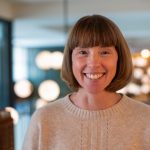

An employer in Chicago describes how another year of rising premiums forced her to consider dropping her workers’ insurance.
Small businesses employ tens of millions of Americans. But half of the nation’s smallest employers don’t offer health insurance to their workers. The costs are too high, many say, or their businesses are simply too small.
Rachel Bernier-Green was determined to make it work.
“My first job out of college did not offer health insurance coverage,” Bernier-Green told Tradeoffs. She had multiple chronic conditions, including one which put at risk her hopes of having a family. She moved in with her parents to pay her medical bills. “It had been pretty clear to me [that health insurance] wasn’t a nice to have or a theoretical thing.”
So when Bernier-Green started the financial consulting firm EJ Consortium in Chicago in 2023, she made sure her business plan could support health benefits for herself and her employees within a few years. In 2025, she offered her six workers benefits for the first time.
Her timing was terrible. Higher health care costs, rising prescription drug spending and overall inflation have sent premiums soaring over the last few years. According to one report, the cost for employers to offer health insurance to employees jumped more from 2025 to 2026 than it has in the last 15 years.
“We could not have foreseen what was going to happen and how quickly the prices would get out of reach,” Bernier-Green said.
She had few good options to find the money for higher premiums: lay people off, cut wages or stop socking away rainy day reserves. So she made the tough call to drop health benefits for this year.
With employers, consumers and policymakers across the country grappling with the rising cost of health care, we sat down this week with Bernier-Green to understand what this moment is like for her — as a small business owner, as a patient and as a mother.
“It can be gut wrenching to make a business decision,” she said, “when you know the real impacts that it’s going to have on these people that you work with every day.”
Bernier-Green is looking into a combination of options to help her workers gain coverage. One is limited insurance for high-cost medical emergencies, known as catastrophic coverage. The other is called direct primary care, where employees can access primary care services for a monthly fee. Both policies are favorites of the Trump administration and Republicans in Congress as ways to provide more health care choices at lower costs.
Still, Bernier-Green considers these options a temporary fix. “It is definitely a measure that we’re considering out of necessity, not something that I would advocate for as a first line of defense for anyone,” Bernier-Green said.
Episode Transcript and Resources
Episode Transcript
Dan Gorenstein (DG): More of the money Americans earn is going to pay for health care.
That is true for households.
News clip: Health care costs are rising faster than wage growth.
News clip: Premiums could rise twice as much as inflation next year.
News clip: It is looking ugly. Healthcare costs are soaring, which means most of us are going to pay a lot more next year.
DG: And… businesses.
News clip: For employers sponsoring health plans, it’s a much bigger increase than expected.
DG: And for the smallest employers, these premiums hikes have forced the question: Can they still afford their employees’ health benefits?
Rachel Bernier-Green (RBG): It can be gut wrenching to make a business decision when you know the real impacts that it’s going to have on these people that you work with every day.
DG: Today, we hear from an owner of one of the nation’s 36 million small businesses about what it takes to offer employees health insurance and what happens when that coverage gets super expensive.
From the studio at the Leonard Davis Institute at the University of Pennsylvania, I’m Dan Gorenstein. This is Tradeoffs.
*****
DG: Hi.
RBG: Hi Dan.
DG: I know you’re from Chicago and I know how Chicago is about the Chicago Bears. I mean, you feel like you’re hearing more about insurance than the Bears?
RBG: Oh, unfortunately. Unfortunately. Which definitely tells you a lot. I had not, uh, hadn’t put two and two together, but I’m definitely hearing more about health insurance than the Bears.
DG: That’s something when, you know, they beat Green Bay in the playoffs. So that’s no joke.
DG: Rachel Bernier-Green is a small business owner. Like practically everyone in this country, she’s trying to figure out how to make health care affordable.
It’s a complicated issue that Tradeoffs will be covering from many angles this year.
We’re talking to Rachel today because firms like hers are an engine of employment in the U.S. But businesses this size are much less likely to offer workers health benefits.
Rachel’s first company, for example, ‘Laine’s Bake Shop, took off. Contracts with Whole Foods and Starbucks. A business built around her values.
RBG: I had just come out of a part of my career that I referred to as the soul-sucking part of my career. I’d gotten really sick and I had a come to Jesus moment where I was thinking, you know, if this was the end, am I satisfied with the legacy that I’ve left on this world? And I the answer was I absolutely wasn’t.
DG: What did that look like in practice? What were you actually doing that reflected your values?
RBG: We sourced from regenerative farmers. We hired people who were re-entering citizens, so they’d been previously incarcerated.
DG: Rachel grew up, she says, seeing what a second chance means and how crucial a good job is to that second chance.
RBG: One of my best friends growing up, both of her parents had been previously incarcerated and her father passed away in a tragic accident. I will never forget, at his funeral, all of these people were just lining up to talk about how this man had touched their lives.
I thought that this was a way that I could make a difference in the lives of the people that I hired, but also prove the case that when you provide those quality jobs, we can drive recidivism down.
DG: But there was one thing Rachel wanted to accomplish that remained out of reach.
RBG: We weren’t organized in a way that made it possible for us to have the margins needed to offer benefits full benefits like health care.
DG: Rachel understood from personal experience what that could mean for her staff.
RBG: My first job out of college did not offer health insurance coverage, and at the time I was managing asthma. I had extreme allergies and then endometriosis. And this was before the Affordable Care Act. And so I was going to pay an obscene amount of money and none of my chronic conditions were going to be covered.
So I had to move back in with my parents when I first graduated. Not having health care really made a difference because I wasn’t sure if I was going to be able to start a family.
DG: And so, like, from the time you were in your early- to mid- twenties, you understood what health insurance meant because you needed it.
RBG: Yes. Yeah, it had been pretty clear to me, so it wasn’t a nice to have or a theoretical thing. I was spending more on medical expenses than I was on my car note and all of my other living expenses combined.
DG: Not being able to offer her bakery employees health insurance bothered her. And when ’Laine’s Bake Shop closed during the pandemic, Rachel committed to doing things differently with her next business.
In 2023, she opened a small consulting firm called EJ Consortium.
This time around, offering her employees health insurance was a top priority.
RBG: We built our entire business model around the idea that we wanted to create thriving jobs, which meant that we needed to pay family-sustaining wages and that we needed to offer benefits that support people so that they can show up to work and not have to worry about those things.
DG: It took about two years until Rachel could offer coverage. But as soon as she did it, the team was ready.
RBG: People started to say, “oh, well then that means I can do X, Y, or Z for my, you know, for my kid. Or I can go get a physical for the first time in six years.”
DG: You planned and worked for this. How did it feel as an employer to reach this milestone?
RBG: I had a lot of pride. I was, you know, really excited to tell other business owners that, hey, this is possible even when we are, you know, still a tiny company. And if we can do it, you can do it too.
DG: ‘Cause one of the things you do for these companies basically as their CFO is help them figure out if they can afford health insurance, right?
RBG: Exactly. It meant a lot for me, but it also meant a lot for the community of businesses that I work with, because some of them saw the possibility for themselves too.
DG: So, like, you are gonna spend a significant amount of money on health insurance.
RBG: Oh yes.
DG: You could have spent that money in other ways. Why were you like, you know what, it’s better to spend it on insurance than even to put it in the form of wages, higher wages for people? Why did you make that decision?
RBG: I mean, it goes back to two things.
One, really taking care of people’s core needs. And the other is that even if we spent the exact same dollar to dollar amount on higher wages, it wouldn’t have allowed the team to access the level of health care that we could offer through a small business group insurance plan.
DG: And so you saw that math and you understood that one of the best things you could do for your workers was to give them health insurance. You felt like a happier, healthier workforce was gonna actually pay the dividends you were seeking.
RBG: Yes. Yeah, so this was definitely a business decision, not just a, oh, you know, something that feels good to do for people. I definitely think that it actually has a positive impact on our bottom line to have the team fully insured with quality insurance.
DG: And what about you, Rachel? Were you able to get better insurance now that you could offer it through the company?
RBG: Absolutely. It was a game changer because we were previously on COBRA insurance from my husband’s previous job. So we had access to less expensive, better health care. So we were able to get access to the doctor who actually invented the surgery that my son needed.
And so we were able to actually rest, knowing that my son’s surgery was going to be covered, that we could go to the best hospital.
RBG: Yeah, it was fantastic.
DG: When you say you were able to actually rest. What does that mean?
RBG: So we spent a ton of time thinking, okay, well do we, take on additional debt. Do we raid our savings? Or do you have to make the impossible choice of saying, okay, we’re going to go somewhere else because that’s what’s financially feasible for us.
And when you’re a parent making these types of, you know, impossible choices, it is hard to rest. It’s hard to function.
DG: When we come back, as premiums jump for 2026, Rachel must decide what her business can afford.
BREAK
DG: Welcome back.
We’re talking with Rachel Bernier-Green, CEO of EJ Consortium, which helps small businesses with their finances.
Rachel is one of millions of small business owners, entrepreneurs who are a major source of U.S. employment, but who struggle to offer their workers health insurance.
With careful planning, Rachel managed to pull it off, though, in 2025.
DG: How much did you end up spending on health insurance in that first year? Do you remember? Ballpark?
RBG: Yeah, our total bill would have come out closer, to like a little over $60,000 for the year. Yeah.
DG For this year, 2026, Rachel was prepared to pay more, but just a bit. Ten percent.
DG: How much did the cost explode beyond that ten percent. Like, was it a little or were you like, no fucking way.
RBG: It was definitely the latter. So yeah, it was like we had a ten percent allowance and it was not close to that ten percent allowance. And we are too small of a company to have any bargaining power.
DG: There’s been a focus on people who buy insurance through Obamacare after Congress allowed more generous COVID-era subsidies to sunset financial aid that had kept premiums low for millions of Americans.
But insurance prices are rising painfully for everyone, driven by inflation, increased spending on prescription drugs and wages for health care workers.
RBG: We could not have foreseen what was going to happen and how quickly the prices would get out of reach. We had a little wiggle room built in, but we did not have nearly enough to absorb the cost without serious repercussions for the business.
DG: And what would those repercussions have been?
RBG: It would’ve meant looking at, you know, can we keep the entire team employed? It meant looking at growth. We have, you know, all of these other goals in the business that it meant either putting them on the back burner or significantly delaying them.
I knew what it would mean for my team to go without insurance. And I also knew what absorbing the cost of that insurance would mean for the company, and therefore, for the team.
DG: Which is why you decided you were unable to offer health insurance for 2026. What happened when you told everybody?
RBG: We practiced something called open book management, where I share all of the financials for our business with our entire team. And one of the people who relied on the insurance, he actually said it first that we need to let this go and figure something else out. That we shouldn’t, you know, break the entire business just to be able to afford insurance.
And in that moment, it felt almost like the team had given me permission to make a choice that I was really struggling with and would’ve had a really hard time making if I didn’t have their weigh in.
DG: When he said that to you, what was going on in your mind?
RBG: I mean, honestly I almost cried because I understood what sacrifice that team member would be making if we did not have insurance. I also understood that that meant that our team is really bought into our mission, and that they know that it’s not an empty promise that we are going to put a plan in place so that we can bring it back in the future.
DG: Once you told the team, what were the implications for your workers? What was the fallout?
RBG: It meant that some people accelerated some treatment that they may have otherwise put off. One person did have to look for another job. We had some people who looked on the marketplace to try to find coverage.
Some were able to get that coverage. Some were priced out. We had other people where their spouse switched jobs so that they could get access to better health care.
DG: What were those conversations like?
RBG: People were really struggling with these things. There, in some spaces, was shame for not being able to have health care coverage for their families. There is fear, you know, that if something goes wrong that they don’t know how they’ll be able to handle it, especially given that people were simultaneously being priced out of ACA coverage.
It led to a lot of tense, scared conversations as we all figured out how we were going to navigate things.
DG: Rachel, you mentioned earlier that you think one of the reasons your staff was so understanding about you making this decision was because they knew that you would try your damndest to make this temporary.
I know you’ve been looking into alternatives to traditional health insurance.
You actually have some personal experience with one. It’s called direct primary care or DPC, where you basically pay a monthly fee and then you can go to the doctor when you need to kinda like a gym membership. What do you like about this model?
RBG: My favorite thing about this model is that it largely circumvents the need for day-to-day medical insurance. We have found with our DPC providers that we tend to get better care.
Our appointments are three to four times as long. We are able to ask questions and get a more holistic level of care, is what my family has found in our experience.
DG: So paying for your employees to get direct primary care could cover things like checkups and vaccines, but that’s not going to pay for prescriptions or be much help if someone needs surgery or gets cancer.
How are you thinking about those bigger ticket health care costs?
RBG: The idea is that people would get cheaper traditional insurance that covers emergencies, it covers, you know, if you’re diagnosed with cancer, it covers those big things, but that they don’t need it to be as extensive for the day-to-day things because they’ll get all of their primary care through DPC providers.
DG: Is one of the options you’re considering a straight-up catastrophic plan?
RBG: That is an option we’re considering only if we paired it with some additional coverage to make sure that that’s not all people had.
DG: I guess what I’m hearing you say is, like, you’re imagining this sort-of piecemeal approach. How do you feel about that, compared to the insurance you offered before? This would obviously be cheaper. But the quality of the coverage arguably might be lower.
RBG: I mean, it sucks. It sucks from going from a plan where people could get seen anywhere they wanted and could get, you know, top of the line treatment for their mental, their physical, you know, their vision, their dental for everything to trying to basically create a patchwork quilt to get people basic care and keep them from having to file bankruptcy for medical reasons. It’s a much lower bar.
DG: I heard you when you said it sucks. I could feel you when you said it sucks. And I guess I just where my mind went when you were answering that question was to that to that service, for your friend’s dad, and, what it means to take care of people and the value that comes from that.
And it made me wonder for you, as you try to navigate your business, what sacrifices you feel like you might be willing to make, so that you can actually do right by the people you work with.
RBG: We are not going to sacrifice people’s take home pay to be able to provide insurance.
We ensure that the business has a certain percent of profitability that we can set aside for building up reserves. And so we’re also not willing to take away from what we’re putting into those reserves, because it’s in the company’s and team’s best interest that we’re able to weather turbulent times.
DG: Those are two things you didn’t do. Is there anything you did do?
RBG: One of the biggest things that we did was redesigned our service delivery model. So our service offerings and pricing are different now than they were before this, so that we could design the margins that we needed to be able to bring health care back.
DG: If you had an opportunity to talk to people in Congress, what would you say to them?
RBG: I want them to understand the actual impact, lived impact that this has on people. For my family, the surgery for my son was one thing, but my son also had a very complicated beginning medically.
And the fact that he’s able to walk, the fact that he can speak is all due to having the privilege of having the right insurance at the right time. And that’s not fair that we are depriving children and depriving people of being able to live fully and being able to contribute more to society because we refuse to do something about the increasing cost of health care.
DG: Rachel, thanks so much for taking the time to talk to us on trade offs.
RBG: Thank you so much for having me.
DG: Congress and the White House last year made it easier for companies like Rachel’s to cobble together direct primary care with catastrophic coverage.
Rachel says she doesn’t consider that option a “adequate replacement for being fully insured.”
DG: I’m Dan Gorenstein and this is Tradeoffs.
Episode Resources
Additional Reporting and Resources on health insurance markets and policy:
- The Average Cost of a Family Health Insurance Plan Is Now $27,000 (Anna Wilde Mathews, Ruth Simon, The Wall Street Journal, 10/22/2025)
- How much and why premiums are going up for small businesses in 2026 (Matt McGough; Kaitlyn Vu; Shameek Rakshit; Imani Telesford; Jared Ortaliza; Lynne Cotter; Gary Claxton, and Cynthia Cox; Peterson-KFF Health System Tracker; 9/24/2025)
- Small businesses, self-employed brace for sharp health insurance premium spikes (Alexandra Olgin, Marketplace, 9/3, 2025)
- Growth In Number Of Practices And Clinicians Participating In Concierge And Direct Primary Care, 2018–23 (Jane M. Zhu, Trisha Marsh, Daniel Polsky, Aine Huntington and Zirui Song; Health Affairs; 12/2/2025)
- New Guidance Expands Pool of Individuals Eligible to Purchase Catastrophic Plans (JoAnn Volk, Sabrina Corlette, and Justin Giovannelli; State Health and Value Strategies; 9/5/2025)
- New A.C.A. Plans Could Increase Family Deductibles to $31,000 (Reed Abelson, The New York Times, 02/26/2026)
Episode Credits
Guest:
- Rachel Bernier-Green, founder and CEO, EJ Consortium
This episode was produced by Melanie Evans, edited by Ryan Levi and Dan Gorenstein, and mixed by Andrew Parrella and Cedric Wilson.
The Tradeoffs theme song was composed by Ty Citerman. Additional music this episode from Blue Dot Sessions and Epidemic Sound.
Special thanks to Priscilla Easterling, Nicholas Riggs and Jeremy Smith.