
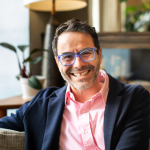

We follow Maryland’s 52-day rush to convince the Trump administration to give the state new funding to transform rural health care.
States will soon get their first payout from a new $50 billion fund that Congress created last year to bolster rural health care. Tradeoffs has been busy covering this ambitious effort, which will help shape state health policy for the next five years.
This week, we’re bringing you a new article and episode to give you important context as you follow what comes next.
Our article explains the basics of the Rural Health Transformation Program and key takeaways from the first round of state awards. (For a deep dive, check out our live event from earlier this month co-hosted with the Leonard Davis Institute of Health Economics at the University of Pennsylvania.)
Meanwhile, our episode takes you along as I try to understand what this opportunity means for one state: Maryland.
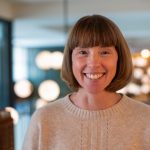
Since last fall, we’ve been following Elizabeth Kromm — one of Maryland’s top health officials — as she and her team rushed to pull together a thoughtful proposal for these new rural health funds. We interviewed Kromm numerous times and sat in on Maryland’s “war room” meetings as Kromm and her staff chose which of rural Maryland’s health care obstacles to prioritize and which to leave out.
All 50 states got at least some money from the new fund, but the Trump administration pitted state against state for additional money, with larger awards going to proposals federal officials liked best.
“If the ideas aren’t good, you don’t get the money, or at least as much of it,” Dr. Mehmet Oz, Trump’s top Medicare and Medicaid official, said in September. “If the ideas are fabulous, you get a ton of money.”
States had just 52 days to come up with their pitches — to figure out how to make the most of this unique opportunity to improve rural health, while balancing their state’s needs with the desires of the federal government.
This week, we bring you the first of two episodes on how Maryland did it. Through the experience of one state — and one dedicated state official — these stories will illustrate how the messy work of putting health policy into action is changing under the Trump administration.
In the first episode, we’ll introduce you to Kromm, the tough decisions she had to make, and the people in rural Maryland hoping to get a share of this new money.
Here are some key takeaways:
- There’s a lot of excitement about this new funding. Maryland officials heard from hundreds of hospitals, nonprofits, citizens and rural health providers, hopeful this money could help them address the many challenges facing rural health care. “This is really an incredible opportunity for Maryland,” Kromm said. “It’s a way that we can build on the work that we’ve already been doing to serve rural communities, and we don’t want to miss out on that.”
- There wasn’t a lot of time. Having just 52 days to prepare their applications limited what states could pull off. Kromm passed over projects that required too much time to vet. “That was a hard decision to kind of just stop that conversation, stop the exploration” of certain high-priority ideas, she said.
- States risk losing money if their projects don’t deliver. The Trump administration will review states’ progress each year, “and for the folks that do a great job, they’re going to get even more money,” Oz said, when awards were announced in December. “And folks that don’t deliver what they promised, they may get some money taken away from them.” Kromm felt pressure to prioritize projects she felt were the safest bets. “We have to be very practical about our approach because we risk dollars being taken away,” she said.
- The new money comes at the same time as states brace for major Medicaid cuts. Rural communities are estimated to lose $137 billion in federal Medicaid funding over the next decade. Hospitals are expected to be hit hard, and they urged states to steer much of this money their way. But the Trump administration opened the funding more broadly. “There’s nothing explicit to say you should be funding hospitals,” Kromm said.
Episode Transcript and Resources
Episode Transcript
Dan Gorenstein (DG): For seven weeks late last year, you could say Elizabeth Kromm had one job.
Figure out how to ask the White House for $1 billion for rural health care in Maryland, and do it so smartly, so impressively, that the state actually gets the money.
Elizabeth Kromm (EK): I’ve been a part of things in the past where it’s a little bit of there’s a game to be played, and we have to figure out how to play it and then how to win it.
DG: As a top official in Maryland’s Health Department, Elizabeth’s job is much bigger than this hugely consequential task.
But going after this money, it swamped those other duties, consumed her off hours, cut into time with her kids.
EK: I think this weekend they kind of just got the most annoyed. They’ve been pretty great. Uh, but this this was a bit much.
DG: This moment required sacrifices. The federal government gave states 52 days to apply for new rural funding.
Money that Republicans in Congress set aside last summer — $50 billion dollars — to soften the blow from their health spending cuts.
News clip: The Big Beautiful Bill, passed by the house on May 22nd, is presenting its challenges here.
News clip: Those cuts would put rural Kansas hospitals in danger of closing.
News clip: It could threaten the financial stability of rural hospitals.
DG: A tight deadline, much faster than usual and the Trump administration threw in a twist.
Mehmet Oz: If the ideas aren’t good you don’t get the money, or at least as much of it. If the ideas are fabulous you get a ton of money.
DG: It’s a competition that pits state against state.
And this is some of the only new money from Washington at a time when states are facing cuts to rural health care nearly three times as large as the relief fund.
EK: Somebody called this like The Hunger Games. So, I only read one book and I watched one movie because I couldn’t take it. It was too stressful. I’m hoping it’s not that, because. What the heck?
DG: For Elizabeth, and her counterparts across the country, these unusual and unpredictable conditions have amounted to a stressful sprint, to get as much money as they can.
EK: This is really an incredible opportunity for Maryland, right. So it’s a way that we can build on the work that we’ve already been doing to serve rural communities, and we don’t want to miss out on that. Anything where we have a chance to do more, we want to do.
DG: Elizabeth is in government because she believes policy can solve vexing problems. And rural health care in America is a vexing problem.
Too few doctors. More folks uninsured. Higher rates of chronic disease. Endemic problems, with limited resources.
Today, we follow Elizabeth and her team as they try to take advantage of this rare chance to make a big investment and maybe change lives.
From the studio at the Leonard Davis Institute at the University of Pennsylvania, I’m Dan Gorenstein. This is Tradeoffs.
*****
EK: Well, welcome to Annapolis.
DG: Thank you. Right. This is your hometown.
EK: Yeah. It’s funny. So this was the hotel where my senior prom was.
DG: It’s a sunny morning in late October. We’re at a hotel on the fringes of Maryland’s capital city.
This isn’t some swank, upscale place with valet parking and a grand lobby.
It’s a modest spot. Where you’d probably find a prom. Or a corporate meeting. Maybe a trade association conference on a budget, which is exactly what brought Elizabeth here.
EK: Hi. Hey. How are you?
Jonathan Dayton (JD): Nice to meet you.
EK: Oh, my gosh, thank you.
JD: Do you need anything from us this morning?
EK: I don’t think so. Are you good? I know I sent the slides late, but …
DG: Elizabeth is about 5’9, with short blond hair. It fits her vibe: efficient, tidy.
Elizabeth is here to talk to the Maryland Rural Health Association.
And it’s a big day for her. She’s about to go public with the state’s plan to spend whatever new federal money it gets for rural health.
A lot of people here have opinions on that.
Attendee: Primary care, access to care.
Attendee: Behavioral health professionals.
Attendee: The workforce.
Attendee: Oral health, dental careers.
Attendee: Housing disrepair is also a big issue.
Attendee: Access to quality food
DG: And what Elizabeth lays to the room could have a big impact on the future of their work. Their budgets shrink with cuts to state and federal spending. This new money, it’s important.
EK: Good morning. (Good morning.) All right, so we’ve got limited time today.
DG: Everyone in the room, Elizabeth, the audience, they all want the same thing: the most money for Maryland as possible.
But that is harder than it sounds.
Standing before the audience she lays it all out. How much is on the line, how it works. What it will take to get these new dollars.
EK: All told, we’re looking at somewhere between, over the course of five years, 500 million and a billion coming into Maryland.
DG: But the amount of money going to Maryland, or any state, will ultimately depend on a few things.
Congress came up with a broad list of what’s okay. Technology for chronic disease management? Absolutely. Recruiting more nurses and doctors to rural towns? Sure. Administrative costs? Yes, but only a little bit.
The White House also has broad discretion to hand out half the pot, $25 billion.
Their score takes into account just how rural a state is and whether states are pursuing conservative policy priorities.
Elizabeth levels with the crowd at the DoubleTree. The cards are stacked.
EK: We don’t have some of the things that other states have, in terms of size of the rural population. We don’t have frontier hospitals. Several of the scoring components that go into this application Maryland just isn’t competitive for.
DG: Since Elizabeth first saw the application, she’s recognized Maryland’s at a disadvantage.
Primarily that’s because compared with Texas or New Mexico or wherever, Maryland just isn’t super rural.
At this point in her sprint – day 36 – she’s gotta be honest with folks. The plan still has a few loose ends.
EK: This is probably where I’m guessing. And I say I’m guessing because we are furiously writing and trying to figure out how we’re putting all this together right now.
DG: Elizabeth Kromm is not someone who guesses in public. Not about something this big.
It is only because her deadline is so tight, she is moving so fast, she finds herself in an uncomfortable position: still with details to nail down.
DG: The crowd, they’re all banking on Elizabeth to pull this off. On some level, whole state is whether they know it or not.
And, odds are decent she’ll deliver something.
Elizabeth has a track record of finding a way forward, even when it’s hard to see.
For example, one of her old bosses, Ken Ulman, told me a story that sums it up pretty well.
Ken Ulman (KU): I would come to the office with some ideas, and be like, hey, do you think we can get like, healthy food delivered on a regular basis to those in our community that need it the most? And she’d be like, ah, yeah, probably. Let’s figure it out.
DG: They did it. They pulled in help from a grocery chain and truck dealership. People held in the county detention center got job training to prep the meal kits.
A dozen years later, that food delivery service they launched, still going strong.
Elizabeth is great at policy puzzles, at looking several steps ahead, at staying focused on results.
This strategic superpower, we heard it as we talked with Elizabeth over Zoom.
EK: Hey, like, totally appreciate this rubric. Makes sense for, you know, 49 states, it does not allow Maryland to be competitive in this application.
DG: Driving around Annapolis.
EK: I’m trying to kind of play through the argument in my head of like, is this what I should be pressing on?
DG: And it was super clear as she made one of the toughest choices she had to over those 52 days.
What policy goal to prioritize.
Speaker: I just wanted to reiterate how critical transportation is.
DG: From the start, transportation – really the lack of it – emerged as an urgent need in public listening sessions around the state.
Elizabeth had to decide pretty fast whether to tackle transportation head on.
Many policy folks believe that a key to improving rural health is figuring out how to somehow connect people to the care.
EK: If you are not able to actually get to, physically get to, the care you need, that’s a problem. Not everything is accessible by bus lines, right? Not everybody has access to a reliable car.
DG: Elizabeth knew she needed projects Maryland could pull off quickly and successfully.
The Trump administration said states that fail to deliver results could lose this federal cash.
EK: We have to be very practical about our approach because we risk dollars being taken away in future years or clawed back that we’ve already spent.
DG: Elizabeth realized she would be starting from scratch on all of this.
At the same time, she had proposals for other high-need projects.
She made the call.
EK: I’m sure there is some sort of creative solution out there. Maybe with more time and sort of the ability to seek out other experts and really try to disrupt in that space, maybe we could have done that. But that was also me, like, no, we have to go.
DG: When we come back, Elizabeth reveals the projects that Maryland did select. And we go to the western part of the state for a look at Maryland’s big swing.
BREAK
DG: Welcome back. Elizabeth Kromm is the person inside Maryland’s Health Department in charge of getting the state its share of $50 billion in new federal money for rural health care.
She’s been racing to identify a list of projects Maryland will prioritize.
And in late October, at the DoubleTree where she had her prom.
EK: In this very room. (laughter) you all look just as lovely as we did
DG: Elizabeth unveiled her plan.
EK: Three pillars. We’re going to grow Maryland’s health workforce. Ensure world class health systems for rural Marylanders. And then food is health.
DG: These are broad, squishy labels for the state’s three priorities. One: Get more people into health jobs. Two: Expand ways people can get medical care. Three: Feed people more locally grown food.
EK: We’re just really going to go big on food right now.
DG: Food may seem like an obvious choice.
Eating well can help prevent diabetes or heart disease, conditions that are more common in rural Maryland than the rest of the state.
But states can’t buy people food with this pot of money. It’s not allowed.
So what could Maryland spend money on?
The answer: local farms, and more ways to get what they produce into the kitchens of their neighbors.
EK: I need more Maryland food in Maryland bodies. How am I going to get that? I have a lot of Maryland farmers, right? Maryland food into Maryland bodies, make them healthier in rural areas.
DG: Elizabeth usually is pretty even-keeled.
But when she talks about food, her passion bubbles up.
That’s because she believes addressing people’s basic needs can fundamentally improve people’s health.
And also: Her plan is a great compliment to what Maryland is already trying to pull off.
EK: We know, through significant research over the years, that food matters for health. And there are certain things like medically tailored meals, you know, produce prescriptions, medically tailored groceries. There are already other efforts underway of the, like, physical buying of food. So this is where the two come together.
DG: Another example of Elizabeth thinking two steps ahead, identifying that these federal dollars could increase the chances rural Marylanders get healthy food to eat.
DG: One problem the state needs to solve is figuring out how to cut down on food waste.
Right now, some of the fruits and vegetables grown by in-state farmers spoils.
Another problem? Many small towns have few grocery options, what officials call “hunger hotspots.”
To tackle these two challenges, Maryland’s application calls for something like a mini-public works project.
EK: We usually can’t spend money on, refrigerators, right, you know, buying certain equipment. Like a traditional health grant isn’t going to pay for, sort of the agriculture side of production.
DG: Here’s the vision: The state wants to build a rural network of freezers, refrigerators and cold storage trucks and lockers. Cold food keeps longer.
They’d also help business owners to stand up new markets, groceries or pop-ups.
Elizabeth and her team identified $88 million in food investments Maryland could make over five years.
To get a sense of how this might all play out if the money comes through …
Levi Lantz (LL): (rumbling engine) Yeah. So swing around to the back side here. So yeah.
DG: We sent Tradeoffs reporter Melanie Evans to the far west corner of the state, Garrett County, out in the Appalachian mountains.
Melanie visited one of the small Maryland farms at the heart of the state’s plans.
Melanie Evans (ME): I’m at the Lantz family farms, in a side-by-side, a kind of mini-truck with two seats in a cab.
LL: There’s about 5,000 peppers in this in this patch here. It’s about, uh, about a half an acre here.
ME: Levi Lantz is taking me for a tour. His seven-acre farm is right next door to his parents’ place.
LL: There’s eggplants. There were sweet potatoes up there we harvested.
ME: Maryland wants to see Levi sell more of his peppers and eggplants to his rural neighbors.
For that, he needs the farm to make enough money to expand operations.
Getting his small farm to turn even a modest profit means Levi has to look for every efficiency and opportunity that he can find.
Just one example: We stop at these domed tunnels, where he grows flowers, tomatoes, lettuce and cucumbers… these tunnels help Levi expand his business, they let him keep growing into the colder months.
LL: This one had about 700 tomato plants in there.
ME: Whoa. (Yeah.)
LL: But we tie them up, we do a double string down to each plant. So there’s really like 1,500 strings that we’re going up to in there.
ME: So can I ask, like, do you, when it’s like in full tomato bloom, do you just walk in there and like, I mean, it’s got to be gorgeous.
LL: It is pretty. I mean, I it, it’s a lot of green, I’ll say that. Um, you know, it’s a lot of work. Um.
ME: (Laughter) You can tell which one of us is the farmer. I’m like, it’s got to be so pretty. And you’re “it’s a lot of work.”
LL: Yeah. It’s, um. It is pretty. I mean, there’s so many, so many beautiful moments around the farm. But it’s, uh, definitely trumped by a lot of work.
ME: All his work is starting to pay off though, in exactly the ways Elizabeth Kromm hopes to scale.
This past summer, Levi and other farmers filled food boxes for 400 local hospital patients.
He’s opened three farmstands. And he even made enough this year to scale back his full-time job in IT. It’s the first time he’s ever been able to do that.
He drives me to the old goat barn which he’s converting to hold sinks and freezers so that as much of his harvest can go to people’s homes, instead of rotting.
LL: We have the the refrigeration units on their way. Hopefully they’ll get here next week. So yeah it’ll be it’s moving along. We got to get more concrete poured. So.
ME: Wait, are you, are you pouring the concrete?
LL: Oh yeah. Yeah. We’ve poured all this concrete ourselves here. This whole entire barn.
ME: So wait, when you say ‘we’, meaning like you and your wife? Or your dad?
LL: My dad, my wife. Our neighbor helps us out a lot. His wife helps us out on the farm. She works for us a little bit. And then, my neighbor helps us out whenever he’s able to and such. But, yeah, my wife was, she was pregnant and helping us pour this piece of concrete here. I got a picture of her.
ME: Levi is pretty proud of what he’s accomplished on his own.
But if the state is serious about creating more robust farms, they’ll need more than this kind of devotion to pull it off.
Not every farmer has neighbors and family – a pregnant wife – willing to pitch in.
If more small farmers can do what Levi does, they can combine to fill the bigger orders, like the fresh food boxes for hospitals.
More and more, hospitals, insurers, philanthropies, they want to get their hands on farm-grown food.
LL: We are slowly building up the box programs. There’s more and more people that say, hey, I have money. You know, we say the easiest thing to do is put together a box.
ME: That’s exactly what Maryland wants. More boxes. And the state is gambling its investment of this new rural money could help the whole program take off.
Bottom line: by investing in Levi and farmers like him, Maryland is hoping to help people like Bonita Baer.
ME: Hi Bonita. I’m Melanie. Thanks for having me over.
Bonita Baer (BB): You’re welcome.
ME: Bonita lives one county over from Levi, in Lonaconing, a town of about 1,000 around 45 minutes east from his farm.
She got a box of locally grown produce last summer, subsidized by a grant, through one of her son’s schools. She’s got four boys.
BB: They are three, eight, 11 and 14.
ME: Bonita’s main job is raising her kids. It’s a lot trying to keep up with a rambunctious three year old. Give some space to a moody teenager.
BB: And a referee for the other two.
ME: Bonita puts a lot of thought into feeding her four boys on the family’s tight budget.
She gets some money from WIC and SNAP, two national programs that help low-income families buy food.
She’s also gotten so incredibly good at scouting for deals.
BB: Like right now for in my app, I have my shopping list for the Dollar General and I have the pumpkin puree, which is, ah, two for $3. And then they’re canned green beans is four for $4. And then the corn $2. So my total is at $27.55, but I won’t get this until Saturday so I can get the extra $5 off.
ME: Bonita has all the apps. Walmart. Save A Lot. Aldi’s. She tracks and compares prices so she can pack as much as she can in her closet-sized pantry at the start of each month.
BB: I have the Chef Boyardee Beefaroni. That’s my one son’s favorite. And then I have SpaghettiOs because the kids like SpaghettiOs.
ME: There’s also stacks and stacks of canned vegetables.
BB: Sliced carrots, peas, green beans, corn, sweet potatoes. We have two cans for each dinner that we have.
ME: Bonita would love to get more fresh veggies on her kids’ plates. And on her husband’s. He was just diagnosed with diabetes.
That’s why that $5 produce box from her son’s school was such a big deal.
BB: Fresh produce is really expensive in the market. Whenever you come home and you get a box like that for $5, you jump all over it.
ME: So here’s how Elizabeth sees it: If she can invest some federal money into growing more local agriculture, it will be easier for hospitals and insurers to expand fresh food box programs for families like Bonita’s.
I ask Bonita – standing in front of her pantry – how often she goes through the food on her shelves.
BB: By the end of the month, this will be all gone.
ME: So how are you thinking that through as you start to see the shelves thin and empty out. Like, can you tell me, what goes through your head in terms of, how you’re planning?
BB: That’s a good question because I don’t know how I do it, but I do it. The anxiety gets to me, that’s for sure, because I’m like, oh, I don’t know what’s going to be the next step here.
ME: You said the anxiety gets to you.
BB: Well, a bunch of pressure in my chest. I feel like I get anxious and very jittery and. And I can’t sleep, I can’t focus. It’s just everything’s out of whack.
ME: There are meals, Bonita tells me, when she’s had to go with less.
BB: Every day my kids eat before I do, and if there isn’t enough to stretch it, you know, I’ll eat just a small little plate just to get me by.
ME: Can you tell me what that that feels like?
BB: Makes me feel horrible.
ME: If Maryland gets this federal money, it could help ease some of the stress that Bonita feels, unsure if she has enough to feed her family each month.
DG: There are a lot of people in Maryland who agree that food is essential to health. But there are some who want to see the state put the rural dollars somewhere else.
Hospitals. They are expecting a financial blow as patients lose Medicaid insurance under new Republican policies.
And Elizabether heard from them as soon as she unveiled the state’s plan.
Mark Boucot (MB): The big question that I have is with the deep Medicaid funding cuts for hospitals: How does this plan help?
DG: That’s Mark Boucot. He’s president of two rural hospitals.
As a result of new insurance restrictions set by Congress last summer, hospitals are expecting more unpaid bills. Lost revenue is projected to total up to $12 billion across 40 states.
Academics and the industry warn the financial hit could shut down already vulnerable rural hospitals.
MB: I don’t see a connection between how this plan is working and what will be done to help solve that problem.
DG: Elizabeth knew this kinda blowback was coming.
In Maryland and around the country, hospitals have staked a claim on this fund.
EK: There were a lot of comments in the media where the language was pretty specific, that, you know, this was to save rural hospitals. And so there was a perception from the beginning that these were dollars to go directly to hospitals.
DG: But in spite of all the hand-waving from lawmakers and hospitals about this money being for them – the Trump administration opened up the fund more widely.
EK: They were talking about workforce and telemedicine and innovations in care and food. There’s nothing explicit to say you should be funding hospitals.
DG: In her final days and hours before Maryland submits its application, Elizabeth and her team check and double-check their work. Looking for anything that could undermine what they’ve done.
EK: The other things that I highlighted in yellow, I just needed somebody else to check that what I wrote made sense.
Speaker: Do me a favor and check the last page and make sure you’re at the page limit.
EK: Oh, my God, if that’s the thing that kills us.
DG: Finally, the team hits send.
Speaker one: Are we ready for sign and submit? (We sure are.) It’s 5:02. We’re early.
Speaker two: And we’re a day early, aren’t we? Yeah.
Speaker one: Look at that.
EK: Amazing job guys. Six weeks.
DG: And then no cheering or anything. The team is exhausted.
DG: After she sent in the application, I asked Elizabeth to step back from the minutiae and reflect on this 52-day sprint.
DG: Even if there was no money, and I know you’re not expecting that, but if there was no money, has this been a waste of an exercise, or was there actually something accomplished?
EK: Oh, I actually think it was a really valuable exercise.
DG: Strategic to her core, Elizabeth capitalized on the application to get very clear on how Maryland could be more efficient at meeting basic rural health needs.
EK:So if we think about sort of solving, you know, improving health through food, that’s a, like, 2,000 piece puzzle, right? And so in many cases, I feel like we found all the straight edges. And then someone will do a lot of really good work in this corner. And then someone’s like working in the middle and gets frustrated and leaves, right? And this process forced us to really put some pieces together in a meaningful way. We actually had a really good way to make progress on this puzzle.
DG: What happens next is in the hands of federal health officials in Washington, who will decide what to fund.
The money for Maryland farmers, for Bonita, it may not come through.
Next week on Tradeoffs, Maryland finally gets its answer and Elizabeth faces a whole new round of tough choices.
I’m Dan Gorenstein, this is Tradeoffs.
Episode Resources
Additional Reporting and Resources:
- States Race To Launch Rural Health Transformation Plans ( Sarah Jane Tribble, Arielle Zionts and Maia Rosenfeld, KFF Health News, 01/14/2026)
- CMS divvies up first payments from $50B rural health fund, with an eye toward MAHA goals (Daniel Payne, STAT, 12/29/2025)
- A Closer Look at the $50 Billion Rural Health Fund in the New Reconciliation Law (Zachary Levinson and Tricia Neuman, KFF, 08/04/2025)
- $50B Rural Health ‘Slush Fund’ Faces Questions, Skepticism (Sarah Jane Tribble, KFF Health News, 07/21/2025)
- Projected Health System and Economic Impacts of 2025 Medicaid Policy Proposals (Sanjay Basu, Sadiq Y. Patel, Seth A. Berkowitz, JAMA Health Forum, 07/16/2025)
Episode Credits
Guests:
- Bonita Baer, Maryland resident
- Mark Boucot, president and CEO of Garrett Regional Medical Center and Potomac Valley Hospital
- Elizabeth Kromm, assistant secretary for population health and strategic initiatives, Maryland Department of Health
- Levi Lantz, ALL Produce & Greenhouse
- Ken Ulman, former executive, Howard County, Maryland; president of Margrave Strategies
This episode was produced by Melanie Evans and Dan Gorenstein, with help from Jennifer Weingart, edited by Dan Gorenstein and Ryan Levi, and mixed by Andrew Parrella.
The Tradeoffs theme song was composed by Ty Citerman. Additional music this episode from Blue Dot Sessions and Epidemic Sound.
Special thanks to Melissa Bolyard, Joyce Emerick, Mark Holmes, Jonathan Kromm, William Lantz, Alan Morgan, Melissa Nething, Bronte Nevins, Sara Seitz, Gena Spear and Theresa Stahl.