


It’s been 90 days since Congress passed Trump’s megabill slashing health care spending and reshaping the Medicaid program. States are already knee-deep in dealing with the fallout.
Last month, some 500 state health policymakers descended on San Diego. Lawmakers, Medicaid directors and staffers from red, blue and purple states were there.
Tradeoffs tagged along, too. Outside, the weather was perfect: blue skies, high 70s, seagulls soaring.
But inside, the forecast felt much cloudier.
“In terms of time, in terms of resources, we’re going to have to make really hard choices,” one person told us after a session titled “Managing the Undertow of Shifting Health Insurance Markets.”
“Hug a Medicaid person today,” a speaker said. “They need it.”
States are now knee-deep in dealing with the fallout from the megabill that Republicans passed in July. Though a federal law, it comes with a cascade of consequences for states and the health programs that they run, including massive spending cuts and major reforms to Medicaid.
We checked in this week with Hemi Tewarson, executive director of the National Academy for State Health Policy, to hear how states are starting to adapt to this new reality.
Here are some highlights from our conversation:
- States are having to move quickly through uncharted territory. For example, beginning Jan. 1, 2027, millions of people on Medicaid must prove they are working, volunteering or going to school at least 80 hours a month if they want to keep their coverage. Gathering and verifying that data poses a big tech challenge for states. Given the tight timeline and large costs, some states are having to temper their ambitions, Tewarson said. Rather than imagining what the best “one-stop shop” for Medicaid enrollment might look like, states are instead asking what they can build “at a minimum level” that will be enough to get ready for 2027.
- Maintaining people’s privacy and trust is a top concern among state officials who are worried that new Medicaid requirements could cause millions to drop or lose coverage. “This is about people reporting on different aspects of their lives in order to become eligible,” Tewarson said. “They have to have trust in the system.” Both the messaging and the messengers will be critical, she added. Doctors, health insurance plans and local community institutions like libraries and churches, mosques and synagogues could be effective messengers.
- Some states are seizing on opportunities to make Medicaid work better. The work requirements, in particular, give states a chance to offer people more types of economic and even educational support, Tewarson noted. For example, to help people reach the required 80 hours per month of work, school or volunteering, some states are exploring ways to help some Medicaid recipients become in-home aides for people with disabilities, and to train others who have a history of addiction to become peer support coaches.
- With difficult budget decisions looming, some states have already begun pinching pennies. Many of the Big Beautiful Bill’s deepest spending cuts will take a few years to hit the pockets of states, hospitals and clinics. But states with particularly bleak financial outlooks are already starting to cut back, Tewarson said. And even those better off are struggling to create budgets in the midst of rapid-fire policy changes that have so many uncertain implications.
Do give our full conversation with Hemi Tewarson a read or a listen. You’ll hear more about her hopes and fears for the future of the Medicaid program — and a few other tidbits that we picked up from talking with state staffers over tacos at that San Diego gathering.
Episode Transcript and Resources
Episode Transcript
Dan Gorenstein (DG): Last month, some 500 state health policymakers descended on San Diego, California.
Lawmakers, Medicaid directors, staffers, folks from all 50 states.
Outside, the weather was perfect. Blue skies. High 70s.
But inside, the forecast felt kind of stormy.
Conference montage: In terms of time, in terms of resources, we’re going to have to make really hard choices. You know, the landscape of healthcare is always changing and it’s changing ever more so now. Yeah, it’s just going to be hard.
DG: States are now knee deep in dealing with the fallout from the megabill that Republicans passed this July.
One trillion dollars in cuts to health care spending. Major reforms to the Medicaid program affecting millions of people.
Hemi Tewarson (HT): So many different changes happening at the same time and the speed with which they are happening is unprecedented.
DG: Today, how states are absorbing, adapting and moving forward in this new reality.
From the studio at the Leonard Davis Institute at the University of Pennsylvania, I’m Dan Gorenstein. This is Tradeoffs.
*****
DG: It’s tough for any single person to keep their finger on the pulse of what’s happening in health care across all 50 states at any given moment.
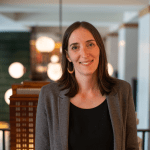
But if anyone can come close to that, it’s Hemi Tewarson, executive director at the National Academy for State Health Policy.
Her group, known as NASHP, exists to support state health officials of all stripes and right now, they need a lot of support.
So I wanted to hear what Hemi’s hearing — what states are thinking, feeling, doing now that we’re a few months removed from the passage of the so-called Big Beautiful Bill.
Here’s our conversation.
DG: Hemi, thanks so much for joining us on Tradeoffs.
HT: It’s great to be here. Thank you for inviting me, Dan.
DG: In one word, if you had to describe what these 90 days since the Big Beautiful Bill became law have been like for state health leaders, what’s that one word, Hemi?
HT: This is a hard question, Dan. As you know, I’m a person of many words, but I would say it has been a time of reflection.
DG: Okay. Say more.
HT: So states have had to think about so many different changes in federal policy, their own state budgets, how they’re working across states in new and different ways.
All at the same time — let’s just call it out — there’s been litigation going on and understanding that, new executive orders from the federal government, and in the midst of all of that, they have to figure out how they best continue with their programs and serve the people that are in their states. And I feel like we’re just at the beginning.
DG: And just some baseline information here for people who are not state officials. What’s the sort of general mandate that state officials understand their remit to be?
HT: They have programs that they run. They have policies that they create. And they have a budget they have to follow. So all of those pieces coming together take a lot of thinking, planning, organization, time, resources.
And so their job is to make sure they’re operating within the budget, that they’re coming up with the new policies that are going to really improve people’s health, and that they’re doing it in a way that also meets all the other external federal requirements, interests of their stakeholders, and also thinking about how the consumers are experiencing this at the end of the day.
DG: Alright, Hemi, I want to talk about where states are at with a few key provisions within the Big Beautiful Bill.
First, there’s this $50 billion pool of money for ‘Rural Health Transformation’ that states are jockeying for, with applications due next month.
These are one-time grants states can get to invest in rural health. And a lot of states are pretty hard up for money given all the cuts.
So how are they approaching this opportunity?
HT: So it’s, you know, $50 billion across 50 states for five years. That may seem like a lot of money, but it really does depend on the state. For some states, that’s going to be, like, completely transformational for the rural populations. For other states, it’s going to be sort of a smaller amount of money that they’re going to have to prioritize. But that said, there are a couple of things that states are thinking about.
DG: Hemi said one thing some states are considering is to reimagine how they pay rural health providers, many who struggle to stay afloat.
Rural areas stand to lose $150 billion in Medicaid spending as a result of the Big Beautiful Bill.
More than 300 rural hospitals face uncertain futures.
HT: So there are a couple of states thinking about can we take this money and really transform how we pay our providers? For example, do I consider a global budget for my rural hospitals?
DG: A global budget being?
HT: Meaning that they get paid one amount so it’s not based on the volume in their facility, but it’s a set budgeted amount that they would get which can help them plan for future years as opposed to being dependent on, like, did we have this many beds filled? Did we have this many people getting procedures? Which in rural areas is really hard because you just don’t have the volume of people there sometimes.
DG: Right, as opposed to a sort of a fee-for-service contract, which is very typical in many places right now, where the provider gets paid for every single individual thing that they do — the tests that they run, the procedures they conduct.
HT: That’s right. This would be a different idea to really think about is there a budget that, you know, you would factor all of those pieces in, but it would be a set amount and wouldn’t vary depending on, you know, who came in for a procedure or a service.
And then there’s another group of states, I’d say probably a larger group of states thinking about infrastructure in rural areas. So, you know, how do we really expand, for example, broadband and help these rural facilities build up their electronic health records, expand the telehealth capacity that they have? This money could provide a one-time investment that could then be used in future years.
DG: Federal health officials say they will announce the winners of this rural transformation money by the end of 2025.
Hemi, another big deadline creeping up quickly on states here is the need to enforce work requirements in their Medicaid programs, confirming that millions of folks on Medicaid have a job, or are volunteering, or going to school at least 80 hours a month to keep their coverage. States have to have this ready to roll by Jan. 1, 2027. What are they doing to get up to speed fast?
HT: Yeah, we’re really 15 months in counting at this point to Jan. 1, 2027. It seems far away. It’s really not. In the world of state budget and state procurement, that is a really short amount of time. States are trying to assess, like, what capacity do they have to actually implement this in terms of people, resources — meaning funding — and then technology because technology is a big piece of this.
DG: Let’s talk about technology for a second, Hemi, since you brought it up. States are going to need software that can do a lot, right?
Pull in people’s job data, verify if they are volunteering or going to school or whatever, if they meet one of the many exemptions included in the law — plus they’ve got to update that stuff as people’s situations change, they get laid off, move, graduate school.
Based on what the states are telling you, Hemi, how ready are the tech vendors to deliver on what the states actually need?
HT: I think it’s hard to know in this moment exactly what the solution will be.
DG: A quick note to listeners: Hemi’s puppy Ozzy joined our conversation briefly at this point so you might hear a few wags of his tail.
HT: But I do think states have a couple of common goals. One is: Are there ways to think about this so that you don’t have to do it 50 different ways 50 different times? So what pieces actually can be built that can be shared more broadly than just one state at a time?
The federal government is working on different ideas for technology. They are piloting with a few states a work verification program, like an app, that could reach people. So that’s one idea. I think there are some states that are like, we wanna redo our whole system, right? We want to have like a one-stop shop. That may all not be ready by Jan. 1, 2027.
So how do we think about what they can do at a minimum level to get ready for 2027 and what pieces can follow in a way that’s going to meet the requirements?
DG: Aside from the actual tech itself, Hemi, where else could states run into trouble here as they navigate what is, for many, uncharted territory?
HT: One thing that comes through on all of this is trust. This is about people reporting on different aspects of their lives in order to become eligible for Medicaid.
In order for people to do that, they have to have trust in the system. They have to understand what the requirements are, and there has to be a doable way for them to report things.
You and I, you know, could get asked lots of different questions from a state government or federal government and we may cringe, right? I mean, so we have to understand that people may feel the same way. How can they know that their information is going to be safe when they report it? And how do we partner with different organizations to get the message out and to build that trust?
That’s, you know, managed care plans in one instance, that’s providers in another. And there’s also a whole bunch of community-based organizations that really can reach folks in different ways than a state government can do.
DG: One last question about work requirements. Let’s talk about the work piece itself. And really, it could be work, it could be volunteering, it could be school, as we said.
To be clear, research suggests that most people on Medicaid already are working.
But for those that don’t currently meet this bar, what might states do to actually help them get there to find opportunities to work or train or volunteer?
HT: One example is peer supports. Those are people with lived experience who can really support and counsel those who have substance use disorder, and states have been talking about, you know, is there a way to create a pathway for training for those folks who want to qualify for Medicaid?
There are other programs that states have been investing in like apprenticeship programs. Those programs are often offered through the economic development office or an unemployment office in a state separate and apart from Medicaid.
Now the question is how do we bring those worlds together in a meaningful way so that those programs can be leveraged and expanded upon to ensure that people continue to have access to Medicaid coverage?
DG: After the break, Hemi’s hopes and fears for the future of Medicaid — and a vibe check from San Diego.
BREAK
DG: Welcome back. We’re checking up in today’s show on states and how they’re coping with the fallout from the sweeping slate of health reforms that Republicans passed this July.
Before a final couple of questions with Hemi Tewarson, I want to bring in senior producer Leslie Walker.
Leslie Walker (LW): Can I bother you for a second? My name is Leslie. I’m a health care reporter. I’m here just kind of talking to folks about what states are dealing with right now and what they’re thinking about.
DG: So Leslie, you were on the ground last month at that San Diego meeting that Hemi’s group put on. I hope that you have recovered from all that sun and sea.
LW: I have. Yes, I am safely back in the San Francisco fog.
DG: I’m glad you’re still in California, Leslie. Because, as a Californian, I want to talk with you about vibes? [Laughs] Inside that conference hotel, what were the vibes, Leslie?
LW: At best, I’d say getting down to business, like, there’s some tough stuff coming for sure and we’re here to figure it out.
At the same time though, Dan, a few folks told me they’d been to this meeting before and this was definitely the bleakest.
During one keynote, this state legislator that was on stage said that the more he’s come to appreciate the implications of this law for state budgets, the more he’s “praying for Medicaid directors.”
Then, there was this lady in front of me in the snack line.
Conference attendee: I don’t work in the Medicaid space, but that one’s going to be a nightmare. I’m glad I don’t work at that agency! That’s going to be a tough one for sure.
DG: Damn, that’s cold. And like what specifically, based on your non-scientific survey of, ya know, the conference lunch buffet, what was the number one thing keeping these folks up at night?
LW: I think, you know, I was listening in on that interview with Hemi and I think it’s what she said. It’s more the cumulation of things — just so many changes happening so fast — that’s the hardest part of this more than any one given thing.
I talked with one state health agency staffer who said even 90 days after this law’s passage she’s still spending three, sometimes four, hours a day parsing through the details and how her state can comply with the law while also doing as little harm to folks as possible.
That’s all time, she said, that can’t be spent on other projects.
DG: Sure, that makes sense. And I gotta think on top of time, there’s also a real financial cost to the states here. Did you get any sense of what that could be?
LW: I did. Of course, it varies a lot from state to state. But one staffer estimated the cost of enforcing these stricter Medicaid eligibility rules — the stuff you and Hemi were talking about — could run their state as much as $200 million.
And this staffer told me she’s really worried their legislature might not sign off on all that money, and their systems won’t work as well as a result. There will be more errors.
That’s something I heard a lot about in San Diego is these errors. States are really worried about them. Under this Big Beautiful Bill, if states have too many errors the feds can actually start to claw money back.
DG: The threat of that clawback is coming potentially at like the worst time for states. I mean, we’re already hearing about Medicaid programs in places like Idaho cutting the rates that they pay doctors and nursing homes.
LW: I think that’s right. And you know, on the topic of money, Dan, one last thing I just wanted to share that really stuck out to me was just how many private sector companies, consulting firms, tech vendors I saw in the mix in San Diego.
A couple were honest with me. They said I’ve never been at a conference with state officials before. But we’ve lost a lot of our federal contracts and we know states need a lot of help right now so we’re here looking for business.
DG: They see an opportunity and they smell the money.
LW: Indeed.
DG: Leslie, thanks for your report. I know how states grapple with the fallout from changes at the federal level is a story that you, and our entire team, are going to continue to cover in the months ahead.
LW: Absolutely. Thanks, Dan.
DG: Ok, Hemi, a couple final questions. It seems clear that Medicaid programs, assuming that these cuts remain, will look very, very different for lots of people in lots of states. What’s your prognostication? I know you don’t know, but what’s your guess as to how different the Medicaid program in particular will be for people five years from today?
HT: I can tell you my hopes. Maybe that’s a better way to frame it.
DG: I also want to hear your fears, but go for it. Let’s start with hopes.
HT: Ok, I’m going to start with the hope. I want to think that at the end of the day, there’s some things that we can really point back to and say, okay, this actually really helped the program improve and modernize — that there is going to be creative thinking about how we make eligibility processes easier for the consumers, that consumers can understand more about what this program is, that consumers have access to different supports that they don’t currently, for example, pathways to employment or pathways to education and training in a way that is different than what we see today because of these different requirements. That’s the hope.
DG: And what’s your fear around that?
HT: That, you know, do we truly have the capacity and the funding and the, frankly, trust from consumers and other partners to actually make this work? That’s the fear.
DG: Final question: What’s your advice to people working in state government who might feel demoralized or exhausted right now dealing with this fire hose of changes you’ve just outlined?
HT: It’s the ultimate mission of serving in state government is figuring out how to operate programs that can best meet the needs of the consumers in the budget that you have. So, staying true to that mission, understanding that things will look different, being prepared for change.
Knowing that you’re in it together and finding the mission and the inspiration because at the end of the day, you’re going to be the ones that can really impact people getting coverage and also the services that they need for their health.
DG: Hemi, thanks so much for taking the time to talk to us on Tradeoffs.
HT: Thanks for having me. It’s great to be here.
DG: I’m Dan Gorenstein. This is Tradeoffs.
Episode Resources
Additional Reporting and Resources on State Fallout from the Big Beautiful Bill:
- In Some States, Strapped Counties Must Impose Trump’s Medicaid Cuts (David Chen, New York Times, 9/30/2025)
- Medicaid standoff could put health care for many North Carolinians at risk (Jaymie Baxley, NC Health News, 9/29/2025)
- States Are Cutting Medicaid Provider Payments Long Before Trump Cuts Hit (Bram Sable-Smith and Sarah Jane Tribble, KFF Health News, 9/22/2025)
- States should be full steam ahead on Medicaid work requirements, experts say (Rebecca Pifer, Healthcare Dive, 9/22/2025)
- The rural health ‘Hunger Games’ are underway (Alice Miranda Ollstein, Politico, 9/15/2025)
- Allocating CBO’s Estimates of Federal Medicaid Spending Reductions Across the States (Rhiannon Euhus, et al; KFF; 7/23/2025)
Episode Credits
Guests:
- Hemi Tewarson, Executive Director, National Academy for State Health Policy
- Leslie Walker, Senior Producer, Tradeoffs
This episode was produced by Leslie Walker, edited by Dan Gorenstein, and mixed by Andrew Parrella.
The Tradeoffs theme song was composed by Ty Citerman. Additional music this episode from Blue Dot Sessions and Epidemic Sound.