

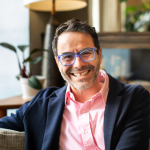

Pulitzer Prize-winning journalist Sarah Stillman explains why so many people with mental illness are starving to death in U.S. jails, who is profiting, and what can be done to prevent it.
Jails in the United States are required to provide health care for the people incarcerated within their walls. Reports of inadequate care behind bars, though, are distressingly common. And yet, Sarah Stillman, a Pulitzer Prize-winning staff writer at the New Yorker, was still shocked at what she found when she started looking into reports of people with mental illness starving to death in jails.
“I looked at many cases that I think could fairly be called homicides,” Stillman told us in a recent interview, “where people were actually looking on while someone starved to death or was dehydrated to death in front of them.”
Stillman documented more than 50 cases of people dying of starvation, dehydration or other medical crises in U.S. jails in recent years, almost all of whom had been arrested as a result of a mental health crisis. She found that many of these individuals were held in jails that outsourced mental health care to large private companies.
“To know that we’ve reached a point where starvation in a U.S. county jail, something that atrocious could happen while other people are not just looking on, but actually making millions of dollars — I think that speaks a lot to the failures of these systems,” Stillman said.
Here are some key takeaways from our conversation:
- Since the 1970s, many county jails have turned to a handful of large private companies to provide medical and mental health care. These companies, in theory, have more expertise and resources to care for people in jail — nearly half of whom have a history of mental illness. But a Reuters report from 2020 found that jails that contracted with the top five companies in the market had death rates that were 18 to 58% higher than those of jails whose medical services were publicly managed.
- Some deaths that Stillman uncovered involved jail or medical staff not providing sufficient food or water to people under their care. In other cases, people received inadequate treatment for their psychosis or severe depression — leading them to refuse to eat or drink. “Sometimes they became fearful that the jail was trying to poison them,” Stillman said.
- Stillman said these tragic deaths highlight the potentially deadly consequences of privatizing medical and mental health care in jails. But she also documented starvation deaths in jails that ran their own health care. “I’m not necessarily going to trust that if we handed all this over just to county sheriffs, that the system would necessarily be more accountable,” she said.
- Based on her reporting, Stillman believes policymakers need to devote more attention and resources to providing better mental health care to people before they end up in jail. She pointed to cities that send unarmed teams to respond to mental health crises as one possible solution. Another, she said, would be to reduce or eliminate cash bail, a system that requires people charged even with minor crimes to pay in order to be released from jail while their case works its way through the courts.
Listen to the full conversation with Stillman above or read the transcript below. You’ll learn more about people like Mary Faith Casey, a mother of two who went from 145 lbs. down to 76 lbs. after three months in jail.
Episode Transcript and Resources
Episode Transcript
Dan Gorenstein (DG): Here are a couple of staggering statistics. More than 5 million people cycled through U.S. jails in 2023. And nearly half of people in jail have a history of mental illness.
Jails are required to provide health care, but reports of them failing to do so are common.
News clip: A health care provider is raising red flags about mental health care services in the Shelby County Jail.
For many struggling with mental illness or addiction, spending months in the county jail can turn into a death sentence.
DG: Now, new reporting shows that people with mental illness often face a particularly cruel fate in jail: death by starvation.
Sarah Stillman (SS): I looked at many cases that I think could fairly be called homicides, where people were actually looking on while someone starved to death or was dehydrated to death in front of them.
DG: Today, Pulitzer Prize winning journalist Sarah Stillman explains why so many people are starving to death in U.S. jails, who is making money off of it, and what can be done to prevent it.
From the studio at the Leonard Davis Institute at the University of Pennsylvania, I’m Dan Gorenstein. This is Tradeoffs.
*****
DG: Sarah, thanks for being here. Really appreciate it.
SS: Yeah. Thank you so much for having me.
DG: Sarah Stillman is a staff writer at The New Yorker.
Sarah has written about human trafficking, foreign wars, immigration. She won a Pulitzer Prize in 2024 for her criminal justice reporting.
She says there’s a question that runs across all of her work: who stands to make money.
SS: You know, my very first piece for The New Yorker was about labor trafficking on U.S. military bases in Iraq and Afghanistan, and so many of the themes of that project feel so parallel to what I’m looking at now in the context of county jails and the privatization of mental health care there.
What we got when we tried to privatize U.S. wars is not actually that dissimilar from what we’ve gotten when we tried to privatize health care provision to the most vulnerable people in our own country.
DG: Which is what in a sentence?
SS: That the priority that gets attended to, is that the bottom line of a corporation gets served, but the public good does not.
To know that we’ve reached a point where starvation in a U.S. county jail like something that atrocious could happen while other people, not just looking on, but actually making millions of dollars. I think that speaks a lot to the failures of these systems.
DG: I’d like to dive into your article, Starved in Jail, this 10,000 plus word article that you published in The New Yorker in the spring. And it starts and is really anchored in the story of a woman named Mary Faith Casey.
Tell us a little bit about Mary if you would, please.
SS: Well, what interests me about Mary Faith Casey is she was such a loving, caring person who had two kids, Carlin and Karina, who she just adored. She was the kind of person who would sew their Halloween costumes by hand and go on their school field trips. And she was just a very engaged mom. But she was also as are so many people in our society, like struggling with mental health issues and addiction.
DG: Right? I mean, she had been diagnosed with post-traumatic stress disorder. Bipolar disorder, schizophrenia. She was on medication. All of which Mary told her jailers ultimately when she was locked up. What led to her being locked up in the first place, Sarah?
SS: Yeah, so our understanding of what happened is that her life had really gone quite off the rails in that she’d gone from being someone who was living like a kind of lavish life in the Coachella Valley with her husband and the two kids, and going on these fancy vacations and becoming friends with Phil Knight, the founder of Nike, to, you know, living in a park. She’d been living for many years in California, but moved to Arizona, where her son was. And that’s the point at which she was arrested on this probation violation and sent to the Pima County Jail.
DG: And what happened to Mary once she got into jail?
SS: Well, Mary had been physically relatively healthy at that point in time and she kind of gone back and forth between periods of being much more mentally healthy and periods where she wasn’t taking her medications that helped her a lot. And so when she entered the jail, she made clear she was someone who had struggled with mental health issues and needed psychiatric medication.
Her children’s lawyers now contend that essentially, the company that was responsible for providing that care, which is a company called NaphCare, wasn’t really able to provide her with adequate mental health care, which included Mary going quite a long stretch of time without the medications she needed.
DG: I mean, you chronicle this in the article. Mary went from 145 lbs. to when she appeared in court some four months later, I think 76 lbs.
SS: Yeah, she was visibly emaciated to the point that the judge was just completely shocked. And so Mary at that point was urgently hospitalized. But, she was so far gone from many months of starvation in the jail that she was unable to be revived.
DG: I want to pause here on this word starvation. Because I think the word starvation for some could conjure this idea of guards withholding food and water from people. But Mary was being given food. Mary was being given water. She just didn’t eat it. She didn’t drink much. You write that that’s actually a somewhat common symptom of many serious mental illnesses.
SS: Right. A very common symptom that emerged when they went untreated and oftentimes even put in solitary confinement untreated was that they became really fearful. And sometimes they became fearful that the jail was trying to poison them, which was the case for Mary.
There was also quite a number of cases I found where people were placed in solitary and severe depression took over when they were untreated. And so they just kind of ceased to eat.
And then there was a third category. I mean, tragically, unfortunately, there were definitely cases I looked at where the person simply wasn’t given sufficient food or was actively deprived of the food or water that they needed. So that certainly happened as well.
But many of the cases, it was more the consequences of untreated psychiatric distress and oftentimes the compounding factor of being put into solitary confinement when you’re in the midst of a mental health crisis.
DG: So one of the most perplexing parts of this, in my mind, is that you have staff at the jail, the jailers, the guards, but also a medical team that are watching this as Mary goes from 145 lbs. to 125 lbs. to 95 lbs. Is this like benign neglect? Is this a failure of knowing what to do? As you think about Mary’s case in particular, what dots were not getting connected?
SS: Yeah. I mean I think it’s quite a number of things. I think the lack of access to a speedy chance to go before a judge was one important part, because, frankly, again, her charges likely would have been dismissed or would have been a very minor consequence. And that could have happened speedily if she’d had her right to court.
But I think the most basic one was this was someone who had previously obtained psychiatric medications while incarcerated and she had done okay. And this had never happened.
DG: In the Pima County jail. She’d been there. This was her third stint there, in fact.
SS: Exactly. And so this was an instance where because of the failure to provide the medication she needed, to provide sufficient psychiatric oversight, she started skipping meals and then just essentially not eating or drinking very, very little and then was allowed to just kind of continue in this vein until she just withered away.
DG: And so what happened after Mary’s court case?
SS: So the judge agreed that Mary was quite emaciated. She was released to be hospitalized, given the state of the emergency. But ultimately the hospital, the doctors there realized that she was kind of beyond the point of return.
You know, they certainly did everything in their power, they say, to try to bring her back. But her organs, her system was just suffering from such an elongated period of neglect that that proved impossible. And so she was released to hospice care and essentially taken care of by her family to essentially die, which is what the family was there for.
Mary’s family: We love you, Mary, it’s all right. Mary, we love you.
DG: There’s this one video I think that you posted of Mary’s family surrounding her in her sister’s home after she left the hospital.
Mary family: Forever and ever. You go be with the angels.
SS: I really faced the reality that, like, this could happen to a lot of people, no matter how privileged they are, no matter how many resources they have. The neglect bested even the most determined family members and people who were willing to put any resource to bear to keep their loved ones safe. And so that was really jaw dropping, and eye opening for me.
DG: Mary died on October 6th, 2022. She was 65.
When we come back, Sarah explains how private companies are often involved in many of these starvation cases and what’s being done to prevent these tragedies from happening.
BREAK
DG: Welcome back. We’re talking with Pulitzer Prize winner Sarah Stillman, a staff writer at The New Yorker.
Sarah recently documented more than 50 cases of people dying of starvation, dehydration or other medical crises in U.S. jails, almost all of whom had been arrested as a result of a mental health crisis.
A big part of your story, Sarah, is that most of these people died in jails where the medical care had been contracted out to a handful of private companies. Can you just give us a quick primer on how this works? This contracting between the jails and these companies?
SS: Totally. So often what you see is that a county will be making a contract with a company like NaphCare is one, but there’s others like Wellpath, that offer mental health care and also medical care, often at a capped cost. So basically, any additional money that’s expended on care comes out of the corporation’s pocket, which many people argue disincentivizes the provision of adequate care. And is topped by what we’re seeing across the country, which is major staffing shortages and crises. So a lot of these companies aren’t actually staffing at the levels that they’re contractually required to do. So that’s another big factor.
DG: And you cite a Reuters report from 2020 that found that jails that contracted with the top five companies in the market had death rates that were 18 to 58% higher than those of jails whose medical services were publicly managed. Of the five companies studied, NaphCare, that you just mentioned, who oversaw Mary Faith Casey’s care in Pima County, had the highest death rate across a three year period.
Given these outcomes, given the stories that you’ve uncovered, why are counties still contracting with these companies? Like, I guess at the end of the day, I’m trying to understand the appeal of working with the private companies to provide this care.
SS: Yeah, I think it’s a really fair question. And this is where my own views got kind of complicated by my reporting, because I realized as much as I’m highly skeptical of the results we get when we privatize critical public services, I did talk in Arkansas to the sheriff there, and the sheriff was really candid about he was like, look, we’re being put in this weird position where, like, we are not equipped to be mental health providers. And we’re being used in that way because the front end services aren’t there.
So the problem is less about, you know, the privatization as it is about the fact that we’re being put in this role that we don’t want to be playing, that we’re not equipped to be playing, and I think there’s something quite compelling about that argument. I’m not necessarily going to trust that if we handed all this over just to county sheriffs, that the system wouldn’t necessarily be more accountable.
DG: So where do you land on this, on this question of privatization? My kind of like top line of what you just said is, it would make sense that a county jail says this is not what we know how to do. We jail people. We don’t treat them for mental illnesses. But as our institutions have become the places where these people are kept, we should be contracting with experts to deal with it. It sounds like there’s some sympathy you have there.
SS: I mean, I think we know for sure what’s not working, and that’s the current model, whether it’s private or whether it’s in many cases when it’s run by the sheriffs, it’s also unaccountable. I don’t think those are the only two options on the table. There are models that are growing of like actually deeply thoughtful, integrated health care provision that connects the front end, the period of incarceration and the period after incarceration. So I think that’s the realm where we need a lot more resources and we need a lot more experimentation.
But I think what I could say with absolute confidence is that the things that happen under the care of a private company are often hidden from view because they’re not subject to public records requests. They’re not subject to a lot of the kinds of transparency that public institutions are. And so the lack of public transparency in the privatization context is, I think, an area of serious concern.
DG: I know that NaphCare declined to comment on Mary’s case, except to say that they found the version of events outlined by her family’s lawyers as, quote, inaccurate and demonstrably false. You did talk with the CEO of NaphCare, a former Department of Justice lawyer named Brad McLane. What did Brad have to say?
SS: He agrees that at the front end of the system that we need clearer models for preventing people’s incarceration to begin with through actual, you know, true mental health care.
He, I think, made the good point that despite the fact that, you know, in the case of the place where Mary was in jail, the jail was understaffed, there’s an argument that county sheriffs can’t necessarily do the staffing job any better.
But then it’s not entirely clear to me that the depth of neglect that led to these instances is always being understood and acknowledged. And in some cases, some companies are outright denying it, despite the fact that they’re reaching these settlements with families often.
DG: Sarah reviewed more than 40 lawsuits involving claims of starvation, dehydration, and severe neglect in jails, many of which ended with multi-million dollar settlements paid by companies and taxpayers.
We’ve talked a lot about Mary Faith Casey. She was one of dozens of people who, you write, suffered a fate that you would have thought impossible in the 21st century. In an article full of chilling moments, though, this one may have been the most chilling for me.
Can you please read the passage about Holly Barlow-Austin, who died at age 47 in the Bi-State Justice Center in Texarkana, Texas, please.
SS: Barlow-Austin had serious health issues that the jail’s private operator and medical contractor, LaSalle Corrections, neglected to treat, leading to sudden blindness. She found it difficult to locate the food and water in her cell, and she began to go without it. In jail footage that I reviewed, she realized that she’d knocked over a precious cup of water with her foot, tried to drink from it, and curled up in a fetal position when she found that it was empty.
Another day, she screamed and waved her arms, seeking help from a nurse. The nurse looked at her, then left, jotting. According to records, quote, zero needs voiced and quote zero distress noted. Barlow-Austin died the following week of meningitis and other complications. LaSalle Corrections and other defendants agreed to a $7 million settlement.
DG: You go on to write that an autopsy of Lason Butler, a 27 year old dehydration victim in South Carolina, showed, quote, possible postmortem rodent activity. Another preliminary autopsy, this one of Ramon McGhee, a 42 year old from Memphis, Tennessee, suggested that McGhee’s body was plagued with, quote, extensive insect infestation.
Maybe this is a naive question, but how is it possible that this lack of care, this torture, as you describe it, is allowed to happen?
SS: That was the question I had is how do we move in our minds from just the cliched idea that we all already know that, like, okay, yeah, people are not being treated well in jails and it must be really crappy in there. I mean, this was so far beyond anything I ever would have imagined. Like, so horrible to even know how to begin to write about it.
And I remember one lawyer, before sending me one of the jail death videos, said, like, this is going to stain your brain. And he was right. I mean, like, it has stained my brain. There were many nights working on this story. I truly could not sleep because I watched videos. And it wasn’t just videos of people being starved across days and days and weeks, but also people being like, mocked at and laughed at while they’re in immense suffering and solitary confinement. And that was really hard to compute.
Like, I wish I could answer that for you, but all I know is just the level of urgency of what I saw. I don’t know how we’ve allowed it, is I guess my answer. I really don’t know.
DG: What policy fixes are people around the country pursuing to see that this stop?
SS: Yeah, I think it’s exciting to look at the front end interventions. This idea of really testing out having mental health providers or specially equipped teams that are there for mental health crises calls as one potential experiment that I think is really worth investing in.
I think another huge movement that’s, you know, controversial one in our country, but we really need to look at it is looking at the cash bail system. So I think about Larry Price. I think about his starvation death in Arkansas, and I think about the fact that he would have only had to put down $100 to get out on bail, and his death would have been prevented. And that was true of many of these deaths.
And then I think, third, we need to do a real examination of like, why can’t people get access to good care for addiction and for mental health in their communities.
Mary’s son told me very frankly, he said, one of the reasons this was hard to talk about is that he also is struggling with mental health crises. And he said that every time he sought help, he’s been kind of kicked in the face by the system he feels, and that the system is willing to pay the money when it comes to incarcerating someone, but maybe less willing to pay the money when it comes to, you know, treating them to begin with.
DG: Final question, Sarah. You’ve learned things. You’ve learned about the depth of the problems. You’ve been very clear about that. Setting that aside, how are you different now for having done this reporting, if at all?
SS: I think a little part of me is just like always going to be heartbroken by the things I saw while doing this project. I don’t think I’m ever going to get over that. Like just the depth of having to face, like the kind of cruelty we can do to each other when we have dehumanizing systems in place. Like that was really something that I’m not going to get over, and I just accept that that’s part of doing this work is like you take in things that, yeah, that are going to stain your brain.
But it was kind of refreshing to think of how complex the problem is, because it makes me feel like there’s so many tributaries that will feed change here and so many different systems that need to be revised, and people are doing really active work in all of those contexts. People are working to transform housing injustice and the lack of access to affordable housing, and people are working to find better treatments for mental health crisis and addiction.
And I was just looking yesterday at this Bible passage that I ended the piece with that Mary had put into her son’s Bible soon before she died. And it’s Isaiah 43:18 and it’s, “See, I’m doing a new thing now. It springs up. Do you not perceive it? I am making a way in the wilderness and streams in the wasteland.” And I think about that, that we’re just going to have to, like, do a new thing. And like that has been very renewing for me. It’s like, that’s what we need, that those are the experiments we need. And so I’m heartened by the people who are committed to that.
DG: Sarah, thanks so much for taking the time to talk to us on tradeoffs. I Really appreciate it.
SS: Yeah, thanks for these substantive questions. I really am grateful.
DG: I’m Dan Gorenstein, this is Tradeoffs.
Episode Resources
Additional Reporting and Resources on Jail Starvation:
- Starved in Jail (Sarah Stillman, New Yorker, 4/14/2025)
- Starved for Care (Investigative Reporting Lab, Yale University)
- The Hidden Health Care Crisis Behind Bars: A Randomized Trial to Accredit U.S. Jails (Marcella Alsan and Crystal Yang, NBER, January 2025)
- The Fifth Branch (Tradeoffs, July 2024)
- How Medicaid Mental Health Coverage Could Keep People Out of Jail (Kosali Simon, Tradeoffs, 1/7/2022)
Episode Credits
Guests:
- Sarah Stillman, Staff Writer, New Yorker; Founder, Yale Investigative Reporting Lab
This episode was produced by Ryan Levi, edited by Dan Gorenstein, and mixed by Andrew Parrella and Cedric Wilson.
The Tradeoffs theme song was composed by Ty Citerman. Additional music this episode from Blue Dot Sessions and Epidemic Sound.
Tradeoffs reporting for this story was supported, in part, by the Sozosei Foundation.
Comments are closed.