
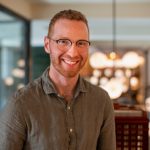
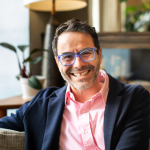

A leading addiction expert explains how he’s driven by the memory of a friend who died, and why he believes giving data on the drug supply to people on the street is more important than using it to inform national drug policy.
Note: This episode was originally published July 31, 2025. The transcript was updated on Dec. 11, 2025 when the story re-aired. No other episode details have been updated.
For the first time in a long time, there’s some good news in America’s overdose epidemic. In 2024, nearly 30,000 fewer people died of an overdose than in 2023 — a 27% drop.
Experts say several factors have likely contributed to the steep decline in drug fatalities, including a less deadly drug supply, easier access to addiction treatment and increased distribution of naloxone (also known as Narcan).
For people like Nabarun Dasgupta, a University of North Carolina epidemiologist who studies street drugs, this is the moment he’s been waiting for.
“I felt like I could exhale for the first time in 20 years,” Dasgupta told us in a recent interview. “When we verified [the data] and felt like this [decline] was real, I think I slept better that night than I had in a long, long, long time.”
The work is personal for Dasgupta. He started analyzing overdose death data two decades ago when a close friend died of a heroin overdose. As a self-described numbers nerd, Dasgupta hoped digging into the data would help him cope.
“[He] was the first one who really connected me with the human side of the drug problems in the United States,” Dasgupta said of his friend and former colleague, Tony Givens, who died in 2004. “It was just super hard to feel him disappear from my life.”
What started as an act of self-soothing for Dasgupta quickly became a calling. He’s now one of the country’s leading experts on the epidemiology of street drugs, and his lab’s analyses of overdose trends and the ever-changing drug supply are followed closely by policymakers and journalists.
But Dasgupta told us his most important audience — and inspiration — are the people who have died or could die of an overdose.
“Our primary mission is getting the information back to individuals who use drugs,” Dasgupta told us. “Their lives are on the line.”
Below are highlights from our wide-ranging conversation, which has been lightly edited for length and clarity.
TRADEOFFS: Who was Tony Givens? Why was he important to you?
NABARUN DASGUPTA: We met in 2002 at Yale, where I was a student, and he was one of the outreach workers. He had a lot of street experience, and I was meant to be learning how to do scientific research in the field with respect for the community.
Tony was just a huge spirit and super compassionate. I remember the first weekend we were out doing field work. We were in Maine, and I was a student — very hard up for money. He came with me to T.J. Maxx, and it turned out I didn’t have enough money to buy underwear, like on my first day on the job. And Tony put out like a $50 bill and was like, “I got you, man, I got you.” So that’s the kind of guy he was.
There are some people in your life who are more than mentors. They serve the role of a moral compass, and Tony was the first one who really connected me with the human side of the drug problems in the United States.
TRADEOFFS: Can you tell us what happened to Tony?
DASGUPTA: When I met him, he hadn’t had a drug problem in decades. But he went through some emotional turmoil with a girlfriend and with a close friend. Things spiraled for him, and he decided to end his life. So it was an overdose, but it was an intentional overdose. It was just super hard to feel him disappear from my life.
TRADEOFFS: So you lose Tony, and you have this hole. And one of the ways, I’m guessing, that you’ve filled holes in your life in the past is to go to numbers — the certainty that comes from math. When you went to the numbers to try to put Tony’s death into context, what happened? And how did that lead you on this path that you’re on still today?
DASGUPTA: I thought it was going to be an easy question: How many overdose deaths are there in the United States? And at that time — this is 2005 or so — CDC wasn’t putting out those numbers. So what I was directed to, by CDC, are these national files that have one row for each person who has died in the United States — of all causes. And our goal would be to pluck out which ones of those were overdoses.
In order to even download the data, you have to have permissions and software and write code. I figured it out, working on that by myself at night outside of my day job. And when I finally felt confident about it, I looked up and realized, I guess I have all this code and access to data, and I can ask all sorts of other questions of the data. That was how Tony’s death pushed me into trying to understand these numbers and tell a better story with them.
TRADEOFFS: My sense of your work at its most practical, is the testing of the [drug] supply — understanding the safety of what is being bought and sold [on the street]. Can you explain how your testing program works?
DASGUPTA: We get drug samples directly from people who use drugs, along with programs that are providing frontline public health services to keep people alive. Once the samples arrive on campus, we analyze them and figure out exactly what’s in them — every single substance. We put the results on the website so that the people who are using drugs can get the results first.
We can identify if things have been added to it that are dangerous beyond, say, fentanyl or methamphetamine. We’ve identified over 400 unique substances in the drug supply, which gives you a sense of just how unreliable and unpredictable the drug supply is at this current moment.
TRADEOFFS: If you could get any data on the behavior of people who use drugs, what’s the data that you would want that would help us think more clearly about how to further reduce the 80,000 overdose deaths that we saw last year?
DASGUPTA: I would want to know why people are still using fentanyl and street opioids. We hear in our field studies — these are like sociological, qualitative assessments — that people are no longer using to get high; they’re using to prevent withdrawal. I think asking, “Why would you still keep using, despite what you know about fentanyl and what you’ve seen happen to your friends?” would unlock an understanding of the barriers that people face to making real changes in their lives.
TRADEOFFS: What you’re saying, I think, is that there is an opportunity for policymakers to access this knowledge on the street and use it to better inform their policymaking.
DASGUPTA: Yes, theoretically there is that opportunity. But our primary mission is getting the information back to individuals who use drugs. Their lives are on the line. We, as scientists and policymakers, are not affected in the same way. So we try to get the information back to the community first, let them do with the information what they need to do to protect themselves. And then we can find patterns that can inform policy and science. But that’s really a secondary aim.
TRADEOFFS: What about someone who says the best way to help people on the street is to create better policy? That going one by one with people is not efficient when the problem is still so enormous?
DASGUPTA: Over the last 50 years, U.S. drug policy has not done a particularly good job. Overdoses have reached historically high levels. So when we throw up our hands and say, “this is too big of a problem to personalize and to solve,” I think we’re doing ourselves a disservice. It might be time to move away from a national drug policy and have localized, regional or even city-level drug policy that fits what is happening in the drug supply.
TRADEOFFS: You almost have a free-market approach in your perspective: Consumers need to know what is in the supply at an individual level, and we need to trust that consumers are, more often than not, going to make smart, rational choices.
DASGUPTA: Absolutely. Drugs are a free market. They’re very lightly regulated, and there’s a lot of untapped potential by looking at people who use drugs as consumers — to empower them to make changes on a grassroots level, in a way that top-down law enforcement efforts cannot reach, and have not in the last 20, 30, 40, 50 years of drug policy in the United States. The drug supply has gotten more intense, more dangerous. We need to do something that will break that cycle.
TRADEOFFS: When I’ve talked to you in the past, you are upbeat, often sunny. At the same time, I’m quite confident this work has taken a real toll on you. How do you describe that toll?
DASGUPTA: On good days, I try to harness it as the reason why I have to keep going. And other days, I’ll just disappear myself into paperwork tasks and doing expense reports, to not have to directly engage with death. My cell phone contains millions of death records, and it’s like a weight in my pocket being carried around, just feeling that level of loss.
People will send us drug samples, and they’re in these white cardboard boxes. And oftentimes on top of it, we’ll see handwritten notes and little figures drawn. People saying, “Thank you,” or “Your service helped someone save their life.” Having those types of notes every week really makes a difference. Just the personal feeling of, “OK, this isn’t just data collection. This is actually doing something in service.”
TRADEOFFS: In a sentence, what would Tony say about the work that you’ve done?
DASGUPTA: “You’ve done good, but you have a lot to learn.” It’d be delivered with a laugh and a pat on the back and a hug, and probably some tears in his eyes for being proud of me.
I know there are a lot more people who are going to die, but, I think maybe, just maybe, for the first time in two decades, I feel like, OK, we’re headed in the right direction.
Episode Transcript and Resources
Episode Transcript
Dan Gorenstein (DG): Hi, Dan here.
We’re continuing our holiday season profiles of people trying to tackle health care’s biggest challenges
Nabarun Dasgupta has spent two decades studying and trying to turn the tide on America’s drug addiction and overdose crises.
His work was recognized this fall with a MacArthur Fellowship, often known as a “Genius Grant.”
I talked with Nab in July about the very personal reasons that drive his work and a lot more.
Stay tuned to the end of this episode for some updates.
ORIGINAL STORY:
DG: For years, the data on drug overdose deaths told a clear, consistent, heartbreaking story.
Clip: Last year more than 47,000 people died from a drug overdose in the United States.
Clip: 59,000…
Clip: 81,000…
Clip: More than 100,000 deadly overdoses…
DG: Starting last year … the data finally started to tell a different story.
Clip: Drug overdose deaths in the U.S. last year plunged to their lowest annual level since 2019.
Clip: There were 30,000 fewer drug overdoses in 2024 compared to the year before.
DG: The new trend leaves experts with a rare feeling of hope. National policymakers are celebrating their work to expand treatment and restrict the drug supply, namely fentanyl. But one leading addiction scientist says to make more progress, we need to give people who use drugs better information.
Nabarun Dasgupta (ND): Our primary mission is getting the information back to individuals who use drugs. Their lives are on the line.
DG: Today, why focusing on people over policy could be the key to driving down deadly overdoses.
From the studio at the Leonard Davis Institute at the University of Pennsylvania, I’m Dan Gorenstein. This is Tradeoffs.
******
ND: I can vividly remember the first time I saw a friend’s death record in the data set.
DG: This is Nabarun Dasgupta at the University of North Carolina, reading from an essay he wrote called “The Ghost in the Machine: The Emotional Gravity of Conducting Mortality Research.”
ND: I caressed the row with my mouse. I left the window open on my desktop for days, feeling his presence emanating through pixels.
DG: Nab, as he’s known, collects data on street drugs and overdoses. He’s been doing this work for 20 years, inspired, he told me, by the loss of his friend.
ND: The reason we do this work is often deeply personal, and the way that the data are presented are very antiseptic and emotionally truncated. Just imagine a spreadsheet with millions of rows. And there’s a couple dozen columns that have you know, sex and age and all the circumstances of death. But that doesn’t really tell a story about that person’s life.
DG: Who was the friend that you saw in the data set?
ND: His name was Tony Givens. We met in 2002 at Yale, where I was a student, and he was one of the outreach workers. He had a lot of street experience. And so I was meant to be learning how to, you know, do scientific research in the field with respect for the community.
DG: And who was Tony? Why was Tony important to you?
ND: Oh, man. Tony was just a huge spirit, and he was super compassionate, too. I remember the first weekend we were out doing field work. We were in Maine and we were doing a study, and I was very hard up for money, and I needed to buy underwear. And he came with me to TJ Maxx, and it turned out like I didn’t have enough money to buy underwear, like on my first day on the job. And Tony put out like a $50 bill and was like, “I got you, man, I got you.” So that’s the kind of guy he was.
DG: The kind of guy who buys underwear for you.
ND: Yes, buys underwear for strangers.
There’s some people in your lives who are more than mentors. They serve the role of a moral compass, and Tony was really kind of the first one who really connected me with the human side of the drug problems in the United States.
DG: And can you tell us what happened to Tony?
ND: Yeah, he had a history of drug use, but when I’d met him, you know, he hadn’t had a drug problem in, like, decades. And he went through some emotional turmoil with a girlfriend and with a close friend. And things kind of spiraled for him, and he decided to end his life. So it was an overdose, but it was an intentional overdose. And, yeah, it was just super hard to feel him disappear from my life.
DG: So you lose Tony, and you have this space, this hole, right? And one of the ways, I’m guessing, that you’ve filled holes in your life in the past is to go to numbers. The certainty that comes from the math, right? When you went to the numbers to try to put Tony’s death into context, what happened? And how did that lead you on this path that you’re on still today?
ND: So I thought it was going to be an easy question. How many overdose deaths are there in the United States? How many heroin overdoses specifically? And at that time – this is 2005 or so – CDC wasn’t putting out those numbers and reports. So what I was directed to by CDC are these national files that have one row for each person who has died in the United States of all causes. And our goal would be to pluck out which ones of those were overdoses.
In order to even download the data, you have to have permissions and software and write code. And so I figured it out, working on that by myself at night. When I finally felt confident about it, I looked up and realized like, well, I guess I have all this code and access to data, and I can ask all sorts of other questions of the data. And that was kind of how Tony’s death pushed me into trying to understand these numbers and tell a better story with them.
DG: So, like you started this process as a way to kind of self-soothe. It sounds like somewhere along the way, you actually realized maybe a great way to honor the death of your friend was to dive deep into this work.
ND: Yeah, that’s right. I mean, even something as simple as, you know, is there a rural/urban divide in overdose deaths? That is something that we take for granted now as something we understand. But we hadn’t asked that question at that time. And suddenly, those little questions that I was asking for self-soothing were forming themselves into a body of actual knowledge.
DG: You end up creating this new knowledge base, and you really come to sort of a three-pronged problem with our country’s overdose data: The numbers were hard to access for the average person. It was unclear how reliable or accurate the numbers were. And third, you could see that it would be very difficult for most people to use the data in a way that could actually help people out on the street.
So, 20 years later, here we are. Where have we made the most progress?
ND: So I think there’s definitely been progress. In terms of access, we see every state has an opioid-overdose dashboard. Some of them are updated two years, three years after-the-fact, and others are pretty much real-time. So there’s a difference in quality.
I think there’s been tremendous improvements in accuracy over the last 20 years largely because medical examiners chose to standardize how they report overdoses.
The part that we still lag on is the last one: How do we make these data useful? Most of the time the data are so far abstracted from people whose lives are represented there and filtered through academics and then government. And then disseminating results back to individuals becomes almost an afterthought. And so I think that’s where I strive to do better.
DG: My sense of your work at its most practical, is the testing of the supply — understanding the safety of what is being bought and sold. Can you explain how your testing program works?
ND: We get drug samples directly from people who use drugs, along with programs that are providing frontline public health services to keep people alive. Once the samples arrive on campus, we analyze them and figure out exactly what’s in them, every single substance. We put the results on the website so that the people who are actually using drugs can get the results first.
DG: It sounds like you’re looking for anything that people might not be expecting in their street drugs.
ND: Yeah. We can identify if there’s things that have been added to it that are dangerous beyond, say, fentanyl or methamphetamine. We’ve identified over 400 unique substances in the drug supply, which gives you a sense of just how unreliable and unpredictable the drug supply is at this current moment.
DG: Nab says in the last three years, his lab has analyzed about 15,000 drug samples from 40 states.
When we come back, Nab gets into a few theories that may help explain the big drop in fatal drug overdoses, and why he’s less interested in using data to inform big policy change.
BREAK
DG: Welcome back. We’re talking with Nabarun Dasgupta. He’s spent the last 20 years collecting data on street drugs and overdose deaths.
So, Nab, the CDC announced this spring that 30,000 fewer people died of an overdose in 2024 than in 2023. That is a 27% drop. This is an unprecedented decline, as you know. How did you feel when you saw this?
ND: I was very skeptical. It’s my job to be a professional skeptic about these specific data. But I felt like I could exhale for the first time in 20 years. It’s demoralizing, year after year, when those numbers come out, to see how much higher they’ve gotten every year. When we verified it and felt like this was real, it was just — I think I slept better that night than I had in a long, long, long time.
DG: You really did?
ND: Yeah.
DG: Why?
ND: Because I felt like we had turned a corner. There’s this accumulated self-helplessness that starts to happen when you are handing out naloxone, getting people into treatment, doing all the things to prevent overdose and the numbers still keep going up. It makes you really question what you’re doing. And what it felt like for the first time, in seeing those numbers change, was like, wow, this is actually working.
DG: So the question that everybody has obviously been asking, Nab, is what’s caused this big drop in overdose deaths. There are lots of theories, as you know, and there are two that I think are particularly interesting and important that I’d like us to talk about.
The first is that the drug supply itself, the product, has become less deadly. We know that the federal government has been cracking down on fentanyl. We also know that the manufacturers of these street drugs are using less fentanyl in their products. Do you think those two factors are contributing to the decrease in mortality that we’re seeing?
ND: So the crackdown on fentanyl specifically has led the market to look for alternatives. There are three sedatives that are now being mixed in with fentanyl and in some places, completely replacing fentanyl, that have a lower overdose-risk profile. They have other problems like skin wounds and super heavy sedation. But the consistent thing is that with these three substances, people use less and they use less often. So fewer rolls of the dice, fewer chances for an unintended overdose. So I think that’s one part of what’s happening. The second factor — the amount of fentanyl per bag or per pill has declined a little bit.
DG: If part of what’s driving the decrease in deaths is that the supply on the street is getting safer, does that suggest to you at least, Nab, that more attention needs to be paid to what is in the supply? That we need to get more serious about regulating the supply?
ND: I think so. I think regulating the supply makes a lot of sense. But let me just back up and say, I don’t know that the drug supply is necessarily any safer. It’s safer in terms of this one particular outcome of overdose death. But if you have something that’s like super sedating, then people who use that and are unhoused, for example, are going to be at greater risk of having their things stolen, and assault and rape. The additives have also made drug treatment more difficult.
None of this is consumer-friendly experimentation with the drug supply. So I think a regulated drug supply would be a logical conclusion to not having street chemists make these decisions when better alternatives are available.
DG: The other theory that I want us to talk about is that consumer behavior is changing. People who use opioids are clearly aware of the dangers of fentanyl. How big of a deal is it that consumers appear to be more fentanyl savvy?
ND: So I think part of the behavior change is fundamentally linked to age. Gen Z has a much lower rate of overdose deaths than their parents’ generations had at that same age. They’re more likely to be interested in cannabis or in ketamine or mushrooms and other psychedelics. And what we have in the United States is over 1.5 million kids who have lost a family member to an overdose death. And that is, I think, fundamentally what has changed some of Gen Z’s perceptions towards opioids.
DG: If you could get any data on consumer behavior, what’s the data that you would want and need that would help us think more clearly and carefully about how to further reduce the 80,000 deaths that we saw last year?
ND: I would want to know why people are still using fentanyl and street opioids. We hear in our field studies – these are like sociological, kind of qualitative assessments – you know, people are no longer using to get high; they’re using to prevent withdrawal. I think asking that question of, ”Why would you still keep using, despite what you know about fentanyl and what you’ve seen happen to your friends?” would unlock an understanding of the barriers that people face to making real changes in their lives.
DG: What you’re saying, I think, is that there is an opportunity for policymakers to access this knowledge that lives on the street, and use it to better inform their policymaking.
ND: Yes, that is theoretically like there’s that opportunity. But our primary mission is getting the information back to individuals who use drugs. Their lives are on the line. We as scientists and policymakers are not affected in the same way. So we try to get the information back to community first, let them do with the information what they need to do to protect themselves. And then we can find patterns in that that can inform policy and science. But that’s really a secondary aim.
DG: What about someone who says the best way to help people on the street is to create better policy, that going one by one with people on the street is not an efficient way when the problem is so enormous — 80,000 people dying of an overdose?
ND: Over the last 50 years, U.S. drug policy has not done a particularly good job. Overdoses have reached historically high levels. So when we kind of throw up our hands and say, this is too big of a problem to personalize and to solve, I think we’re doing ourselves a disservice. It might be time to move away from a national drug policy and have localized, regional or even city level drug policy that fits what is happening in the drug supply.
DG: You think that trying to arm people who use drugs with better information about what is in the drug supply, is the most effective way to reduce deaths. You almost have a kind of like free market approach in your perspective, which is consumers need to know what is in the supply. And we need to trust consumers are more often than not going to make smart, rational choices. You’re like a very pro-market approach.
ND: Absolutely. Drugs are a free market. They’re very lightly regulated and there’s a lot of untapped potential by looking at people who use drugs as consumers to empower them to make changes on a grassroots level in a way that top down law enforcement efforts cannot reach and have not in the last 20, 30, 40, 50 years of drug policy in the United States. The drug supply has gotten more intense, more dangerous. We need to do something that will break that cycle.
DG: We’ve heard from several addiction experts who are worried that this progress we’re seeing will be undermined by changes from Congress and the Trump administration. Congress, as you know, just passed the big cuts to Medicaid, which is the largest single payer of care to treat people who use substances. The team behind the country’s biggest annual survey about drug use, was laid off. How worried, Nab, are you that the data will become less reliable, less accessible?
ND: All the ones that you mentioned I do agree with are problems, but the one that keeps me up even more is the assistance that CDC was providing to state medical examiners and coroners to improve their methods on overdose death data. That has been one of the unsung benefits over the last two presidential administrations since at least 2018, when CDC started investing in improving the state and local death determination and investigation systems. So I’m very worried about that.
DG: When I’ve talked to you in the past, you are upbeat, often sunny. At the same time, I’m quite confident this work has taken a real toll on you. How do you describe that toll?
ND: On good days, I try to harness it as the reason why I have to keep going. Other days I’ll just disappear myself into paperwork tasks and doing expense reports to not have to directly engage with death. My cell phone contains millions of death records, and it’s like a weight in my pocket being carried around, just feeling that level of loss.
We talk about the work we do as not “research.” We talk about it as “science and service.” And it’s really that concept of we are here to serve people who use drugs. And if we stay true to helping them first, we’ll learn enough to start connecting some dots and reflecting some trends back to them that might help them.
DG: And I suspect that it is helping people that allows you to continue to want to carry this weight.
ND: Absolutely. I mean, part of our lab service involves people sending us drug samples, and they’re in these white cardboard boxes. And oftentimes on top of it, we’ll see handwritten notes and little figures drawn, people saying thank you, your service helped someone save their life. And you know, having those types of notes every week really makes a difference. Just the personal feeling of, OK, this isn’t just data collection. This is actually doing something in service.
DG: In a sentence, what would Tony say about the work that you’ve done?
ND: You’ve done good, but you have a lot to learn. It’d be delivered with a laugh and a pat on the back and a hug, and probably some tears in his eyes for being proud of me.
I know there’s a lot more people who are going to die, but, I think maybe, just maybe for the first time in two decades, I feel like, OK, we’re headed in the right direction.
DG: Nab, thanks so much for taking the time to talk to us on Tradeoffs.
ND: My honor, thank you for having me.
UPDATE:
DG: Life has been a whirlwind for Nab since he won the MacArthur Fellowship in October a few months after this interview.
He’s still figuring out what he’ll do with the $800,000 prize money.
He’s interested in expanding his drug checking work to Latin America and spending more time studying why consumer demand eventually dries up for certain drugs.
Nab says he hopes his award gives strength to others in the field to keep pushing to make life better for people struggling with addiction.
I’m Dan Gorenstein, this is Tradeoffs.
Episode Resources
Additional Reporting on the Drop in Overdose Deaths:
- Trump targets supervised consumption of drugs and harm reduction in executive order (Lev Facher, STAT News, 7/25/2025)
- GOP tax law will increase overdose deaths by 1,000 each year, analysis finds (Lev Facher, STAT News, 7/18/2025)
- Drug deaths plummet among young Americans as fentanyl carnage eases (Brian Mann, NPR, 6/10/2025)
- They’ve tracked Americans’ drug use for decades. Trump and RFK Jr. fired them (Rhitu Chatterjee, NPR, 5/29/2025)
- U.S. Overdose Deaths Decrease Almost 27% in 2024 (CDC National Center for Health Statistics, 5/14/2025)
- Sedative ‘dex’ is replacing ‘tranq’ in illegal drug supply and causing excruciating withdrawal (Lev Facher, STAT News, 5/1/2025)
- 8 theories why fentanyl deaths are plummeting (Brian Mann, NPR, 3/24/2025)
- Deadliest phase of fentanyl crisis eases, as all states see recovery (Brian Mann, NPR, 3/10/2025)
- What’s Behind the Remarkable Drop in U.S. Overdose Deaths (Jan Hoffman and Noah Weiland, New York Times, 11/21/2024)
- Are overdoses down and why? (Nabarun Dasgupta, Opioid Data Lab, 9/18/2024)
- Ghost in the Machine: The Emotional Gravity of Conducting Mortality Research (Nabarun Dasgupta, American Journal of Public Health, 7/2021)
Episode Credits
Guest:
- Nabarun Dasgupta, Epidemiologist, University of North Carolina Street Drug Analysis Lab and Opioid Data Lab
The Tradeoffs theme song was composed by Ty Citerman. Additional music this episode from Blue Dot Sessions and Epidemic Sound.
Additional thanks to Keith Humphreys.
This episode was produced by Ryan Levi, edited by Deborah Franklin and Dan Gorenstein, and mixed by Andrew Parrella.
Tradeoffs reporting for this story was supported, in part, by the Foundation for Opioid Response Efforts.