

Why are a handful of sheriff’s departments in California refusing to respond to some 911 calls that involve a person with mental illness?
“Mental illness is not a crime” has become a rallying cry for improving the treatment of people in crisis. As we explained last year in our special three-part series “The Fifth Branch,” more than 100 communities across the U.S. now send mental health experts instead of armed police to certain 911 calls.
Now, a handful of sheriff’s departments in California have started refusing to respond to some 911 calls that involve mental health issues. The most prominent official involved is Sacramento Sheriff Jim Cooper, who announced in February that, going forward, his deputies would only respond to mental health calls if a crime had been committed or was in process, or if someone other than the person in crisis was in imminent danger.

Join us for a virtual discussion with Penn LDI on June 6 at noon ET, to learn about the programs targeted by federal cuts, the lessons we’ve learned about how to prevent gun violence, and what the administration’s actions could mean for communities impacted by this uniquely American epidemic. Learn more and register.
“We wear the badge, we carry the gun,” Cooper said at his press conference announcing the new policy. “We deal with crime, not mental health crises.”
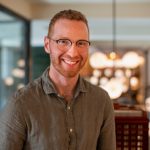
Veteran journalist Lee Romney has covered mental health issues in California for nearly 25 years and witnessed the growing consensus that police should be less involved in mental health crises. Lee was shocked by Cooper’s announcement.
“It seemed like he was throwing the baby out with the bathwater,” Lee told us. “Law enforcement is recognizing that things go better for them when they collaborate with clinicians, with paramedics. I think he’s just taken it a step beyond.”
Lee wrote about the new policy for CalMatters, a nonprofit newsroom that covers California. She talked with Cooper and other law enforcement leaders, along with family members of people with severe mental illness.
Here are a few takeaways from our conversation with Lee:
- Lee says Sheriff Cooper’s decision to pull back on mental health calls was motivated in part by concerns over legal liability. Cooper has cited a recent federal court ruling that held two Las Vegas police officers liable for killing a mentally ill man in 2019. But other legal experts say Cooper’s concern is misplaced. They say cops still have legal protections when answering mental health calls.
- At least a handful of sheriff’s departments are following Sacramento’s lead. “I think that they are trying to make a point,” Lee said of these departments. “They’re trying to force a broader conversation and say, ‘Hey, it’s not our job to fix the mental health crisis problem.’ ”
- Critics — including lawmakers, firefighters and community members — worry Cooper’s policy will put civilians and first responders at risk. But Lee says some mental health advocates are cheering the move. Cooper’s decision, they say, has pushed Sacramento to increase its efforts to come up with better ways to respond to mental health crises without sending the police.
Listen to our full conversation with Lee above or read the transcript below. It includes the powerful story of a scared mother who felt abandoned when her teenage daughter was in crisis and Sacramento deputies refused to respond.
Episode Transcript and Resources
Episode Transcript
Dan Gorenstein (DG): Hey, it’s Dan. We are tracking Republicans’ proposal released earlier this week that makes major cuts to the country’s Medicaid program. Early estimates suggest millions of people could become uninsured if this plan becomes law.
Next week, we’ll have a story that looks at what this plan could mean for patients, health care providers and the larger economy. Until then, you can check out our previous reporting: why many Republicans think a smaller Medicaid is a better Medicaid, what we’ve learned about Medicaid work requirements, and how these program cuts could impact people with disabilities. You can find all of that on our website, tradeoffs.org.
Today we’ve got a story on a topic we’ve covered closely over the years: the effort to remove police from mental health crises. Here we go.
*****
DG: “Mental illness is not a crime” has become a rallying cry for improving the treatment of people in crisis. We’re seeing a growing number of communities across the country that now send mental health experts to certain 911 calls instead of armed police. But a handful of sheriff’s departments have begun refusing to respond to some calls involving mental health issues.
Sheriff Jim Cooper: I don’t want to put my deputies in the situation where they have to use deadly force on someone just because they’re having a mental health crisis. And that’s what it comes down to.
DG: Today, why some cops are walking away from mental health crisis calls, and what that could mean for people in distress and their families.
From the studio at the Leonard Davis Institute at the University of Pennsylvania, I’m Dan Gorenstein, this is Tradeoffs.
******
DG: Lee Romney has been reporting on the intersection of mental health and the legal system since 2002, first at the Los Angeles Times and then as an independent journalist.
Lee Romney (LR): So I started then covering the state hospitals, which had become almost exclusively for people who had been arrested or charged or convicted of a crime that was directly linked to their mental illness. That was already a sign that people were having to be criminalized in order to get help.
DG: In recent years, Lee has seen more and more efforts to decriminalize mental illness.
News clip: For the first time the NYPD will no longer be the leading agency responding to 911 for non-violent mental health calls…
DG: The 988 mental health crisis line offers a way for people to get help over the phone.
News clip: These call-takers are now handling suicide and mental crisis calls that used to require a dispatcher to send a police officer to check it out.
DG: Many police departments have hired social workers to ride with cops on mental health calls.
News clip: One of the biggest impacts they’ve seen the co-responders have had is that use of force numbers have gone down significantly.
DG: And more than 100 cities and counties now send unarmed teams to respond to certain nonviolent 911 calls instead of police.
LR: You know, there’s common ground around minimizing the role of law enforcement. And that’s good, you know, and we have made progress.
DG: That’s why Lee was shocked in February when she heard the sheriff of Sacramento, California give a bold press conference.
Cooper: We can’t keep doing what we’re doing and coming to these calls. It has to change. And as sheriff, I have the power to make that decision. And we’re going to change how we do business.
LR: Sacramento County Sheriff Jim Cooper said. We wear the badge, we carry the gun.
Cooper: We wear the badge, we carry the gun, we deal with crime, not mental health crises.
LR: We don’t respond to mental health crises. So what Sheriff Jim Cooper said is we won’t come out unless a crime has been committed, is in progress, or somebody other than the person in crisis is in imminent danger.
Cooper: Being mentally ill is not a crime. And we can’t be the answer. There have been far too many bad outcomes and it can’t continue. It has to stop now.
DG: So the Sacramento Sheriff’s Department’s new policy — only answering a mental health call if there’s a crime, or someone other than the person in crisis is in danger — is both, it seems to me, similar and different from what we found in our own reporting on crisis response.
On the one hand, as you know, Lee, it’s become pretty common to hear law enforcement officials agree there are better people to respond to these emergencies. What’s different though is the suggestion that police should have basically no role. I mean, most cops, when they talk about mental health crisis calls will tell you they’re loath to give up any control.
As someone who’s covered this movement, how big a shift was this Sacramento policy, compared to what you’d seen before?
LR: It seemed like he was throwing the baby out with the bathwater because there’s a lot of consensus around things that do work. And I think in many departments, not all, law enforcement is recognizing that things go better for them when they collaborate with clinicians, with paramedics. And I think that’s good. That’s what we should be talking about. But I think he’s just taken it a step beyond.
DG: For your article, which is great and I encourage folks to check it out, you interviewed a woman named Susanna about her daughter’s struggles with mental illness, and how their family got caught up in Sheriff Cooper’s new policy. Can you tell us a bit about Susanna and her daughter?
LR: Yeah, so Susanna’s daughter is 17.
Susanna: She has suffered from mental illness since about fourth grade.
LR: She’s on a long-acting antipsychotic.
Susanna: Things agitate her and upset her, and they escalate, and sometimes I do rely on the police to help de-escalate that situation, taking her to the hospital. I mean, they’ve even helped at times for her to take her anxiety medication.
DG: And the story you open your article with is about a particularly harrowing Friday night at Susanna’s home earlier this year. What happened, Lee?
LR: Yeah, on this Friday night, close to midnight, she and her husband were trying to sleep, and the daughter came in, spit in the husband’s face. It was in the darkened bedroom and said, “I’m going to stab you and kill you.”
Susanna: I locked the door because she was agitated and I needed her to calm down. She went and got a knife and was saying, “I have a knife like, you better let me in this door.” And my husband was like, that’s it. I’m calling the cops. And he called the cops.
911 Operator: Do you need police, fire or an ambulance?
DG: This is a recording of the 911 call Susanna’s husband made that night.
911 Husband: My wife’s daughter busted in our room and spit in my face cause she’s arguing with my wife and she’s spit in my face.
Susanna: We were in the room the whole time, and she was pounding on the door, kicking it.
911 Operator: Did she do anything else, or did she just spit in your face and go in her room?
911 Husband: Uh, she threatened to stab me and kill me. She did threaten to stab me and kill me.
Susanna: She was pounding, pounding. She still couldn’t get in because I was holding the door closed, and, he was on the phone with the police, and the operator was like…
911 Operator: Okay. All right. I’ll put in a call for service. We’ll have someone out there give us a call back if anything escalates or changes.
LR: But the 911 dispatcher also said, hey, does she have mental health issues? And the husband said, yeah, she does. And so that, according to Sheriff Cooper’s new policy, kicks it up to a supervisor who will decide, you know, do we go to this or not? And so a supervisor called the husband back a couple times, and they discussed her mental health history, the fact that she has been involuntarily taken to the hospital, the fact that she had previous assaultive behavior, she was on probation.
Susanna: He explained to my husband that they are not answering mental health calls at this time.
LR: Instead the supervisor said, well, why don’t you just stay in the locked bedroom until she calms down? But call us back if something escalates further.
DG: This is a chilling moment. I mean, I think many of us can imagine someone is at your door brandishing a knife, and the cops are like, nah, we’re going to take a pass.
LR: Yeah. They could have connected the family with 988, and 988 could have potentially contacted the civilian crisis team, but the sheriff’s department didn’t do that. They just said, stay in your locked bedroom.
DG: What ended up happening, Lee? And how did the family feel about what had happened?
LR: They were distraught, and they were angry that they did not get help that night.
Susanna: It’s scary when you’re in that situation and it feels like nobody wants to help. Who is going to assist my family in these situations? And not only my family, but other families like mine whose child might be more aggressive or might actually, you know, kill them or hurt them very badly. You know, who is going to step in and stop that?
DG: Susanna’s daughter eventually calmed down that evening. But two months later, the sheriff’s department did respond after the teenager chased her brother with a fireplace poker, threatening to kill him. Deputies arrested the girl and took her to juvenile hall.
LR: So now, she’s been criminalized again, which is, in theory, what Sheriff Jim Cooper says he’s trying to avoid.
DG: When we come back, Lee talks about the other options available to families like Susanna’s, and how a handful of other cities and towns are following Sacramento’s lead.
Midroll
DG: Welcome back. We’re talking with journalist Lee Romney, who recently reported a story for the nonprofit news organization CalMatters about how Sacramento, California, sheriff’s department refuses to respond to mental health crises unless there’s a clear crime or someone other than the person in crisis is in imminent danger.
In his interview with Lee, Sacramento Sheriff Jim Cooper has repeated a lot of the lines we hear in these sorts of conversations.
Cooper: Being mentally ill should not be a crime.
Cooper: Yeah, we’re trained in de-escalation, but we’re not mental health experts.
Cooper: Someone shouldn’t have to be arrested and go to jail to get help.
DG: Cooper, like a growing number of people in law enforcement, says cops are poorly equipped to deal with these situations, and they often make them worse.
Cooper: I want everybody to go home safe. I don’t want to ever have to take someone’s life or have one of my deputies do that. That’s the most important thing, a good outcome for everybody.
DG: But Cooper also told you, Lee, that he’s increasingly worried about the legal liability of dealing with someone in a mental health crisis.
Cooper: What if it turns deadly and something happens and you lose your loved one? Who are they going to blame? They’re going to blame my deputies. They’re going to sue my deputies. That is not OK.
DG: Based on your reporting, Lee, how much of this is about wanting to provide the best care for people in crisis? And how much is about avoiding the legal liability?
LR: Sheriff Cooper has made it clear that he was already thinking about going in this direction, but that a Ninth Circuit appellate court ruling really pushed him over the edge.
DG: And what was this big court ruling? What did it find?
LR: The ruling involved Las Vegas police officers who had been dispatched to the scene where a man had called for help himself. He self-identified as somebody with paranoid schizophrenia. He thought people were out to get him. They ended up putting him on the ground and using body weight compression to the neck and chest. And he died of what they consider positional asphyxia.
They didn’t try other things first, like verbal de-escalation, like calling in paramedics or calling in other officers to help do what the court called a safer team-takedown. So what the court said is that given that there was no crime, given that there was no threat to the officers, no resisting arrest, this level of force was not acceptable.
DG: And so the way Sheriff Cooper has framed this, though, is look at this ruling. Look at what has happened to these two officers in Las Vegas. I’m concerned deputies in my department could potentially be legally liable. Um, so I really want us to get out of the business of responding to mental health calls because I don’t want them to jeopardize their careers and their livelihoods.
LR: Exactly. I mean, he actually said, “This job is already hard enough to recruit for. Now we’ve got this.” But other legal experts say this is no different than any other other case. And it does not mean you can’t lay hands on anyone in a non-criminal mental health call, it means that that force has to be
DG: commensurate
LR: Yes, there’s a narrow allowable use of force.
DG: Yeah, you talk about this in your story, Lee, that other legal experts who advise law enforcement disagree with Sheriff Cooper and his take on this case and do not think cops have to pull way back on mental health calls.
You also quote a Sacramento fire battalion chief who said this policy is going to get somebody really hurt or killed.
At the same time though, right, we also know that police in America have shot and killed more than 2,000 people over the last decade who were in the middle of a mental health crisis. I’ve got to imagine there are some people who are really glad that the sheriff’s department is walking away from these calls because of how dangerous they can be for the people in crisis.
LR: Yes. I mean, I think that’s true. I was at a conference, after Sheriff Cooper went public with his decision, where there were some leaders in the peer movement who said, good, you know, let them not come.
DG: And when you say peers, you mean folks with their own lived experience of mental illness who have been trained to help respond to these crises.
LR: Right, and I think that, you know, I think especially in communities of color, people don’t want to call 911. It’s the last thing that they want to do. And so that’s absolutely legitimate. And I think that we have come to a place where we recognize that it’s not the best first response. But again, it kind of comes back to how do you triage these cases? Who do you send instead?
DG: Right right right. I mean, we’ve done a bunch of reporting on so-called alternative crisis response teams. More than 100 cities and towns around the country now send unarmed teams to respond to certain nonviolent 911 calls instead of police. Sacramento County has some of these teams, I think they’re called Community Wellness Response Teams.
Has Sheriff Cooper’s new policy pushed Sacramento to find new ways of handling mental health calls?
LR: Yeah, it’s really accelerated the effort to integrate 911 and 988 so that they can actually do like a direct warm handoff when someone calls 911 to 988. That was not happening before the policy shift. Now it is.
And then the other thing is they’re getting the word out about 988 and about the Community Wellness Response Teams to more people in the whole county, especially to communities of color and other communities that have had a historically fraught relationship with law enforcement. The problem is that they still see these little gaps that require law enforcement.
DG: We did some digging around and found that there are a handful of other departments that have threatened to stop responding to these calls — some cities in Illinois; Olympia, Washington. Sacramento County appears to be the first to actually go through with it, and based on your reporting, Lee, the Orange County Sheriff’s Department and a few other communities in California have followed Sacramento’s lead. Do you get the sense that there’s enthusiasm, there’s excitement for this among law enforcement?
LR: I’m not sure I’d use that word. I guess I’d say that in the certain departments that have said that they aren’t going to do this anymore, I think they’ve been waiting for a reason to back away. They get sued a lot, and they also become like the bad guy. They say we’re damned if we do and we’re damned if we don’t.
So I think that they are trying to make a point. They’re trying to force a broader conversation and say, hey, it’s not our job to fix the mental health crisis problem, and I think that in Sacramento County, Sheriff Cooper took this Ninth Circuit case, and he put his rather blunt interpretation on it and just said, OK, we’re out.
DG: You raise several questions in your article, um, questions that really most communities in the country at this point are grappling with. If mental illness is not a crime, when should law enforcement be involved? Who is best suited to safely de-escalate a mental health crisis and coax a person to accept care? What do you think Sacramento County is teaching communities across the country about what the answer is to those questions?
LR: I think it’s a cautionary tale, but that it also points to the answers in the sense that, hey, we get to see what happens when they really do connect those 911 calls directly through to 988. They’re going to start tracking that data, and then we’ll be able to see, OK, how many civilian teams went out. How many of these cases were they able to resolve without law enforcement?
There are absolutely legitimate concerns from people who don’t want 911 as the response. But I think that what we’re hearing, what I’m hearing, is, hey, we’ll take the civilian teams, you know, give us that. But in the absence of that, don’t leave us stranded.
DG: Lee, thank you so much for taking the time to talk to us at Tradeoffs.
LR: Thank you for having me. I really appreciate the opportunity.
DG: You can find a link to Lee’s full story for CalMatters along with our reporting on alternative crisis response in our show notes and on our website, tradeoffs.org. You can also find a link to the new podcast Lee is working on, November In My Soul, which chronicles the history of mental illness and confinement.
I’m Dan Gorenstein, this is Tradeoffs.
Episode Resources
Additional Reporting on Mental Health Crisis Response:
- They called for urgent help with a mentally ill loved one. Why California police refused (Lee Romney, CalMatters, 4/28/2025)
- Social Worker or AR-15? Portland Struggles Over How to Respond to People in Mental Health Crisis (Audrey Azzo, MindSite News; 5/12/2025)
- Mobile Crisis Response Teams Support Better Policing: Evidence from CAHOOTS (Jonathan Davis, Samuel Norris, Jadon Schmitt, Yotam Shem-Tov and Chelsea Strickland; NBER; 5/5/2025)
- Standard for 911/988 Interactions (National Emergency Number Association, 1/27/2025)
- The Fifth Branch (Ryan Levi and Dan Gorenstein, Tradeoffs, July 2024)
- Lessons on 988 and 911 Interoperability (Stephanie Brooks Holliday, Samantha Matthews, Wendy Hawkins, Jonathan H. Cantor and Ryan K. McBain; RAND; 3/20/2024)
Episode Credits
Guests:
- Lee Romney, Journalist and co-host of November In My Soul
The Tradeoffs theme song was composed by Ty Citerman. Additional music this episode from
Additional thanks to Leah Pope and Amy Watson.
This episode was produced by Ryan Levi, edited by Dan Gorenstein and Deborah Franklin, and mixed by Andrew Parrella and Cedric Wilson.
Tradeoffs reporting for this episode was supported, in part, by the Sozosei Foundation.
You must be logged in to post a comment.