
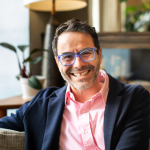


Katherine Wells, the public health director in Lubbock, Texas, describes her fight to stop the largest measles outbreak since 2000 despite a chaotic reorganization of federal health agencies.
Katherine Wells has been an epidemiologist working to protect the public from disease outbreaks for 25 years. Until January, she had never encountered measles.
“I mean, we considered measles eradicated in the United States,” she said.
Now, as public health director for Lubbock, Texas, Wells is at the center of a multi-state measles outbreak that has infected about 700 people, sent more than 90 to the hospital and killed two otherwise healthy children.
The outbreak is now the largest since 2000, according to the Centers for Disease Control and Prevention. Infections have surpassed the 697 cases that occurred during a 2019 outbreak in New York, previously the largest outbreak, the CDC said.
“It’s frustrating,” Wells said, “because we have the solution, which is a very effective vaccine.”
Wells strongly believes her best chance to stop the viral infections is to boost vaccination across West Texas, where immunization rates among kindergarteners have dropped in many counties, as they have nationally.
One of her toughest challenges: Anti-vaccine advocates have flooded the region with false claims about risks from vaccines. “They are moving ten times the speed we are,” Wells told Tradeoffs, when we caught up with her to talk about her experiences. Those false messages not only undermine the public’s confidence in vaccines, she said, they sow distrust in public health more broadly.

Countering the misinformation takes money, Wells said, and the federal government — a reliable partner to local health officials in the past — has taken a step back. Wells’ city and state abruptly lost federal public health funding in March when the U.S. Department of Health and Human Services cancelled more than $11 billion in grants nationwide. A spokesman for the state of Texas said there aren’t funds available to send to Lubbock, though the state has provided other types of support.
Wells isn’t giving up. “We can’t let that noise disrupt what we need to do,” she said. “We still need to focus on our community. We need to get vaccines in arms, even if that takes having one-on-one conversations with individuals.”
Below are highlights from our conversation with Wells, edited for length and clarity.
On the shock of facing a measles outbreak
Public health always happens at 4:30 on a Friday afternoon. That afternoon my staff told me that we had two cases, two potential cases, of measles in the hospital. And that’s not unusual. You always have doctors that see a rash and they want to test for measles. So I didn’t think much of it. That next Monday, I’m actually on board for one of our community nonprofits, and I was sitting in that board meeting and the woman next to me said, ‘My husband is a trainer of paramedics out in the rural areas and yesterday he told me that there was a lot of measles in Gaines County.’ I literally got up out of my seat, walked out and started making some phone calls.
It was scary. I’m going, well, am I overreacting or is this really something? But my gut feeling inside said there’s something more going on. … If you underreact, then it’s so contagious, it’s just like exponential growth. So you want to get in as quickly as possible and figure out exactly how many cases there are. What’s going on in the ground? Are there other sick individuals? How can we make sure it stays in that one community and doesn’t spread to other communities out in the region?
On ways federal upheaval has complicated the measles fight
We’re watching the CDC, HHS colleagues being laid off. All of this uncertainty. … I don’t know what’s going to be cut, what public health’s going to look like at the local level.
But we have this team of people coming into work, seven days a week, helping families that are impacted with measles, combating the misinformation about vaccines, working with our providers who are needing to get children tested or adults tested, talking to businesses that might have had a measles exposure.
That core public health work is continuing. And that’s just an amazing workforce that’s getting, you know, beat up in the national media, accused of their job not being important. But these people, because of their caring for the community, are continuing to show up every day, day in and day out, and making sure that the work that needs to happen during a measles outbreak happens.
On the ‘machine’ that’s churning out vaccine disinformation
It is definitely a challenge. I almost call it a misinformation machine. … It’s just hard to keep up with the messaging. You feel like you combat one bullet point on some kind of false information and then they pivot and find another. … You’re watching the Children’s Health Defense swoop in and start talking to the parents of the children who have died — giving false hope to a community and peddling cod liver oil and vitamin A.
Being healthy — or taking these supplements — is not going to prevent your child from getting measles. And we don’t know which child is going to have severe complications from measles. We don’t know who’s going to end up in the hospital and we don’t know, unfortunately, which child may die.
On conversations with people who are afraid of vaccines
Trying to get somebody to take an injection when they’re not sick, to prevent illness, just causes a lot of fear of the unknown. I’ve talked to a lot of parents that have said, “Well, we never had measles or polio or mumps in our community. So why, even if the risk for vaccines is so minuscule, why even take that risk if that disease doesn’t exist?” We’re seeing more physicians in our community willing to speak up on the importance of vaccine, more physicians willing to take the time with their patients to have those conversations.
I think the one that really touched my heart was a mother with five young children, who had never vaccinated her children before. … She felt comfortable enough to come in and have that conversation with one of our nurses and got all five children vaccinated against measles with the MMR. … So we are getting through to individuals. It’s just a slow process. She’s just one of many parents that are now coming into the public health department — because we are that trusted messenger — to get the vaccine. … It’s uplifting. You’re so exhausted. I mean, we have worked three months straight without a day off, and just it gives you that boost of energy again and some hope.
On cultivating community for the future of public health
It makes me want to double down on my work in public health. … Ten years from now, I hope that the narrative around vaccines is changed and we’re back into a place where people can trust science and trust public health, and listen to those messages, and believe in community.
I still have some hope for all of this. There are 2,000 other health department directors out here, in the United States, who do this work day in and day out. And public health really happens on that local level – with individuals who know their community and want to make their community a better place.
Episode Transcript and Resources
Episode Transcript
Dan Gorenstein: Katherine Wells is feeling the pressure.
Katherine Wells: I’ve been in my role for about ten years, but this has definitely been three of the most challenging months that I’ve faced in my career.
DG: Katherine is the public health director in Lubbock, Texas.
Lubbock is the medical hub of this mostly rural region of the state and is at the center of the nation’s largest measles outbreak since 2000.
KW: … tumbleweed and cowboys and canyons. It kind of feels like the Wild West sometimes.
DG: About 700 people in the area have contracted measles this year.
KW: It’s frustrating because we have the solution, which is a very effective vaccine.
DG: That very effective vaccine is why for much of the last 25 years the number of measles cases in the U.S. annually could be counted in the dozens.
But as vaccination rates have declined, the virus is making a comeback.
Clip: A new study says if childhood vaccination rates stay where they are, measles could become a routine occurrence in this country.
DG: At the same time. President Trump is making deep cuts to local public health funding.
Clip: … the Trump administration freeze on grants allocated to health departments across the country is already having a negative impact …
DG: And the nation’s top health official, HHS Secretary Robert F. Kennedy Jr.,has called the measles vaccine effective, yet continues to question it even though research has found it to be safe.
Today, we talk with one of the people leading the fight against the Texas measles outbreak about tackling a public health crisis in a moment of extraordinary upheaval.
From the studio at the Leonard Davis Institute at the University of Pennsylvania, I’m Dan Gorenstein. This is Tradeoffs.
DG: When measles first popped up on Katherine Wells’ radar in late January, she kinda shrugged.
KW: My staff told me that we had two potential cases of measles in the hospital. And that’s not unusual. You always have doctors that, you know, see a rash and they want to test for measles. So I didn’t think much of it.
DG: That was Friday. By Monday, everything had changed.
Katherine was at a board meeting.
KW: … and the woman next to me said, ‘my husband is a trainer of paramedics out in the rural areas. And yesterday he told me that there was a lot of measles in Gaines County.’
DG: Katherine knew that Gaines County – about 75 miles from Lubbock – has a large Mennonite population, people who’ve been hesitant to get vaccinated.
She also knew that measles spreads easily. Up to 9 out of 10 people who are exposed and not vaccinated will get the disease.
The epidemiologist understood instantly that lower vaccination rates in Gaines and a highly contagious virus had the potential to become a public health disaster.
KW: I literally, like, got up out of my seat, walked out and started making some phone calls. Because I had known that we had two kids from Gaines County in the hospital. And then I have this report from a paramedic, and I’m like, we are dealing with something much bigger than just two cases in our hospital.
DG: And in that moment, Katherine, on those calls, what were you thinking to yourself?
KW: A lot of cuss words. (laughs) But it was, uh, it was like people had talked about, you know, we’re going to have a measles outbreak somewhere. And I am like, I think I have the largest measles outbreak in my own backyard. And how are we going to deal with this?
DG: How often have you directly responded to a measles outbreak?
KW: This is the first time I’ve seen measles in my career and it’s actually the first time we’ve seen measles in Lubbock, Texas, for over 20 years.
DG: As an epidemiologist, is that like a big deal? Not having seen something?
KW: I mean, we considered measles eradicated. And prior to this outbreak, the only time you would see measles, really, in the United States would be when somebody flew to another country and they would bring it back, and maybe you would see them infect a couple of other individuals in their immediate family or in their immediate social network.
DG: What does it feel like to be confronted with a disease you’ve never encountered before?
KW: It brought back a lot of the memories dealing with Ebola and Covid and all of these other diseases that public health has to react to. Measles, at least we know what it looks like. There’s textbooks written about it. We know how to respond to it. Um, but you are definitely dusting off, um, some of that literature because we haven’t had to access that or read about it in public health for so long.
DG: Katherine, is this the moment that you’re, like, trained for? Was this a kind of like, okay, it’s time to put on my superhero uniform, or were you more kind of like, oh shit.
KW: A little bit of both. I mean, I think, you know, deep down inside, you’re always like, you’re scared. You don’t want to overreact. But then, I mean, if you underreact, it’s so contagious, it’s just like exponential growth. So you want to get in as quickly as possible and figure out exactly how many cases there are, what’s going on on the ground? Are there other sick individuals? How can we make sure it stays in that one community and doesn’t spread to other communities out in the region?
DG: So you want to move fast and you need a plan. The outbreak is centered in nearby Gaines County.
You’re Lubbock’s public health director … 75 miles away from Gaines. Why were you jumping into action?
KW: It’s like you’re watching something bad happen in another community. They need help and we’re the closest, you know, health department to them. And we need to offer this support.
DG: So where did you start?
KW: It was me sitting in my office with the health authority for Gaines County and hashing out, like, what, what that plan should look like. Talking through what resources do we have? What can we do without any additional support to start combating this? Because I really felt like there was really no backup.
Clip: Tonight, a communications blackout for America’s top public health agencies.
Clip: The Trump administration has told federal health agencies to pause external communications.
KW: CDC was in a total, like, they were in a blackout. They weren’t able to talk. And we were going through who … who do we know? Who else is an expert in this, that can support us if we don’t have the direct access to CDC.
DG: Right, this is late January so the CDC is going through this massive transition from the Biden administration to the Trump administration. You can’t get anyone on the phone.
That must have felt incredibly isolating, lonely, and also so overwhelming.
KW: Yes, all of the above. I felt like myself, and the director at the other health department, were kind of just alone, going, we think this is bigger than than what it looks like. We’re going to need resources. Um, but I think we’re going to be on our own for a little bit.
DG: When we come back, how Katherine is using the resources she’s got to fight the outbreak and respond to fast-moving anti-vaccine groups.
MIDROLL
DG: Welcome back. We’re talking with Katherine Wells, an epidemiologist who is fighting the ongoing measles outbreak in West Texas.
About 700 people in Texas have been infected, nearly all unvaccinated. Two children have died.
When we left off, Katherine, it was late January, you were in your office with a public health official from Gaines County, a nearby county where you were starting to hear about lots of cases of measles, including two kids in the hospital.
You had reached out to the CDC but heard nothing back. You realize, for now, you’re on your own.
What’s the next move?
KW: I mean, out here, it’s kind of that pull yourself up by your bootstraps. … It was like, okay, what resources do we have? What do we need? We need someone to figure out how big this outbreak is. We need to get vaccines in arms. So we need a team to focus on vaccines. We need a communications team. to get these press releases out, to get, signage in, um, low German, which is what the Mennonite community speaks. and then it’s also some kind of logistics team of how do we, you know, make sure we’re moving resources, um, accurately and keeping track of everything.
DG: Katherine, few people know what it takes to contain an infectious disease outbreak. Help us understand the investment. You turn to the state for help. What kind of resources have they sent?
KW: The state has offered staffing. They’ve brought in nurses that are able to give vaccines so that my nursing staff can still work in our clinics. They’ve given me epidemiologists, or contact tracers, individuals that can be on the phone figuring out who’s exposed. They haven’t provided any funding, which is frustrating.
DG: We reached out to the Texas Department of State Health Services and asked them about their response to the measles outbreak.
A spokesman said Texas could lose up to $550 million in federal funds after the Trump administration abruptly cancelled more than $11 billion in public health grants.
The spokesman said the state is paying for ad campaigns and helped local laboratories begin testing for measles. The state also brought in CDC assistance in late February and again in April.
But he added, quote, “We do not have funds available to provide additional direct funding to local health departments.”
Katherine, you have had to layoff two workers and freeze hiring. You’re saying you need more money. What would you spend that money on if you could?
KW: Um yeah, first it would be the ability to set up, you know, a call center to answer measles questions from the entire community; set up more robust testing, more robust vaccination clinics. Start training members of particularly the Mennonite community on the value of vaccines, sitting down and having small meetings with women in the community and offering vaccine that way, going door to door and talking to these families about, you know, the risk of measles and why it’s important to get vaccine. There’s so much more that could be done if there was funding.
DG: And how much money are we talking about to pull this off? A million bucks? Five million? What are we looking at?
KW: I think, you know, $1 million and 25 people, um, would make a huge difference down here.
DG: So it’s now early May. What have you been able to do with the resources you have?
KW: We’ve been able to offer some additional vaccine clinics at our health department, utilizing some of the state nurses. so we’ve had evening clinic hours. We’ve been able to offer Saturday clinic hours also. We’ve also been able to increase the number of individuals answering the phone, answering calls from the public. So working with individuals that are positive or might become positive, um, to provide education and work with them to stay home so that they don’t infect others.
DG: Katherine, the outbreak is happening under Robert F. Kennedy Jr., who has a long history of vaccine skepticism.
The anti-vax group Children’s Health Defense and others are also actively promoting their message in the outbreak. They have rejected that measles has caused those two deaths to those kids.
In fact, before Texas health officials could announce that a second child had died from measles, a vaccine skeptic published the news online and blamed poor medical care.
What does it look like, day to day, to fight this kind of misinformation?
KW: You’re watching the Children’s Health Defense, you know, swoop in and start talking to, you know, the parents of the children that have died. And, you know, giving false hope, to a community and giving these, you know, peddling cod liver oil and vitamin A. Being healthy or being, taking these supplements, is not going to prevent your child from getting measles.
DG: Do you feel like you’re being outflanked by the anti-vax crowd?
KW: Yeah, definitely. Because there’s a communication void and a leadership void. And when nobody’s standing up to take that space, the anti-vaxxers can easily move in and all of a sudden become that trusted source for information. I mean, they are moving, ten times the speed we are.
DG: You’re something of a public figure in this outbreak, Katherine, people recognize you in the grocery story and when you’re out with your kids.
I’m curious, when people come up to you, people who fear vaccinations, what have they told you? What do you hear?
KW: I think one is the fear of just the unknown or the fear of that injection. A lot of people will easily take, you know, a prescription pill when you’re sick. but trying to get somebody to take an injection when they’re not sick, to prevent illness, just causes a lot of unknown fear. I’ve talked to a lot of parents that have said, well, we never had measles or polio or mumps in our community. So even if the risk for vaccines so, so minuscule like, why even take that risk if that disease doesn’t exist?
DG: You, Katherine, are simultaneously managing a massive measles outbreak, the loss of resources, and a disinformation campaign that’s moving faster than you. What’s one sign of hope that you have?
KW: I mean, I think the one that really touched my heart was a mother with five young children who had never vaccinated her children before … came into our health department clinic. We just have a walk in no questions asked. You can come in and get that vaccine. She felt comfortable enough to come in and have that conversation with one of our nurses and got all five children vaccinated against measles. She just said that the risk was too high, seeing, you know, two children in the community die, um, hearing about all of these other, sick children that are in the hospital. So we are getting through, to individuals. It’s just a slow process.
DG: What was that like when you heard that story?
KW: Oh, it just, you know, it’s uplifting. You’re so exhausted. I mean, we have worked three months straight without a day off. It gives you that boost of energy again.
DG: You’ve gone through Covid, you’ve been an epidemiologist for a quarter of a century. And you are now managing your first measles outbreak. When you look back 10 or 15 years from now, how will you think these three months, the first three months of the measles outbreak, has changed you?
KW: That’s hard to say from here. It makes me want to double down on my work in public health. Ten years from now, I hope that the narrative around vaccines is changed and we’re back into a place where people can trust science and trust public health. And I’m not going to give up on my work, even if, some folks don’t want to believe in the work anymore. It’s still my role. And there’s, 2000 other health department directors out here, in the United States, that do this work day in and day out. And public health really happens on that local level, with individuals that know their community and want to make their community a better place.
DG: Katherine Wells, thank you so much for talking to us.
KW: Thank you for having me.
The number of measles cases nationwide is now around 935, the second highest total for any year since 2000. In Texas, the stream of new infections has started to taper, a trend that public health experts are watching closely to see if it holds.
DG: I’m Dan Gorenstein, this is Tradeoffs.
Episode Resources
Additional Reporting on the Texas measles outbreak and vaccinations:
- Measles Surge in Southwest Is Now the Largest Single Outbreak Since 2000 (Teddy Rosenbluth, Apoorva Mandavilli, The New York Times, 04/22/2025)
- Modeling Reemergence of Vaccine-Eliminated Infectious Diseases Under Declining Vaccination in the US (Mathew V. Kiang, Kate M. Bubar, Yvonne Maldonado, Peter J. Hotez, Nathan C. Lo, JAMA, 04/24/2025)
- U.S. may be reverting to a time when measles deaths were not very rare, experts warn (Helen Branswell, STAT, 04/06/2025)
- Anti-vaccine advocates battle over narrative in West Texas, downplaying role of measles in deaths (Pooja Salhotra, Terri Langford, The Texas Tribune, 04/16/2025)
- In Rural Texas, a Measles Outbreak Hasn’t Swayed Vaccine Skeptics (Sumathi Reddy, The Wall Street Journal, 03/10/2025)
- What RFK Jr. Told Grieving Texas Families About the Measles Vaccine (Tom Bartlett, The Atlantic, 04/10/2025)
Episode Credits
Guests:
- Katherine Wells, Director, Lubbock Public Health
The Tradeoffs theme song was composed by Ty Citerman. Additional music this episode from Blue Dot Sessions and Epidemic Sound.
This episode was produced by Melanie Evans and Dan Gorenstein, edited by Ryan Levi and mixed by Andrew Parrella and Cedric Wilson.
You must be logged in to post a comment.