
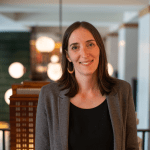

We talk with Harvard researcher Ari Ne’eman about why the sharp policy shifts underway in Washington pose a unique threat to people with disabilities.
When Ari Ne’eman heard Robert F. Kennedy Jr. call autism an “epidemic” that “destroys families,” Ne’eman felt like he had stepped into a time machine — heading in the wrong direction.
It was during an April 16 press conference where Kennedy, the nation’s top health official, went on to claim that autistic children will “never pay taxes” or “hold a job” and that their condition is preventable.
“This is a throwback to how people talked about autism 25 years ago,” Ne’eman said.

Ne’eman knows this history well, having studied it as a Harvard health policy researcher, lived it as an autistic person and shaped it as the co-founder of the Autistic Self Advocacy Network.
Kennedy’s rhetoric is not the only thing that Ne’eman fears could turn back the clock for all Americans with disabilities. In just three months, the Trump administration has made moves to shake up special education and dismantle a federal agency dedicated to helping older and disabled Americans live independently.
Congressional Republicans are also contemplating deep cuts to Medicaid, the public health insurance program that covers some 15 million Americans with disabilities.
“This is a very dark time. Disabled people are under unique threat,” Ne’eman told us when we sat down recently for an interview about the sharp policy shifts in Washington. “But I still have hope.”
He said he derives much of that hope from the successful history of the disability rights movement, the subject of his upcoming book.
“The Americans with Disabilities Act and a whole host of other priorities only exist because people with developmental disabilities, people with physical disabilities, blind people, deaf people, people with mental illness and many other categories decided, we have to all hang together or we’ll surely hang separately,” Ne’eman said. “The word disability is as much a coalition as the term people of color or LGBTQ.”
Below are highlights from our wide-ranging conversation, which has been lightly edited for length and clarity.
DAN GORENSTEIN: In this moment of great uncertainty about how our health care system is changing, why are the stakes especially high for people with disabilities?
ARI NE’EMAN: So disabled Americans really have a uniquely challenging position, in that they are very frequently devalued and dehumanized by the health care system. But, at the same time, they have a tremendous need for health care. Some of it is the same kind of medical care that people are very familiar with — things like prescription drugs or doctors visits. But there are also, I would say, unique needs — the person who helps you use the bathroom, the person who helps you find and keep a job, the person who helps you get dressed in the morning. These are often very intimate and very personal kinds of support without which people would not be able to live.
Ultimately, for many people with disabilities to survive and thrive on their own terms, there is a need for some very costly, ongoing assistance. For people with developmental disabilities — things like Down syndrome, autism, cerebral palsy, spina bifida — it’s common for home- and community-based services to cost $40,000 or $50,000 a year.
So having a service system that is adequately financed and responsive to people’s desires about how they want to live is absolutely crucial.
GORENSTEIN: That ‘service system’ as you call it, Ari, is taking some real hits in Washington right now. Has the disability community faced potential cuts this sweeping before?
NE’EMAN: The most notable comparison comes in the early 1980s when the Reagan administration first came in. The disability community had just won major civil rights victories — the federal law that guarantees children with disabilities the right to attend public school, and provide supports and services, as well as the first nationwide civil rights law that protects disabled people against discrimination. Unfortunately, the Reagan administration moved quickly to try and roll back both of those key protections.
GORENSTEIN: Disability right advocates ended up winning that fight, and a key reason was this sort of ingenious two-pronged strategy, right?
NE’EMAN: That’s exactly right. The first part of that strategy was massive mobilization. You had key advocates across the country mobilizing tens of thousands of people to write letters, show up at hearings, engage in aggressive activism. There were points in time where you couldn’t walk down the hallway of the Department of Education without having to step over mail bags full of the tens of thousands of letters that had come from disabled people and parents across the country.
At the same time you also had this really interesting insider strategy, in which a number of advocates sought to reframe long-standing disability rights priorities in terms [that appealed to people] across the political spectrum. So, for example, you saw an ongoing effort to activate many socially conservative parents who saw support for keeping disabled children in their family homes as a reflection of family values. There’s this fantastic quote I came across in my book research talking to someone who was very active on the Hill in the 1980s, where he said, “When I saw the Republican women in their Halston suits show up to lobby against the rollback of special education rights, I knew this was over.”
GORENSTEIN: Do you think a similar playbook can work this time around? Are you seeing advocates use it?
NE’EMAN: So, when you’re facing down a conservative administration, one of the key things you have to do is show them [that a policy they’re considering] is going to hurt them with people who voted for them, as well as people who voted against them. And I think the disability community is really uniquely well-positioned to do that.
To some extent, you are seeing this right now. Disability has been foregrounded in both the defense of Medicaid and in the efforts to push back on the elimination of the Department of Education. And the reason for that is kind of a dark reality: There are many people in this country who, when you say, “This will hurt racial and ethnic minorities or the LGBTQ community,” their reaction is, frighteningly, “Good. That’s what I intended to do.” But many of those people can still be influenced [if you say] “This will hurt disabled people.” That’s an unfortunate reality, but it’s a reality that exists right now in American politics, because disabled people are a constituency that still has crossover appeal.
GORENSTEIN: So, Ari, we’ve talked about what advocates did in the 1980s and what they are doing today to push back on potential budget cuts.
But I’m wondering how you as a researcher plan to track these cuts. What’s the evidence that you’re going to be watching for, to see the effects of these policy choices on human beings?
NE’EMAN: Well, first and foremost, I’m going to be looking at [the effects of] rollbacks in the availability of home- and community-based services. These are the supports that help disabled people and older adults remain in their homes and communities instead of having to go into a nursing home or other institution. And if we do see a major pullback in federal Medicaid funding, it’s quite likely these services are going to be first on the chopping block.
There are three things that I’m worried are going to happen as a result. Number one: Disabled people are going to end up forced into nursing homes and institutions. Number two: Family members, in particular women, are going to be more likely to fall out of the labor force in order to provide uncompensated care. And then number three, I think we are likely to see a lot more unmet health care needs. There is a very strong literature showing that [providing] home- and community-based services means people are less likely to end up in the emergency department because of those unmet care needs. So those are really the three dimensions this is likely to impact.
GORENSTEIN: It strikes me that those sorts of impacts are going to be tougher to track now that we’re also seeing the Trump administration slash research spending, including $15 million in grants related to disabled and retired people. I believe you personally just lost a grant of your own.
NE’EMAN: I would say the pullback in research investment is a very real concern. Because the disability community is so broad and diverse, there’s a need to study populations both together but also separately. We had a grant looking at how people with developmental disabilities have fared in employment outcomes over the course of the last 20 years. And one of the things that is really notable is that the employment experiences of someone with an intellectual disability or someone with Down syndrome are just light years different from the employment experiences of a wheelchair user, or a blind person or a deaf person. Each of these constituencies have very different experiences. They’re impacted in different ways by public policy. And so the rollback in the federal commitment to disability research is a very real threat.
GORENSTEIN: While we’re on the topic of research, I’ve got to ask you about Secretary Kennedy’s recent announcement that called autism “preventable.”
He made a number of statements most scientists don’t agree with. He promised to investigate the “environmental toxins” that he believes are responsible for the rise in autism rates, and deliver research results on that as soon as September.
You are autistic, and you’re a researcher. What did you make of that announcement?
NE’EMAN: I have to be honest, I think my first thought was, “Oh God, not this again.” Secretary Kennedy’s approach is particularly ill-advised, but in some respects it’s an extension of a long standing problem.
Over the course of many administrations, we’ve seen autism research focus disproportionately on questions of biology. So, for example, in 2020 this country spent $418 million on autism research. Only about 8.5% of that was spent on research on how to improve the quality of the services and supports autistic people receive.
And I think it’s unfortunate — not because there isn’t the role for research on the causation of autism, but because there’s an imbalance. When the average autistic person or family member of an autistic person wakes up in the morning, they don’t ask themselves, “Have they found a new biomarker yet? Did they build a better mouse model?” They ask, “Are there better strategies available to help me or my loved one live independently, to be included in the workplace, to be in the general education classroom?” And we really owe it to people to have a research agenda that is in some way responsive to that.
GORENSTEIN: I’d like to go back to history. I’m thinking about other moments in the disability rights movement — the federal building sit-ins in the 1970s, the crawl to the Capitol in the 1990s.
This is a group of people who are overlooked, undervalued and so often dehumanized. And still, when the chips are down, folks with disabilities so often find a way to break through.
Does that give you some hope?
NE’EMAN: Horrific things have happened to disabled people in this country. We are a country that placed hundreds of thousands of people into lifelong institutionalization and that sterilized tens of thousands of people. We know how bad it can get, and we refuse to let it get that bad again. That’s why the disability rights movement exists — to say that we are only going to move forward. We refuse to turn back the clock.
Episode Transcript and Resources
Episode Transcript
Dan Gorenstein (DG): Last month, on April 9th…
Sound from rally: Thank you everyone, your voices are so important right now.
DG: Close to 300 activists and advocates for people with disabilities gathered on the grass across from the U.S. Capitol.
Sound from rally: Are we going to let them dismantle big parts of the Social Security Administration? No! Are we going to allow them to dismantle big parts of CMS? No!
DG: It was a brisk morning, and the speakers did their best to warm the crowd up.
Sound from rally: I am Medicaid! Don’t cut me! I am Medicaid! Don’t cut me!
DG: But underneath the energy, the outrage, there was also a sense of fear. People worried about what all of the cuts coming out of Washington could mean.
Montage of field interviews from rally: I wouldn’t be able to get to and from work. Some people wouldn’t be able to get ou of their house and some people would die. Without Medicaid, I’d have to live in a nursing home.
DG: 15 million folks with disabilities rely on the public insurance program Medicaid. And while the future of that program is currently up in the air, other programs have already been whacked.
Nearly half the staff fired at the federal health agency that helps people live independently. Social Security offices gutted, leaving long lines for the benefits that so many people with disabilities rely on.
Ari Ne’eman (AN): This is a very dark time. Disabled people are under unique threat. But I still have hope.
DG: Today, a conversation with one expert about what all this upheaval could mean for people with disabilities and how history and data can help us understand this moment.
From the studio at the Leonard Davis Institute at the University of Pennsylvania, I’m Dan Gorenstein. This is Tradeoffs.
***
DG: Some 70 million people in the U.S. report having a disability. Their conditions are incredibly diverse.
My guest today, Harvard researcher Ari Ne’eman, does not claim to speak on their behalf. No one person ever could. But he does have a unique set of experiences to offer. In addition to being a health policy expert and a former appointee to the National Council on Disability, he’s also autistic and spent many years as a disability rights advocate.
Here’s our conversation.
So, look, Ari, let’s get right into this.
In this moment of great uncertainty about how our health care system is changing, why are the stakes especially high for people with disabilities?
AN: So disabled Americans really have a uniquely challenging position in that disabled people are very frequently devalued and dehumanized by the health care system, but at the same time, have a tremendous need for health care.
Some of it is the same kind of medical care that people are very familiar with — things like prescription drugs or doctors visits. But there are also, I would say, unique needs. Ultimately what we’re talking about here is the person who helps you use the bathroom, the person who helps you find and keep a job. These are often very intimate and very personal kinds of support without which people would not be able to live.
DG: It strikes me from the reporting I’ve done, Ari, that living life on your own terms, which is what everybody wants, is more challenging. It’s more difficult for lots of people who have disabilities, and that requires more support. Is that right?
AN: It is. It is. You know, ultimately, for many people with disabilities to survive and thrive on their own terms, there is a need for some very costly ongoing assistance. For people with developmental disabilities, things like Down syndrome, autism, cerebral palsy, spina bifida and so on it’s common for home- and community- based services to cost $40,000 or $50,000 a year. And so having a service system that is adequately financed and that is responsive to people’s desires about how they want to live their own life is absolutely crucial.
DG: That ‘service system’ as you call it, Ari, is taking some real hits in Washington right now, as you know. But I’m wondering how unprecedented this moment really is. Has the disability community faced potential cuts this sweeping before?
AN: You know, I would say the most notable comparison comes in the early 1980s when the Reagan administration first came in. The disability community had just won major civil rights victories…
News tape: 35 million handicapped Americans won a big victory today…
Kitty Cone speech: We showed strength and courage and power and commitment…
AN: The first nationwide civil rights law that protects disabled people against discrimination…
News tape: …from now on every school or hospital or college which gets money from Health, Education and Welfare will have to provide full facilities for the handicapped
AN: …as well as the federal law that guarantees children with disabilities the right to attend public school and provide supports and services.
Cone speech: We the hidden, supposedly the frail and the weak, that we can wage a struggle at the highest level of government and win!
AN: Unfortunately, the Reagan administration moved quickly to try and roll back both of those key protections.
News tape: The task force listed 27 existing regulations it wants to open up for review and possible change. Some examples: education of handicapped children…
DG: Spoiler alert here: They did not succeed. I know you know that, Ari, because you’re writing a book about this era, and a key reason that advocates won was this sort of ingenious two pronged strategy, right?
AN: That’s exactly right. The first part of that strategy was a process of massive mobilization. So you had disability rights advocates across the country mobilize tens of thousands of people to write letters, show up at hearings, engage in aggressive activism. There were points in times where you couldn’t walk down the hallway of the Department of Education without having to step over mail bags full of the tens of thousands of letters that had come from disabled people and parents across the country.
DG: So that’s prong one, Ari, what you call this aggressive activism. What’s the second prong?
AN: So at the same time you also had this really interesting insider strategy in which a number of key disability rights advocates sought to reframe long-standing disability rights priorities in terms capable of appealing across the political spectrum.
So, for example, you saw an ongoing effort to activate many socially conservative parents who saw support for keeping disabled children in their family homes as a reflection of family values. There’s this fantastic quote I came across in my book research talking to someone who was very active on the Hill in the 1980s, where he said, “When I saw the Republican women in their Halston suits show up to lobby against the rollback of special education rights, I knew this was over.”
DG: What do you love about that quote?
AN: Well, I think it communicates that disability really is, in many respects, something that resonates across the whole of society. And so when you’re facing down a conservative administration, one of the key things you have to do is show them that’s going to hurt them with people who voted for them, as well as people who voted against them. And I think the disability community is really uniquely well positioned to do that.
DG: Do you think this similar playbook can work this time around? Are you seeing advocates use it?
AN: To some extent, you are seeing this right now, right? Disability has been foregrounded in both the defense of Medicaid and in the efforts to push back on the elimination of the Department of Education. And the reason for that and, you know, this is kind of a dark reality is advocates across the board recognize that there are many people in this country who, when you say, “This will hurt racial and ethnic minorities or the LGBTQ community,” their reaction is, frighteningly, “Good. That’s what I intended to do.” But many of those people can still be influenced by saying this will hurt disabled people. That’s an unfortunate reality, but it’s a reality that exists right now in American politics.
DG: Okay, Ari, so we’ve talked a lot about what advocates did in the 1980s and what they are doing today to push back on potential cuts, but I’m wondering, as a researcher how do you plan to track these cuts? What’s the data that you’re going to be watching for to see the effects of these policy choices on human beings?
AN: So the number one thing that I, and you know, I think the whole disability community is deeply concerned about is the possibility of major rollbacks to what we call home- and community-based services. These services are the supports that help disabled people and older adults remain in their homes and communities instead of having to go into a nursing home or other institution in order to get help getting out of bed in the morning, getting dressed, using the bathroom. If we do see a major pullback in federal Medicaid funding, it’s quite likely that community-based supports are going to be first on the chopping block.
DG: Got it. And so specifically, Ari, what will you be looking for here? How will you know that cuts to these services are disrupting people’s day-to-day lives?
AN: Okay, there are three things that I’m worried are going to happen as a result of cuts to community services. Number one, I’m worried that disabled people are going to end up forced into nursing homes and institutions. Number two: Family members — in particular women — are going to be more likely to fall out of the labor force in order to provide uncompensated care because paid help has been withdrawn. And then number three, I think we are likely to see a lot more unmet health care needs. There is a very strong literature showing that home- and community-based services means people are less likely to end up in the emergency department because of those unmet care needs. So those are really the three dimensions this is likely to impact.
DG: I want to note here that back in April, when we talked with folks at the rally at the Capitol, cuts to these home and community services came up more than any other topic.
As we head to the break, here’s what one rallygoer with cerebral palsy told us these services mean to her.
Samantha Lademan: It enables the transportation that takes me to my university classes. It enables the transportation that I use to go out with my friends. And my nephew’s hockey games. Sorry, it’s pretty emotional. My mom has just had her own set of surgeries. For many years, she was the caregiver for me that did the daily showers and the lifting, and now I don’t know if my caregiver is going to be able to come each day. It literally affects every aspect of life.
DG: That was Samantha Lademann, who traveled more than 1,000 miles from Edina, Minnesota to share her story.
When we come back, more with Ari — why he’s worried about the loss of a little known office inside of HHS and what’s giving him hope.
MIDROLL
DG: Welcome back. Before we return to our talk with Harvard researcher Ari Ne’eman we wanted to play another clip from a person with a disability who is worried about this moment.
Brittanie Hernandez-Wilson: Fear is the number one thing that I’m hearing, you know? Like we are within the first groups to be targeted historically, and that’s exactly what’s happening now, and so I think a lot of community members are really feeling it. We also have a long history of resilience, forced resilience, honestly. Like this isn’t necessarily like a, you know, yay type of thing, right? But being forced to be resilient so, like, on one side there’s fear, but then on the other side there’s also action because we know that there’s no one else that’s going to stand up for us.
DG: That was 37-year-old Brittanie Hernandez-Wilson in Oakland, California.
So, Ari, people with disabilities are not only a vulnerable population but also an incredibly diverse one. And it seems to me like that makes uniting in this moment both challenging and crucial.
AN: Yeah, if you look at the broad arc of disability history, it’s an arc that shows very different groups of people coming together into this broader coalition. So, you know, the Americans with Disabilities Act, home- and community-based services, a whole host of other disability rights priorities, they only exist because people with developmental disabilities, people with physical disabilities, blind people, deaf people, people with mental illness, many, many other categories decided, well, we have to all hang together or we’ll surely hang separately.
The word disability is as much a coalition as the [term] “people of color” or LBTQ. It’s an ad hoc political coalition of very different groups of people who have decided that they have a common cause together of defending their rights against an often hostile majority.
DG: I’m so glad you made that point, Ari, because it is easy, I think, to forget just how diverse this group of people is. And it also provides important context for another big policy change that we’re seeing in Washington, and that is cuts to all sorts of grants that fund disability research. I believe you personally just lost a grant of your own.
How much harder is it going to be for researchers like you to get a full picture of how this whole group of people is doing without that research?
AN: I would say the pullback is a very real concern. Ultimately, because the disability community is so broad and diverse, there’s a need to study populations both together but also separately. You know, you mentioned, a grant we lost. We had a grant looking at how people with developmental disabilities have fared in employment outcomes over the course of the last 20 years. One of the things that is really notable is the employment experiences of someone with an intellectual disability or someone with down syndrome are just light years different from the employment experiences of a wheelchair user, or a blind person or a deaf person. Each of these constituencies have very different experiences. They’re impacted in different ways by public policy. So the rollback in the federal commitment to disability research is a very real threat.
DG: While we’re on the topic of research, Ari, I’ve got to ask you about the recentannouncement by HHS Secretary Robert F. Kennedy about autism.
News clip montage: Doubling down on his claim that there is an autism epidemic // Kennedy called autism a ‘preventable disease’ // Announced a plan to study whether environmental toxins have contributed to the rise in diagnoses.
DG: You are autistic, Ari, and you’re a researcher. What did you make of that announcement?
AN: I have to be honest I think my first thought was, “Oh God, not this again.” You know this is a throwback to 25 years ago.
Over the course of many administrations, we’ve seen autism research focus disproportionately on questions of biology. So for example, in 2020, this country spent $418 million on autism research. Only about 8.5% of that was spent on research on how to improve the quality of the services and supports autistic people receive.
And I think it’s unfortunate not because there isn’t a role for research on the causation of autism, but because there’s an imbalance. I think when the average autistic person or family member of an autistic person wakes up in the morning, they don’t ask themselves, “Have they found a new biomarker yet?” They ask, “Are there better strategies available to help me or my loved one live independently, to be included in the workplace, in the general education classroom?” We really owe it to people to have a research agenda that is in some way responsive to that. There is a need for change, but it is in the exact opposite of the direction Secretary Kennedy is promoting.
DG: One final cut that I want us to talk about: This one is to a group inside the US Department of Health and Human Services, known as the Administration for Community Living. This was an office, as you know, dedicated to making sure people with disabilities, as well as older adults could live full, healthy lives. HHS first cut its staff by half, then said it plans to fully eliminate it and spread its duties out among other parts of the agency. How big of a loss is this?
AN: It’s a major loss. It’s a major loss. The thing that you have to understand is a huge part of the value of agencies like the Administration for Community Living is having people within the federal government whose primary responsibility is defending the rights of disabled people and providing a lens as to how disabled people and older adults will be impacted by public policy regardless of where it’s coming from. So, you know, even if you retain all of the individual pieces of the Administration for Community Living elsewhere within the government, you lose that broader cohesive picture and you lose having people whose primary responsibility is to be in the room saying this is how these policies will impact people with disabilities.
DG: Last question, Ari and I’d like to go back to history. I’m thinking about other moments in the disability rights movement, and they are in many ways quite radical. The federal building sit-ins in the 1970s…
News clip: 500 to 600 people in wheelchairs, with walking canes and hearing aids stormed the regional office of Health, Education and Welfare in San Francisco…
DG: The crawl to the Capitol in the 1990s …
News clip: What do we want? ADA! When do we want it? Now! What do we want? ADA!
DG: This is a group of people who are overlooked, undervalued, and so often dehumanized. And still, when the chips are down, folks with disabilities so often find a way to break through. And they do it with their stories and literally, sometimes, with their bodies. Does that give you some sense of hope?
AN: You know, this is a very dark time. Disabled people are under unique threat. Horrific things have happened to disabled people in this country. We are a country that placed hundreds of thousands of people. Into lifelong institutionalization that sterilized tens of thousands of people. And we refuse to go back to that time.
So I think that is a very powerful motivation. During my years when I worked as an advocate, it motivated me as an advocate. Now, when I work as a researcher, it motivates me as a researcher. We know how bad it can get, and we refuse to let it get that bad again. That’s why the disability rights movement exists — to say that we are only going to move forward. We refuse to turn back the clock.
DG: Ari, thank you so much for taking the time to talk to us on Tradeoffs. I appreciate it very much.
AN: Thanks for having me on the show, Dan. It’s been a pleasure.
DG: I’m Dan Gorenstein. This is Tradeoffs.
Episode Resources
Additional Reporting on Recent Disability-Related Cuts:
- Trump Cuts Threaten Agency Running Meals on Wheels (Reed Abelson, New York Times, 4/24/2025)
- History Repeats? Faced With Medicaid Cuts, States Reduced Support For Older Adults And Disabled People (Jessica Schubel, et al; Health Affairs; 4/16/2025)
- CDC faces backlash for cutting sickle cell, adult disability programs (Alexander Tin, CBS, 4/10/2025)
- ‘Just a Mess’: Staff Cuts, Rushed Changes and Anxiety at Social Security (Jack Healy, Alexandra Berzon, Tara Siegel Bernard and Nicholas Nehamas; New York Times; 4/8/2025)
- Sweeping HHS Cuts Will Put Disabled and Older Americans’ Right to Live in Their Communities at Risk (Susan J. Popkin, Nina Russell, Barbara Butrica and Dana Ferrante; Urban Institute; 4/7/2025)
- Medicaid Cuts Could Jeopardize Access to Critical Long-Term Care Services for People with Disabilities and Older Adults (Lena Marceno and Alyssa Llamas, Commonwealth Fund, 3/25/2025)
Episode Credits
Guest:
- Ari Ne’eman, Assistant Professor of Health Policy and Management, Harvard T.H. Chan School of Public Health
The Tradeoffs theme song was composed by Ty Citerman. Additional music this episode from Blue Dot Sessions and Epidemic Sound.
Additional thanks to Alison Barkoff and Melissa Crisp-Cooper.
This episode was produced by Leslie Walker, edited by Dan Gorenstein and mixed by Andrew Parrella, with field reporting by Joanna Broder.
Tradeoffs reporting for this episode was supported, in part, by Arnold Ventures.
Comments are closed.