
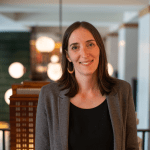

Journalist Paula Span, who writes The New Old Age column for the New York Times, shares what she’s learned about how to age well.
Tradeoffs is a nonprofit news organization that reports on health care’s toughest choices. Sign up for our weekly newsletter to get Tradeoffs’ latest stories in your inbox each Thursday morning.
Note: This episode was originally published Oct. 17, 2024. The transcript was updated on Oct. 16, 2025 when the story re-aired, to reflect a few minor updates made to the script. No other details have been updated.
Episode Transcript and Resources
Episode Transcript
Note: This transcript has been created with a combination of machine ears and human eyes. There may be small differences between this document and the audio version, which is one of many reasons we encourage you to listen to the episode above!
Dan Gorenstein (DG): Hi, Dan here.
This is a big week for the Tradeoffs team.
Our show turns 6 years old today, and right now, I’m recording this from a coworking space in Queens with our team. Everybody say hi.
Tradeoffs Team: Hi!
DG: In just a few hours, we’re headed to collect our biggest honor yet: an Edward R. Murrow Award for ‘’The Fifth Branch,” our special series exploring how one city is transforming the way it responds to people experiencing mental health crises.
A $15 donation makes this type of in-depth, award-winning journalism possible. Go to tradeoffs.org/donate to keep this work going.
Tradeoffs Team: Thank you!
DG: And now, onto today’s show.
We’re revisiting a 2024 conversation with New York Times columnist Paula Span that remains as timely as ever.
It’s all about how we can help ourselves and our loved ones navigate tough health care choices as we age.
Enjoy, and I’ll catch you next week.
ORIGINAL STORY:
DG: America’s older population is booming.
Soon, almost one out of every four people will be at least 65 years old.
This fast-growing group will inevitably face tough health care decisions. Should I just let that cancer be or cut it out? Do I want to die at home or in a hospital?
New York Times columnist Paula Span is on a mission to help equip older adults and their loved ones with the evidence — and the confidence — to grapple with these sorts of choices.
Paula Span (PS): I just want to give people the sense that, yes, you can question this. Become knowledgeable and have this conversation.
DG: Today, Paula shares what she’s learned over the last 15 years writing her column The New Old Age.
From the studio at the Leonard Davis Institute at the University of Pennsylvania, I’m Dan Gorenstein. This is Tradeoffs.
****

DG: Paula Span has been a reporter for 50 years. She’s written books on aging and grandparenting. She teaches journalism at Columbia University. And twice a month, she writes The New Old Age column for The New York Times.
Paula, thanks for joining us.
I’m curious — where does the name ‘The New Old Age’ come from?
PS: Well, the column, I did not start this column. I inherited it from the late Jane Gross, who was a longtime New York Times reporter and who started The New Old Age when she was a caregiver for her mother. The title reflects the way increased longevity has changed the equation, plus the aging of the enormous Baby Boom generation, which just means that there are more old people than we have ever had, and so there was a lot of catching up to do in terms of policy, in terms of the way people think. So that’s why she and the paper called it The New Old Age, and I took it over from her about 15 years ago.
DG: And when you did first take the column over Paula, what did you see as your charge? What were you hoping to deliver for readers?
PS: It has changed actually. Initially, we thought we were writing mostly for the adult children who were taking care of their aging parents. It had a caregiving focus. And as time went on, we realized that we had a lot of older readers too, and we were talking about them as if they weren’t there. Not a good look. Plus I was aging myself and I began to see things differently, too. So, the column has broadened. It’s also about policy. It’s about housing. It’s about working later into life. It’s about relationships — romantic relationships. We’re trying to take a fairly broad view of the challenges and rewards of aging in this country.
DG: You’re trying, it sounds like, in part with this column to help people live well and be a little less afraid of aging.
PS: I would certainly agree with that. I want us to be less afraid of aging. I call myself an old person. I’m 75. New York Times style is to say older Americans. It’s one of those evasive phrases like “seniors” or “I’m not old. I’m mature. I’m not old. I’m vintage.” But can we just own this?
The task here is not to pretend we’re not old. The task is to make it okay to be old, acknowledging that it brings certain challenges as all phases of life do, but it’s not something that we have to dread. And one way I want to do that is to let readers know that they have more choices than they think they may have — medically and otherwise.
DG: Right, and I’d like us to dig into a couple of examples of those areas of health care where people might have more choices than they realize.
You highlighted a big one, Paula, back in September about dialysis. For folks who don’t know, dialysis is a treatment for people whose kidneys are failing where you have to go to a facility to basically have a machine do what your kidneys can no longer do — filter toxic stuff out of your blood.
More than half-a-million people, including many older folks, rely on this to stay alive and Medicare spends tens of billions of dollars on this treatment.
In your column, Paula, you write about a new study that questions whether all this trouble and money is worth it for some older Americans. What did the researchers find?
PS: Well, they found that there was a survival advantage for beginning dialysis, but it was much smaller than people might expect.
This was a study done by researchers at Stanford and if you started dialysis, when your kidneys began to fail, you lived 77 days longer after three years than people who never started it.
Now, was that worth it? The hours you spent going to a dialysis center, then you have to get home. Then you feel very tired. The next day you feel okay. The day after that you go back for dialysis again — week after week, year after year. You will die anyway. The question is when? And, what is your quality of life during that period?
Now dialysis is very often presented to older people not as a choice, but as the inevitable next step in treatment. Your numbers are looking bad; you’re having symptoms; it’s time for dialysis.
And all I am trying to do with my column is to point out there is another way. Some people opt not to do dialysis. They take medications to control their symptoms — the fluid retention, the nausea. They live almost as long, and maybe they have a better life. This is a very individual decision, but you can’t make that decision if no one has told you that there is an alternative.
DG: And you tell the story of this one woman, Georgia Outlaw — fantastic name — this retired social worker and pastor living in North Carolina who went this alternative route. Can you describe what Georgia did?
PS: Yeah, I never had the nerve to ask her if that was the name she was born with, or if that was one she adopted for herself because she was a pistol. And because she was a veteran as well as a pastor and a social worker, she got her care from the local VA and she came in saying, “I don’t want to do dialysis.” And her doctor said, “Well, we can control your symptoms and we can adjust your medications as your health shifts.”
So that’s what she’s been doing I think for about five years. Not everybody will have this experience. She’s still preaching. She’s pretty active. Not everybody will be that healthy. Some of this doctor’s patients are in wheelchairs, but they are not spending hours and hours a week at a dialysis center.
DG: Georgia’s story, I think, captures the point you’re making about quality of life where people stop, pause, and think, what is it I want to do? How do I want to spend the finite amount of time I have left?
PS: Exactly right. And it comes up in other ways besides dialysis, though that is a big one. There are a lot of standard medical practices and they range all the way from do you have to have thickened liquids when you are very old and have swallowing problems to is it really the truth that the hospital is always the safer place to be if you have a problem? There are just a lot of standard practices that deserve scrutiny and questioning. There is research emerging on all of these fronts to show that things may be different than we supposed.
DG: Paula, in terms of the alternatives to dialysis, is there any evidence to suggest that, you know, other options like at-home dialysis or what Georgia did are becoming the new normal or are we still seeing patient after patient walk through the door of the dialysis center?
PS: Well, there is change, but it’s slow. All health care changes are slow. Medicare is encouraging at-home dialysis — it’s called peritoneal dialysis — with financial incentives to providers because it’s cheaper; it’s less disruptive. It’s not the best for everybody — if you’re frail and you can’t lift things or if you’re living alone. The most recent studies I saw were that 13% of people were now doing at-home dialysis, so there is a change there.
DG: As for the share of people opting out of dialysis entirely, like Georgia Outlaw, that’s about 1 in every 7 folks who reach end stage kidney failure. In other developed countries, people take that route as often as 50% of the time.
Okay, Paula, let’s talk about another trend that you’ve written about that also has some troubling and confusing evidence. It’s an implant that treats chronic pain by sending electrical impulses to your spine. It’s called a spinal cord stimulator.
The FDA estimates 50,000 of these things are getting implanted every year and as of 2018, Medicare was spending more than 1 billion bucks on them. At the same time, the FDA linked these devices to 70,000 injuries and almost 500 deaths.
You highlighted research that questions whether this approach is even worth the risk, which seems pretty big. What’s the evidence say?
PS: So on the question of pain relief, people have very strong opinions. It’s not one of those fields where there’s something clear cut to do and people get desperate. And so this most recent study that I was looking at by doctors at University of California, San Francisco said that based on how much opioid use there was before and after implanting a spinal stimulator, the use of opioids to treat pain did not go down so they concluded that this was not doing the trick. And there are independent reviews called Cochrane Reviews that said they saw very little evidence of benefit for these stimulators. There have been other studies that say there are. They are small [and] a lot of them are industry sponsored. So there’s a hot debate about this. When I wrote this column, 1,000 people chimed in. People are desperate just to not be in pain.
DG: Yeah, how you ended that part of that particular column caught my attention. You wrote, “Patients should probably proceed with caution.” How did you, why did you come to that conclusion?
PS: So there’s a lot of disagreement about this and there are people I respect on both sides. I felt like I don’t know the answer here — I’m a reporter — but it sounds like more than enough reason to really be careful.
DG: In your more medically focused columns, Paula, I noticed you talk about sort of conservative approaches, alternatives to what doctors might present as the best or even the only option. And I’m curious, what is it in your mind about the U.S. health care system that makes that more cautious or skeptical perspective especially important to bring to your readers?
PS: Well, Dan, a couple of reasons. One is that older Americans are major consumers of health care. Stuff happens to our bodies, however much we exercise, however much we try to eat organically, blah, blah, blah. Stuff happens. And also, this is the only population that has something approaching universal health care with Medicare. Imperfect as it is, most older people are insured. And so this sets up a dynamic where, on the one hand, doctors do actually have a bias in terms of doing things. We want to help you. We’re going to try this drug. We’re going to try this procedure, because we don’t want to be, as doctors, saying we don’t know what to do.
And on the other hand, outside of these sort of single payer institutions like the VA system, doctors get paid more when they do more. There are financial incentives for health care systems to do more procedures, tests, instead of saying, “Your back will probably get better in a few months. Here are some stretches. Use heat. Use ice. Call me in six weeks.” So, the system does actually provide a lot of care — maybe more than we need sometimes — and it happens probably more to older people because we have more health problems and we have coverage.
DG: When we come back, Paula reflects on how America’s approach to aging has progressed over the years and one big thing that has barely budged.
MIDROLL
DG: Welcome back. We’re talking with long-time reporter Paula Span who pens The New Old Age, a twice-monthly column in the New York Times.
Paula, given all the time that you’ve spent professionally as a journalist trying to stay on top of the latest evidence, trying to help readers weigh the complex pros and cons of some of these very powerful medical interventions, I’m wondering how that’s affected you as a human being. Has it changed how you navigate your own medical decisions as a woman who’s 75 years old?
PS: I think it has. I think I do ask more questions. I realize that I have some authority and autonomy and I am not necessarily obliged to do everything that a doctor suggests. A lot of things like cancer screenings make all kinds of sense when you’re 40 and 50 and they make much less sense when you’re in your 70s or 80s because you also have probably accumulated other health care problems besides that one. So your trajectory may be different. You are probably more vulnerable to side effects from some of these procedures themselves. So you may say no to things that you would have said yes to at 50 if you know that you can say, “Do we actually need to do that? Is there some other way to do that?”
DG: Obviously, Paula, you’re in a unique position to have those kinds of conversations with authority figures like doctors. I mean, you’re a reporter. You’re used to asking people questions. You’ve got this huge platform. You’ve got your credentials.
What’s your advice to other folks your age who don’t have that power, like I’m thinking about my mom, who don’t have the confidence about how to use their voice in these health care settings?
PS: I think sometimes older people are aware of the stereotypes about them, and they don’t want to seem cantankerous, you know, and crotchety. You don’t need to be cantankerous. I think you can just say, “Hmm, here’s this study that says that maybe I don’t have to go on dialysis. I could do something different and it wouldn’t make that much difference in my lifespan. Why don’t we try that?”
So to the extent that you can marshal your own energy and time — and that of the people that love you — to question something that’s as consequential as whether you spend the next three years in dialysis centers or you spend it mostly at home, that’s something that’s worth looking into. And I just want to give people the sense that yes, you can question this. Lots of research is going to back you up, not all of it. Become knowledgeable and have this conversation — and you can always change doctors.
DG: You’ve written The New Old Age column for about 15 years. I’m wondering how you’ve seen this aging beat change during time. Where have you seen the most progress or evolution on the part of policymakers when it comes to how the country treats its older population?
PS: Well, some of what we’ve all seen is actually encouraging. There is better prevention and treatment for a lot of the chronic diseases that almost all older Americans have some number of. So, you know, deaths from heart disease are down. The incidence of kidney disease is down. The rate of dementia is down in the U.S. and across the world. So there is some good news.
And I would say that in the past five years or so, partly because of the COVID pandemic, we’ve seen more attention to those things that seem non-medical but actually have a big effect on people’s health, like, for example, the need for social interaction. So I see a lot more emphasis on how we can keep older people involved, and it turns out that that doesn’t just make people feel good in the moment, but it really impacts their health, their cognition, their mortality rates, lots of things.
DG: When it comes to policy or attitudes, what’s one thing that has not changed as it pertains to older Americans?
PS: The biggest gap I see in the way we care for older Americans is how heavily we rely on their families to take care of them when they need help, from smaller scale help like buying groceries, paying the bills, driving you to appointments to the kind of round-the-clock 24-hour care that people need sometimes for years. And those people are really on their own. Basically, if you are a caregiver for an older American, you are probably working. You are probably turning down promotions and travel or maybe cutting back to part time because you have to take care of your parent. And we’re basically saying here’s a support group; share your problems; but you still have to mostly solve them on your own.
DG: A few days after we interviewed Paula, Vice President Kamala Harris announced that if elected, she’d push Medicare for the first time ever to cover routine help at home with daily essentials like bathing or eating. The policy would likely come with a very hefty price tag — potentially tough to get through Congress.
Final question: Over these 15 years you’ve been writing The New Old Age, what idea have you contributed to the larger conversation in health policy?
PS: That sounds so self aggrandizing to me. Like, have I made that kind of contribution? I don’t know. It’s a column that runs every two weeks. I don’t have the illusion that I can make that big a difference. But I think what I’ve done is what any reporter wants to do, which is just to put information out there; find out what is true and what is not true to the extent that you can; and to tell people about it and to hope that with that they can make changes in policy, changes in their own lives, changes in their attitudes. And you often don’t know if that has happened or not. But we do know that sometimes 500,000 or 800,000 people have looked at this column and you just hope that’s the stone you’re throwing out there and you don’t know where the ripples go.
DG: I would guess that part of what you have contributed over 15 years is that you have beat the drum on encouraging people to ask questions, think about quality of life and have conversations.
PS: I’ll take that. You just don’t know if you succeed or not.
DG: Paula, thanks so much for taking the time to talk to us on Tradeoffs.
PS: Thank you. It’s been a gas.
UPDATE:
DG: Since this episode first aired in the fall of 2024, Paula Span says her column at the Times is still going strong, now produced in partnership with KFF Health News.
One other update: That polarizing fix for chronic pain that Paula called out — those nerve stimulators — are now the target of a controversial new Trump administration effort aimed at reducing waste in the Medicare program.
Private companies will use artificial intelligence to review — and possibly deny — coverage for about a dozen procedures that the feds say are “vulnerable to fraud, waste and abuse.”
The pilot project is slated to begin in six states in January 2026.
I’m Dan Gorenstein. This is Tradeoffs.
Episode Resources
Additional Reporting and Research from The New Old Age:
- Three Medical Practices That Older Patients Should Question (Paula Span, New York Times, 9/14/2024)
- Dialysis May Prolong Life for Older Patients. But Not by Much. (Paula Span, New York Times, 9/1/2024)
- Effect of Starting Dialysis Versus Continuing Medical Management on Survival and Home Time in Older Adults With Kidney Failure: A Target Trial Emulation Study (Maria Montez-Rath, et al; Annals of Internal Medicine; 8/20/2024)
- A Column in Which Age Takes Center Stage (Josh Ocampo, New York Times, 6/11/2024)
- Long-term Outcomes in Use of Opioids, Nonpharmacologic Pain Interventions, and Total Costs of Spinal Cord Stimulators Compared With Conventional Medical Therapy for Chronic Pain (Sanket Dhruva, et al; JAMA Neurology; 1/1/2023)
Episode Credits
Guest:
- Paula Span, reporter and The New Old Age columnist
The Tradeoffs theme song was composed by Ty Citerman. Additional music this episode from Blue Dot Sessions and Epidemic Sound.
This episode was produced by Leslie Walker, edited by Dan Gorenstein and mixed by Andrew Parrella.
You must be logged in to post a comment.