

How do you convince police officers that it makes sense to send unarmed mental health workers to some 911 calls?
This is the first episode of the three-part special series, The Fifth Branch, a special series by Tradeoffs and The Marshall Project that examines what it looks like when one community dramatically changes how it responds to people in crisis. Scroll down to listen to the episode or read the transcript.
Episode Transcript and Resources
Episode Transcript
Note: This transcript has been created with a combination of machine ears and human eyes. There may be small differences between this document and the audio version, which is one of many reasons we encourage you to listen to the episode above!
Dan Gorenstein: The phone rings a little after 6, a sunny August evening in 2022.
Police Chief Patrice Andrews picks up.
Patrice Andrews: One of my deputy chiefs [said] so we have a barricaded person.
DG: The deputy tells Patrice the man had a history of mental illness.
The family is worried he might hurt himself. They’re asking officers to force him to go to the hospital.
Officers are now camped outside the house.
And the man is making threats.
PA: He said, I’m not coming out, and if you come in, I’m going to shoot you all.
DG: The deputy tells Patrice a hostage negotiator is now on scene and he’s about to call the SWAT team.
PA: And I said, well, wait, wait a minute, wait a minute. Let’s hold on. Let’s, let’s, let’s talk about this for a second.
DG: Patrice takes a breath.
A cop for more than 20 years, she wanted everyone to take a breath.
PA: Whether he would have shot an officer or officers would have shot him, I didn’t have a crystal ball. But I tell you, there were the makings in that for it not to end well.
DG: Patrice knew what she wanted to do.
PA: I said, let me call Ryan.
DG: Ryan Smith headed up a brand new department in the city, a radical experiment in public safety.
Patrice knew the last people Ryan would send would be a SWAT team. Ryan would send a social worker.
DG: I’m Dan Gorenstein, and this is The Fifth Branch, a special series from Tradeoffs and The Marshall Project on what it looks like when one community dramatically changes how it responds to people in crisis.
Police in America have shot and killed 1,939 people in the middle of a mental health crisis since 2015. That’s 20% of all police killings in the last decade. One of every five.
Those numbers are helping fuel a movement.
Cities like Denver, Albuquerque, Houston, Louisville and New York have launched what are called “alternative crisis response programs.”
Instead of armed police – a new generation of responders – EMTs and social workers – now handle 911 calls involving mental illness, addiction or suicidal thoughts.
These programs have kept popping up as we reported on America’s mental health crisis, and we wanted to know whether they were working.
So about a year ago, we gave Tradeoffs producer Ryan Levi an assignment: Find a city doing this work.
Ryan Levi: We wanted to find a place that experts thought could be a model for other cities. They needed to be serious about data and be willing to let me spend a bunch of time with them.
I talked to several interesting programs — New Orleans, Denver, Rochester, New York.
In the end, we went with Durham, North Carolina, and its ‘Holistic Empathetic Assistance Response Team,’ what locals call HEART.
National experts were big fans.

Amy Smith: They did it the right way. Thinking, designing, assessing, researching, evaluating. And then they went to work.
RL: And HEART was willing to give us a lot of access. I interviewed their leaders…
Ryan Smith: I knew that it would be hard. I knew that it would be messy.
RL: Dozens of their responders…
David Prater: Is there a level of risk in this job? There is. Do I consider it an acceptable risk? I do.
RL: I rode along on 911 calls…
HEART Ride Along: Are you guys here for the guy at the top of the street? Yes. He was dead smack in the middle of the driveway when I got here. Like, knocked out.
RL: Interviewed their critics….
Dan Leeder: I thought it was going to be a disaster. I thought it was the worst idea ever.
RL: And met with people who called HEART in crisis…
Durham resident: The police, they have to be the law, you know? And this is love and mercy. That’s the difference.
DG: Ryan and I agreed, it made sense to tell this story out of Durham.
In the two years since the program launched, curious officials from fifty cities around the country have reached out to HEART with lots of questions.
Over the course of three episodes, we’re going to focus on a few of the biggest:
How did HEART get off the ground? Does it keep people safe? How big should HEART be?
Today Ryan will begin at the beginning: how Durham pulled off what many cities struggle to do: getting the police bought into a new way to treat people in crisis.
From the studio at the Leonard Davis Institute at the University of Pennsylvania, this is Tradeoffs.
********
RL: You’re going to hear from a lot of people I talked with during my 5 trips to Durham this year.
But there are three folks in particular I want you to meet.
Patrice Andrews: Patrice Andrews. I am the chief of police for the Durham Police Department.
David Prater: My name is David Prater. I’m a peer support specialist with the Durham Community Safety Department’s heart team.
Ryan Smith: I’m Ryan Smith, Director of Durham’s Community Safety Department.
RL: Patrice, David and Ryan stand out to me because they’re the ones who best helped me understand why the city is transforming the way it responds to people in crisis, how they are doing it and whether it’s working out.
So you’ll hear from them a lot throughout the series.
News clip: We stand for George Floyd!
RL: They all told me that the story of HEART begins in late June, 2020.
News clip: Sometimes I feel like a motherless child…
RL: Hundreds march through downtown Durham.
News clips: I understand y’all anger. Us black people, let me tell you something, we are tired.
We’ve seen these protesters hit the streets in Durham for almost 10 days now.
Yes, there are some “good cops”, but if you’re letting the bad ones keep doing what they’re doing, you’re just as bad.
RL: The protests here look a lot like they do across the country following the murder of George Floyd by a Minneapolis police officer.
Signs. Chants. Calls to reform the police.
Protestors paint the word DEFUND in bright yellow letters on Main Street with an arrow pointing to police headquarters.
A few blocks away the word FUND in the same crisp yellow with an arrow pointing toward the department of social services.

RL: These protests spark City Hall to launch an independent review of Durham’s 911 data.
They find that violent crime represents less than 2% of all calls.
Trespassing, verbal disturbances and mental health crisis calls make up much of the rest.
To respond to those calls city leaders earmark $3 million in June 2021 to create the Community Safety Department.
They tap Ryan Smith to run it.
RS: This work in part is about, you know, helping people imagine something that they may not have imagined.
RL: This new agency gives Ryan a chance to solve an old public safety problem.
RS: Your house is on fire. We send fire. You’re having cardiac arrest. We send EMS. There are shots fired. There is violent crime or criminal activity. We need to send law enforcement. [But] People call 911 for a whole bunch of other reasons. And most of those reasons, because we haven’t had another branch to sort them into, have gone to law enforcement.
RL: For decades, Durham had four branches of public safety – 911 answering the call police, fire and EMS.
City leaders want Ryan to build a Fifth Branch where 911 dispatches social workers and other mental health workers instead of armed officers.
They give him 12 months.
One year to design this new branch of the public safety tree and convince his town it will be safe.
RS: I think most communities are afraid that if they’re sending social workers and others that someone is going to get hurt and killed.
RL: Unarmed response in the U.S. has actually been around for a while.
The first programs to send mental health workers to 911 calls date back to the 1980s.
27 of the country’s 50 largest cities have now launched or piloted alternative response programs.
To build his, Ryan talks with several of them — Denver, San Francisco, Albuquerque.
And he learns how safe this work can be.
RS: This work in part is about, you know, helping tell the story of what this is looking like in other communities. These are the calls they’re already sending these types of responders to. All the bad things that you’re worried about, we’re not seeing evidence of that.
RL: Ryan designs a program with four parts.
Put a mental health worker inside 911 who will resolve some calls over the phone.
Deploy teams of unarmed social workers, EMTs and people with lived experience to respond to non-violent calls involving mental illness and homelessness.
For crisis calls that involve the threat of violence, 911 would dispatch a clinician and a specially trained Durham cop.
The last piece HEART teams would work with people to connect them to longer-term help after a crisis call.
RL: Ryan knows this is audacious.
No other city he’d found had a model this comprehensive.
RS: If what we’re really doing is about, you know, sending the most appropriate response, then I want that to be available for as many people in as many moments as possible.
RL: To do that though, Ryan has to figure out how to deal with this:
Dan Leeder: I’m like, this is going to be a disaster. I said, it is not going to go over well.
RL: A whole lotta officers in the Durham Police Department, like Sergeant Dan Leeder there, see this new department as an attack.
Ryan understands their point of view. The idea of this new branch came from the “defund” protests.
Based on what he learned from other cities, Ryan believes getting police buy-in gives the whole enterprise its best shot.
RS: One thing that I’ve noted is that the inability to get law enforcement buy-in can lead to programs like ours being much smaller than they need to be or is warranted.
RL: A quick word about why Ryan seemed up to this challenge.

He’s calm. The 45-year-old is quick to empathize and slow to anger.
And behind his khakis and button-downs, Ryan has this quiet intensity to him a spirit that keeps pushing.
Finally, and this is random, but it’ll make sense in a minute – he’s got a bird name.
RS: My bird name is chickadee. It’s an important part of our identity in the department.
RL: Actually, everyone at HEART has a bird name.
Ryan’s assistant director came up with the idea – a kind of department bonding thing.
Ryan got “chickadee.”
RL: Um, can you give me the short version of why, chickadee for you?
RS: Here. Let’s go. I’ll read it to you.
RL: Ryan reads to me from a colorful print-out.
RS: Chickadees move in a small group called a banditry and forage together. It decreases their chances of a hawk taking them by surprise.
RL: It’s taped to his office window in City Hall.
RS: By example, the chickadee shows us how working in a cooperative team means more eyes and ears and fewer opportunities for predators.
RL: Ryan is good at seeing ‘problems’ and finding solutions.
If he can get Durham’s police leaders on board, he thinks they can help him persuade all the skeptical rank and file cops.
RS: For the police chief to say, yes, this is good work. To me, that was the dream. Can I make that happen?
RL: Turns out, Ryan was lucky.
Swearing-in: Are you ready, Chief? Yes, ma’am.
RL: It’s December 2021.
Swearing-in: I. I. State your name. Patrice Andrews.
RL: Patrice Andrews stands on stage at North Carolina Central University, the same historically black school in Durham she’d attended 30 years earlier.
Swearing-in: That I will be faithful… That I will be faithful… and bear true allegiance… and bear true allegiance

RL: Dressed in her black ceremonial Durham Police Department uniform, she takes her oath, becoming the city’s 33rd police chief.
RL: There are a few things I want you to know about Patrice:
She comes from an old Durham family. Her dad integrated city schools. She worked as a beat cop here for 20 years.
But here’s the most important thing: she’s taking this job at 48, in part, because she wants to reduce the harm police can cause.
Patrice grew up hearing stories from her parents about the racism and harassment they faced.
Patrice Andrews: Law enforcement was an extension of an oppressive government. I mean, just in a nutshell.
RL: Patrice worried, as a Black woman, what some people in the Black community might think about her being a cop.
Patrice’s dad gave her some advice.
PA: You have to do the work. And if what you’re trying to do is make law enforcement better or you’re trying to make an impact, then you have to stay focused on that, not worry about how people view you as a Black woman in this field.
RL: Patrice determined, all those years ago, to be the kind of cop that would make everyone feel safe.
She struggled, sometimes though, to find her identity in the uniform.
PA: There were times where I knew that some of the force that I saw and participated in was excessive, right? But how do you call that out? It’s very hard to call that out when you don’t necessarily feel like you would be supportive and supported in doing that.
Swearing-in: That I will endeavor…that I will endeavor…to support…to support
RL: As she prepares to become Durham’s top cop, Patrice understands law enforcement’s opposition to HEART runs deep.
But she also understands – firsthand – how hard it can be for cops to respond to a person with mental illness.
PA: I remember responding to a call and there was a woman that was seeing things in her home.
RL: Patrice had been on the force for a few years by this point. She and her partner had driven to the home of a woman who had repeatedly called 911 saying there were intruders.
It quickly became clear there were no intruders.
PA: She’d point to a lamp and she’d say, they’re behind the lamp. And so we’d go over there and say, you’re trespassed, you can’t be here.
RL: Patrice and her partner hoped chasing the figures away – these figures only this woman could see – would bring her some peace.
But she called 911 again. And again.
PA: We kept saying, you can’t call us anymore for this. You know, we’ve told the people to get out of your home and they’re out. You can’t call us anymore, don’t call us anymore.
RL: She kept calling.
PA: We didn’t know what to do. We didn’t have the professional knowledge on how to work with someone that clearly was going through a moment of crisis. The only thing we knew to do was take her to jail, because for us, that was solving our problem.
It felt so wrong, you know, you hear the word ‘ick.’ It was one of the biggest icks I’ve ever had in this career.
RL: Patrice never learned what happened to that woman.
Just that the calls stopped.
PA: I often wonder, did we harm her? Did we harm her mentally more in doing that? Did it serve a purpose, aside from our wanting her to stop calling 911?
RL: Patrice spent 20 years seeing the limits and the abuses of policing.
PA: I knew right from wrong, but I didn’t necessarily know how to change a system that had seemingly always done it the wrong way and had gotten away with it.
RL: She had learned change could come through policy. By becoming a supervisor, a leader, a chief.
Swearing-in: So help me God…so help me God…Congratulations, Chief…thank you. (applause)
RL: And now she’s ready to be that change.
PA: I am going to be unapologetic about saying, you’re wrong, that’s wrong. And, you know, we’re going to fix this.
RL: The ceremony ends, the crowd thins.
As she heads home, Patrice thinks to herself that HEART, this new unarmed public safety response, offers her – and really, her whole department – a chance to do better.
For cops to do their best work and for HEART to do something different.
PA: We can do both. We can have a wonderful professional police department. We can also have amazing public safety partners in HEART.
RL: Now she just has to convince a few hundred deeply skeptical officers.
DG: After the break, Patrice and Ryan Smith map out a plan to get rank and file cops bought in.
Midroll
DG: Welcome back.
Tradeoffs producer Ryan Levi has spent much of the past year on the road or on the phone, talking with people in cities that are trying to find new ways to respond to mental health crises.
In Durham, and more than two dozen of the largest cities in America, that means sending unarmed social workers rather than police.
As we heard before the break, cops have often been skeptical of ‘alternative crisis response’ programs.
Police Chief Patrice Andrews and Ryan Smith, the head of HEART, hoped to chip away at those fears.
A tall task.
Again, here’s Ryan.
RL: Cops were pissed.
Dan Leeder: Nothing is ever 100% but it was darn close that this was a bad idea.
RL: Police Sergeant Dan Leeder spent one Saturday in the fall of 2021 with other cops at headquarters listening to HEART director Ryan Smith make his pitch.
DL: He was in a very tough spot. The director had to try to convince a bunch of cops that, you know, this is something you need to buy into. And, you know, it wasn’t going over very well.
RL: Police Chief Patrice Andrews had started to notice rank and files’ reaction to the new department.
Eye rolls, officers muttering about ‘agendas,’ the woke generation.
One senior officer asked Patrice “What’s this BS about being defunded through HEART?”
That’s why Patrice had invited Ryan to these meetings. To come talk with every single patrol officer. Hundreds of cops.
She wanted to give them a chance to get into it.
PA: You had to break down perceptions. You had to break down feelings, and you had to create environments where people could speak openly and honestly.
RL: The officers had plenty to share with Ryan.
DL: I said, I just want to make sure I understand if there’s a disturbance call and I’m around the corner we have to wait for the clinician who’s across the city. I did not think it was going to work. I thought it was a very bad idea.
RL: The cops had lots of concerns.
Most of them came down to fear. Fear for residents, fear for their jobs, fear for the safety of the new responders.
DL: If they’re going to deal with some of the same people that we’ve had to deal with, you know. Like if we’re getting assaulted what’s going to happen to them?
RL: Ryan Smith expected this big blue wall.
In the meetings, he could feel the existential dread in the air.
The city was hemorrhaging officers.
58 left the department between June 2020 and the end of 2021. 8% of their total staff was driven away largely by the pandemic and the protests.
Sergeant Dan Leeder said plenty of rank and file felt unfairly “lumped in” with the Minneapolis officer who murdered George Floyd.
DL: What did we do? We’re good cops. We didn’t do anything wrong. Why are we having to go through this?
RL: First, there’d been that huge ‘defund arrow’ spray painted on the street and now all this about “new “responders.
DL: Things are changing, and this is a train that is not stopping no matter how much you don’t want to do this, guess what? You’re doing it. There was a lot of trepidation about what is this going to mean for us, how is this going to affect what we’ve been doing for years.
RL: The cops were right.
HEART was happening.
Ryan wasn’t showing up for these weekly pummelings to cut some grand bargain.
He wanted officers to be prepared for this change, and maybe earn a bit of goodwill.
RS: With police, we needed to build confidence that we could do this and not get someone killed. Point blank.
RL: But building that confidence, Ryan knew was going to take time.
That was true for community activists, too.
To convince them that HEART was truly an alternative crisis response program, he co-hosted virtual town halls with the advocates. And held smaller in-person focus groups in English and Spanish.

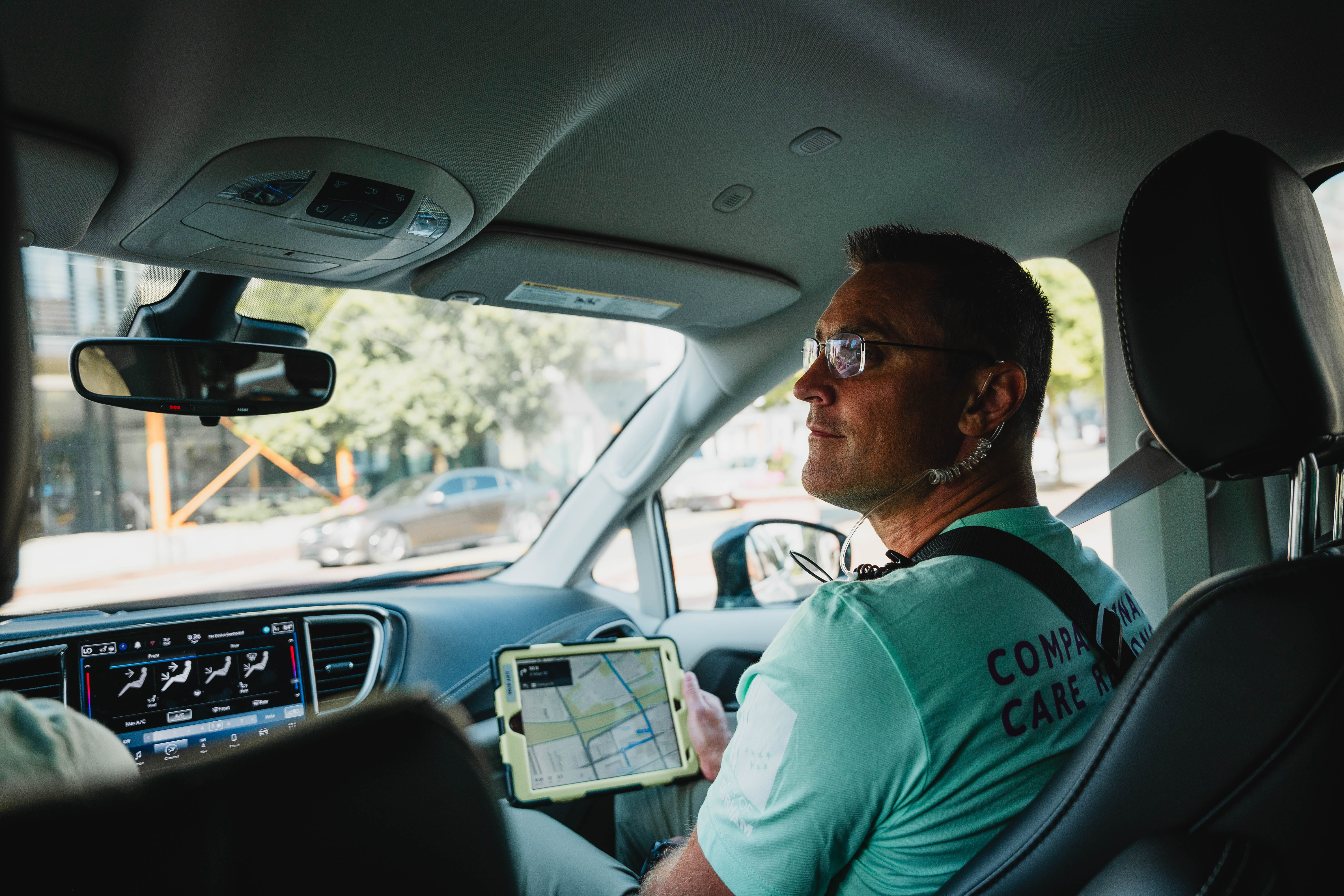
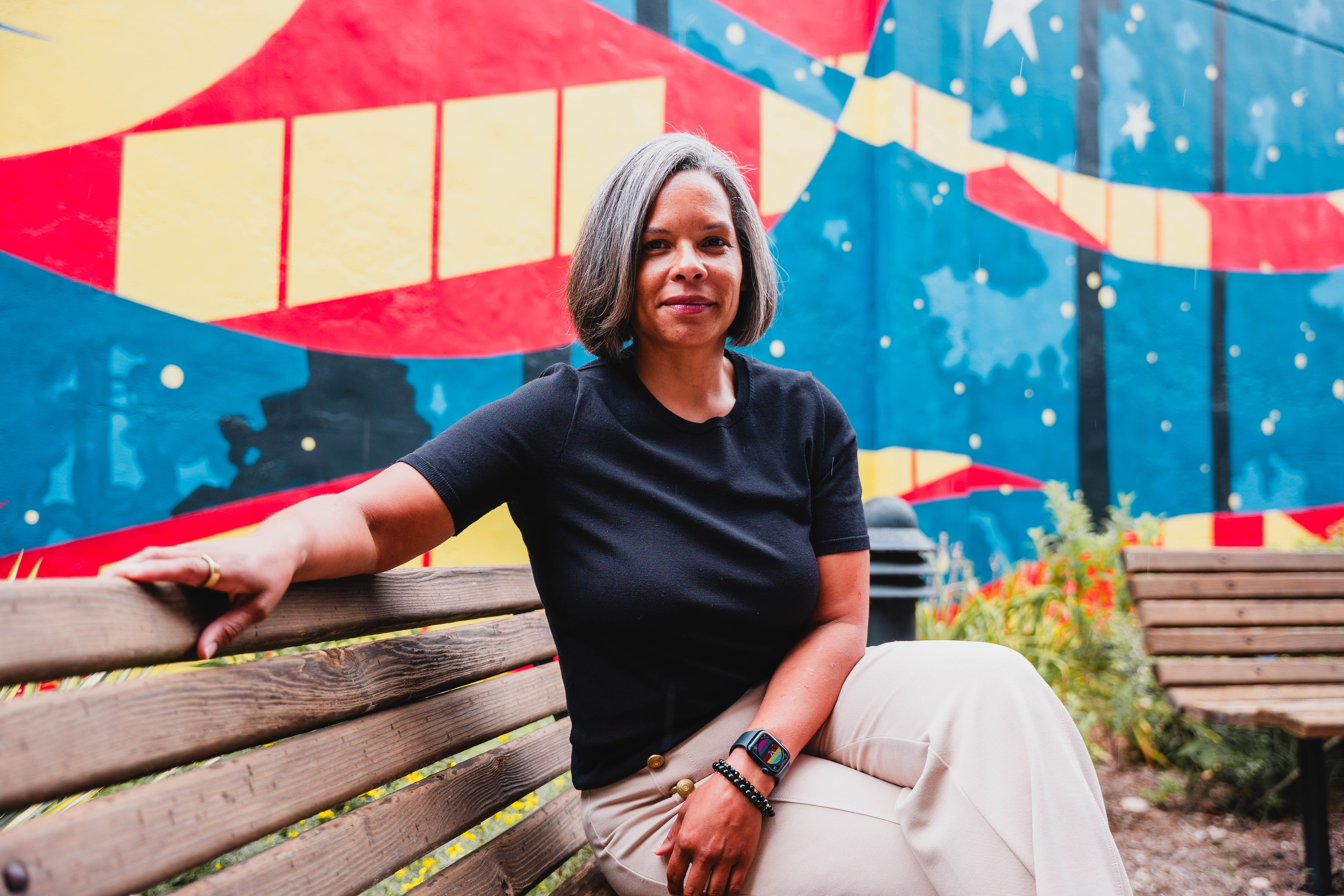
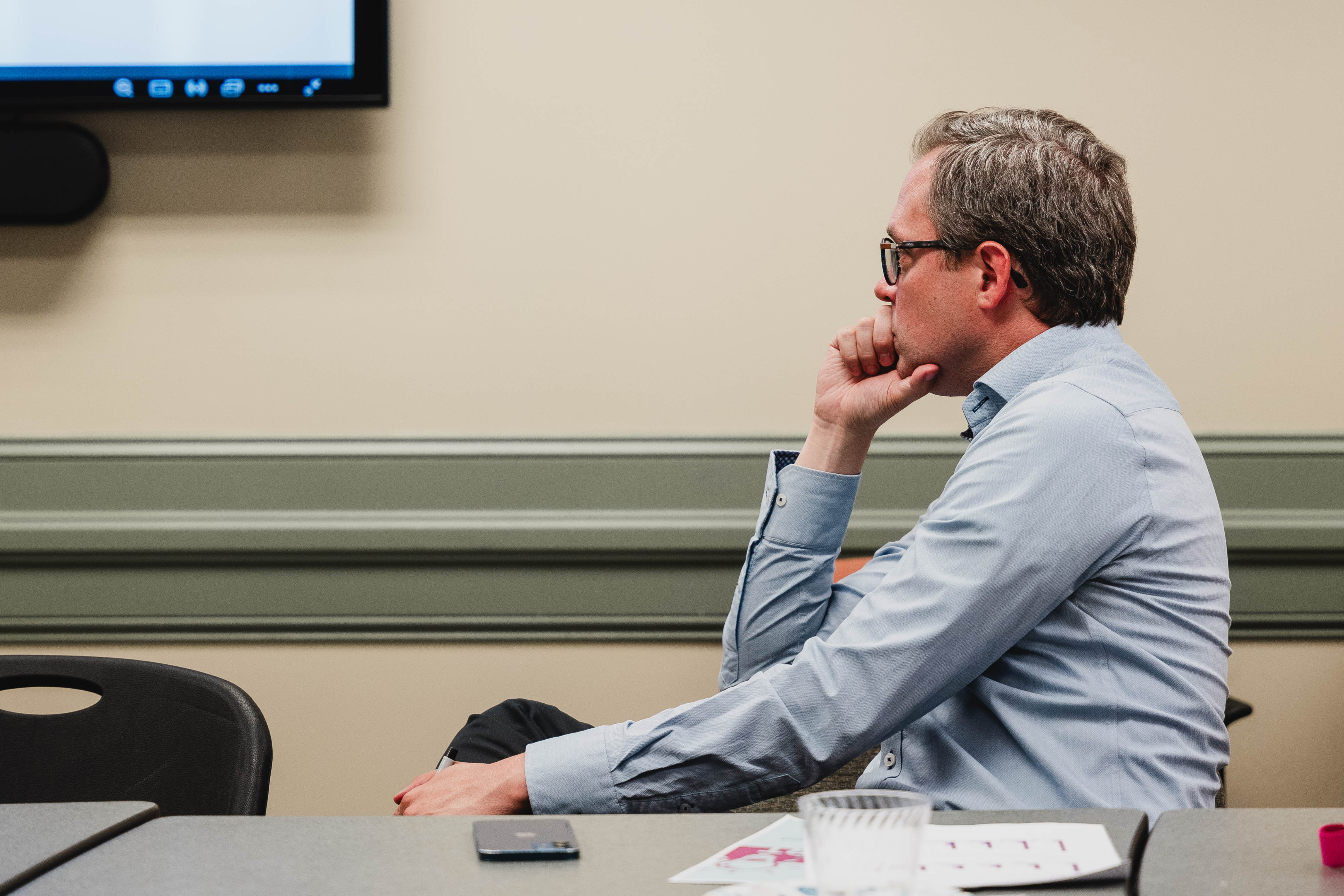
RS: It was clear to me that it had to be a very intentional effort. It had to be consistent. You weren’t going to do it with a few words or small gestures.
RL: These steps, the town halls, the focus groups, the meetings with cops, this was Ryan trying to live up to his nickname.
RS: The chickadee shows us how working in a cooperative team means more eyes and ears and fewer opportunities for predators.
RL: Throughout the end of 2021 and first half of 2022, Ryan Smith and Chief Andrews addressed rumors, tried to reassure officers.
PA: We just needed to make sure that our officers knew that this is not, we’re not replacing you. You still have work that you need to do as a law enforcement officer.
RL: They used data to walk through officers’ fears that HEART would put people in danger.
RS: Everyone’s going to have that, well, I remember this time when this one trespass call ended in a gunshot and an officer was hurt. That’s a valid thing. We named that. And then we look at the data and put that into context that that happens on like less than 1% of 1% of the time.
RL: Ryan and Patrice agreed to ditch the plan to have social workers and cops arrive on scene separately.
And still, they were a long way from getting most rank and file officers bought in.
On June 28, 2022, HEART launched.
RL: Clinicians started answering 911 calls. Unarmed social workers, EMTs and peer-support specialists jumped in vans and hit the streets.
They respond to homeless people panhandling, people thinking about suicide, parents past their breaking point.
Sgt. Dan Leeder listens to it all unfold on his police radio certain he’s going to hear social workers screaming for cops to come save them.
That’s not what he hears.
DL: I’ll hear these calls come out. I’ll hear the HEART team responding to it and you don’t see it come back. I mean, the call’s been handled. Whatever it is they’re doing, they’re doing it right. And the call doesn’t come back again.
RL: Much to Dan’s surprise, these new teams seem to be doing just fine.
But there was still a bunch of skepticism and suspicion.
Some officers would swoop in and respond to calls meant for HEART.
Others would ignore orders to wait for HEART before engaging with a scene.
This lingering pushback from officers frustrated Chief Patrice Andrews.
She wanted them to see that HEART could make their jobs better, safer.
Which brings us to that August night in 2022.
HEART’s been live for less than two months when Patrice gets the call about that barricaded man making threats.
PA: He said, I’m not coming out, and if you come in, I’m going to shoot you all.
RL: The Commander outside the home is proposing a SWAT team.
At that moment, Patrice knows, busting down the door could lead to violence. Exactly what she wants to avoid.
So she gets Ryan on the phone.
PA: I said, look, this is what I have. I know that you all are done working for the day. And is there any way that someone can go out?
RS: She called me, and I told her that I would reach out to Abena. Abena is one of our clinical managers.
Abena Bediako: So I get the call from Ryan. I was with my children. I had just picked them up from school and we were headed home. I knew something was going on because it was after hours.
RL: HEART in the early days shut down for the night at 5.
AB: I got home, got my children settled, let my husband know kind of what was going on and then I called Chief Andrews to get a little bit more information and details on the situation.
RL: Patrice tells social worker, Abena Bediako “Cool the temperature down. Convince the man to go to the hospital.”
Abena’s done this job for 20 years. She lives for moments like this.
AB: Some of the officers were already like, yeah, he’s not really going to talk to you, but you can try. And I smiled because I’m like, okay, I’ll try.
RL: The 5’1 social worker digs in.
She calls the barricaded man’s father.
Dad tells her that his son has been hospitalized before.
Abena calls the man.
AB: He was just angry. And so, okay, you can be angry, you can curse and you can yell. It’s fine.
RL: Her calls keep getting interrupted. Dad calling Son. Son calling Dad.
Up and down the street, Abena paces.
AB: Some of the officers would come and be like, you know, How is he? And I’m like, no, we’re still we’re talking because sometimes people just need to talk, need to be validated.
RL: Abena, on the phone, keeps repeating herself.
AB: You’re okay, let it out. It’s fine and we’re going to be with you.
RL: After, Abena guesses, about an hour of calls, the man relaxes.
She gives officers the thumbs up.
Officers eye Abena like ‘Oh my goodness.’
AB: He let officers come and search his room to make sure that, you know, he was okay.
RL: The man cooperates. He asks Abena, “Can I stay tonight and go to the hospital tomorrow?”
Abena calls Chief Andrews.
PA: Abena said, “Well, he’s not a danger to himself. He is intoxicated. Let’s give him a moment. Let’s check back in with him.” And so we went about it a different way.
RL: The next day Abena drives the man to the hospital. A police escort follows.
The man checks himself in.
Crisis. Averted.
RL: This was a huge moment for the young department. The idea that HEART was “useful” to cops was spreading.
Patrice saw it.
PA: Officers said “Oh so we can call them for this is great. This is great.” So that means that we don’t have to do this. We wouldn’t have to do that. And they can help us.
RL: Sergeant Dan Leeder saw it too.
DL: When I’m wrong, I’m the first one to raise my hand and say, you know what? I was wrong. These people are going to help you. They’re going to make your job and your lives on this job easier.
RL: For Ryan Smith, this incident captured what he’d been saying to officers for the last year.
RS: Most people do not think that story can end with that person just walking out without any handcuffs on, with no use of force, and be transported to hospital because he has threatened to hurt officers and hurt himself. The idea that a different type of response might be successful there is hard to imagine.
RL: For Abena, the story of the barricaded man is important because it’s so unremarkable.
AB: I’m a social worker. So this is what I do.
RL: HEART now has responded to more than 15,000 911 calls.
Cops in Durham, people in Durham, no longer have to imagine what their new branch of public safety can do.
They’re seeing it every day.
DG: Tradeoffs Producer, Ryan Levi. Back in a minute.
Midroll
DG: We’ve always seen The Fifth Branch as bigger than the story of just one city. That’s why we’ve partnered with another nonprofit newsroom, The Marshall Project, which reports on our criminal justice system.
While Ryan Levi has devoted a lot of time to Durham’s HEART program, Marshall Project staff writer Christie Thompson has interviewed researchers, advocates, and other leaders in the field to get a more national perspective on the alternative crisis response movement.
At the end of each episode of The Fifth Branch, Christie will join me to put that show’s theme into a broader context. Today, again, we’re talking about buy-in. Christie, thanks so much for being here.
Christie Thompson: Thanks for having me.
DG: So Ryan Levi shared a stat with me that when HEART first launched, just 37% of Durham police officers thought HEART would be helpful on mental health calls.
Now that’s 66%. We know that cops around the country are skeptical about programs like HEART. How are other cities, Christie, trying to get them on board?
CT: Yeah, I talked with people at the Law Enforcement Action Partnership, also known as LEAP, which is an organization that works with cops and prosecutors and correction officials who are interested in criminal justice reform.
And they said, like in Durham, officers really do seem to be getting on board once they’re able to see what these programs can do in the field and how it can free them up to work on more serious calls.
One thing that they said was really important is that the messenger really matters here. You know, if somebody from within law enforcement like you had in Durham is able to pitch this program, that goes a long way.
DG: I’m curious, Christie, have you found any places where a lack of buy-in from law enforcement has stifled or even shut down a program?
CT: That’s actually a more complicated question than it seems.
I think that skepticism from law enforcement has slowed down, maybe in multiple places, the expansion of these programs.But it’s hard to say exactly how big of a challenge that has been, because people are inclined to talk about the success and not focus on the struggle when they’re still trying to gain more support for these programs.
Something that I did see in my reporting and in local reporting across the country is that police unions can be a limiting factor in the expansion of these programs.
So I live in Seattle, and here our crisis response teams are primarily sent out alongside police officers. Part of that is because it was specified in the Seattle police contract that these responders would not be replacing police officers on certain calls.
DG: What about community activists? HEART director Ryan Smith was worried about losing their support if HEART seemed too close to law enforcement. Is that a concern that you’ve heard in your conversations?
CT: Absolutely. You know, that’s why some programs, they’ve chosen to be housed inside the fire department, or in Albuquerque, they’ve chosen to create an entirely separate public safety agency.
Even then, these teams are being mostly dispatched by 911. But a lot of people are still really wary of calling 911.
And that’s why in some places like Atlanta, for example, they’ve decided to use 311 for people to call to send out their responders so that even if a crisis responder can’t come, the caller has the discretion to say, I don’t want to be transferred to 911, and they’re never going to get a police response that they didn’t consent to.
DG: You talk about 911, and we called this series The Fifth Branch in part because Ryan Smith was so adamant that 911 was just as important a partner as the police, maybe even more, because every single call HEART responds to involves 911.
CT: Absolutely. What experts were telling me was that the part that we have not talked enough about is getting buy-in from these dispatchers, and they are the gatekeepers, right? They are the ones who decide whether to send these teams out.
I talked to one former dispatcher who said the motto was when in doubt, send them out. Them being cops, that’s really what they’ve gotten used to.
In Chicago, they’re sending out a regular update to dispatchers with the outcomes of the calls that they send people to to say, hey, you sent our CARE team and this person got connected to services. I’ve heard of other cities who have invited dispatchers on ride-alongs so they can actually see the teams in action.
So they’re all ways that they’re trying to get the fourth branch, 911 dispatchers, on board because I think they can really be the missing piece of the puzzle in these programs expanding as much as they want to and having as big of a presence as they could have within a city.
DG: Final question, I know there’s some lawsuits out there that are raising the issue of whether buy-in, as we’ve been talking about it, will even really matter going forward. Can you tell us a little bit about these lawsuits?
CT: Yeah, there’s two ongoing lawsuits right now that claim that to keep sending armed police to a mental health crisis is actually a violation of the Americans with Disabilities Act.
And the Justice Department has said similar things as well. They’ve been investigating policing in places like Louisville, Kentucky, in Minneapolis and most recently in Phoenix. And they’ve found that those police departments were discriminatory against people with mental health disabilities by the way cops were responding to people in crisis.
So we’re in a really interesting place right now where so far cities have been adopting these programs voluntarily. But it seems like there might be increasing legal pressure for them to have some kind of response like this available.
DG: Christie Thompson, thanks so much for taking the time to talk with us on Tradeoffs.
CT: Thanks for having me.
DG: Next week, does HEART make Durham a safer place?
Cindy Wilson: A lot of the calls that are in crisis, the people can turn on them in a heartbeat, and there’s nobody there to protect them. They’re going to get hurt.
DG: What happens when a social worker shows up on the scene instead of a cop?
Durham resident: Can you please send the heart team, please?
Durham resident: I dialed 911 and I asked for the Heart team.
DG: 911 calls are unpredictable and HEART’s first responders are on the front lines.
David Prater: Is there a level of risk in this job? There is. Do I consider it an acceptable risk? I do.
DG: Is HEART making Durham a safer place to live? Part II of the Fifth Branch drops next Thursday.
Check it out wherever you get your podcasts.
I’m Dan Gorenstein, you’re listening to The Fifth Branch, a special series from Tradeoffs and the Marshall Project.
This project was supported in part by The Just Trust and the Sozosei Foundation.
Episode Credits
Guests:
- Patrice Andrews, Police Chief, Durham Police Department
- Ryan Smith, Director, Durham Community Safety Department
- Sgt. Dan Leeder, Durham Police Department
- Abena Bediako, Clinical Manager, Durham Community Safety Department
- Christie Thompson, Staff Writer, The Marshall Project
The Fifth Branch was reported by Ryan Levi, with help from Marc Maximov. It was mixed by Andrew Parrella, with help from Cedric Wilson. Cate Cahan is the series editor, and Dan Gorenstein is the executive editor.
The Fifth Branch theme song was composed by Ty Citerman. Additional music this episode from Blue Dot Sessions and Epidemic Sound.
Additional support from Kathryn Dugal, Shannon Crane and Jessica Silverman.
Special thanks to everyone who made this series possible.
You must be logged in to post a comment.