


Two friends—a doctor and an economist—have spent more than 20 years trying to redesign insurance around one simple but elusive goal: make the good stuff more accessible than the bad stuff.
The Basics: Out-of-Pocket Spending
Insured Americans are paying much more out of their own pockets for health care than they did even a decade ago.
A key driver of that increased out-of-pocket spending is the growth of deductibles. A deductible is the amount of money an individual or family is required to pay out of pocket each year before insurance kicks in.

The Basics: High-Deductible Health Plans (HDHPs)
More and more Americans are enrolled in high-deductible health plans. As of 2020, the IRS defines an HDHP as any plan with a deductible of at least $1,400 for an individual or $2,800 for a family, although many plans’ deductibles are even higher.
- 70,000,000+ people in the U.S. with an HDHP
- $2,500 avg. deductible for individual with HDHP
- $5,000 avg. deductible for family with HDHP
Sources: Financial Impact of HSA-HDHP Reform to Improve Access to Chronic Disease Management Medications (VBID Health, 2018) and 2019 Employer Health Benefits Survey (Kaiser Family Foundation, 2019).
The Tradeoffs: Out-of-Pocket Spending and HDHPs
By sharing more costs with patients (sometimes known as skin in the game), insurers hope patients will make more cost-effective health care choices. The plans also tend to have lower premiums…
…but research shows increased out-of-pocket costs make people less likely to stick with medication, and people with HDHPs are more likely to report delaying or forgoing care because of cost.
A Solution: V-BID
V-BID or value-based insurance design aims to more closely align the cost of medical services with their value. In other words, V-BID makes care that has a big impact on health (high-value care) cheaper than care that has little or no impact on health (low-value care).
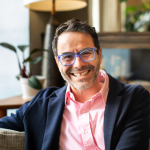
The V-BID approach was pioneered by Mark Fendrick, MD (right) and Mike Chernew, PhD (left), who are profiled in our full episode. (Disclosure: University of Michigan’s V-BID Center has received funding from Arnold Ventures, which also supports Tradeoffs.)
How does it work?

Insurers or employers make services widely agreed to improve people’s health — things like insulin, inhalers, and blood pressure monitors — free or low cost.
Increasing access to high-value services can result in higher costs for insurers. One way to offset those increased costs is for insurers to simultaneously raise the cost of certain low-value services, such as vitamin D testing and high-cost imaging for basic lower back pain. Fendrick and Chernew have dubbed this approach V-BID X.
V-BID in Action
Private Employers
Multiple corporations have incorporated V-BID principles into their health plans. Facing rising health care costs for 160,000 employees in the early 2000s, Marriott International cut the cost of their brand name medications for diabetes, heart disease and several other chronic conditions in half and made the generics free. This led to a 7-14% jump in employees filling certain prescriptions.
State and Local Governments
Several states and localities have also experimented with V-BID. Looking at a projected budget gap of $3.8 billion in fiscal year 2012, Connecticut incorporated V-BID into its health plan for state employees. The state reduced or eliminated copays for medication and doctors’ visits related to chronic conditions, and it required enrollees to get preventive screenings and annual check-ups. The state reports that under the new plan, primary care visits, preventive screenings and adherence to heart disease, blood pressure, cholesterol and diabetes medication have all increased, while emergency department visits and out-of-pocket spending decreased.
Federal Government
ACA: V-BID principles inspired Section 2713 of the Affordable Care Act, which requires all health plans to cover around 100 high-value services — including screenings, preventative services and counseling — for free. This now applies to more than 137 million people.
IRS: In July 2019, the IRS changed a rule that could make 14 high-value services more affordable for tens of millions more Americans with a popular kind of HDHP that is linked to a health savings account (HSA), also known as an HDHP/HSA.
The new rule categorizes 14 services for individuals with chronic diseases, including diabetes and asthma, as preventive care, which means insurers and employers can cover them before someone’s deductible has been met.
Several employers have already adopted this voluntary rule change for 2020, and experts expect more to follow suit in 2021.
Other: Some aspects of V-BID have also been implemented in the U.S. military’s TRICARE and in some Medicare Advantage plans.
V-BID X
V-BID X, a new kind of V-BID plan that aims to completely offset the cost of increasing access to high-value services by not covering or raising out-of-pocket costs for low-value services, has not yet been adopted by any insurers or employers. However, Fendrick and Chernew expect to see some V-BID X plans on the insurance market by 2022.
The Tradeoffs: V-BID
Value is personal: A service, such as an eye exam or cancer screening, that’s high value for one person may be lower value for another, depending on their health and other factors. These clinical nuances can make V-BID plans hard to implement and optimize, especially compared to the very blunt design of traditional plans (e.g. $40 copays for all medicines for all members).
Improving access, increasing costs: Although increasing access to high-value care can improve health, those benefits do not always translate into cost savings. The cost of the increased use of high-value care can be greater than the savings produced by that care. Insurers and employers can offset those cost increases by simultaneously raising costs for certain low-value services. However, some may opt to simply increase premiums instead.
But what about the cost curve? V-BID is certainly responsible for lowering consumers’ out-of-pocket costs for many essential services. However, it is unlikely to have a significant effect on reducing our country’s total spending on health care, which just rose again.
Episode Transcript and Resources
Episode Transcript
Note: This transcript has been created with a combination of machine ears and human eyes. There may be small differences between this document and the audio version, which is one of many reasons we encourage you to listen to the episode!
Dan Gorenstein
Today, the story of two guys.
Bapu Jena
Buddies, really.
Dan Gorenstein
Right. A doctor and an economist…
Bapu Jena
…who at the beginning of their careers set out to solve an unfortunate but pretty common health care problem.
Aurelia Valentine-Webb
I have to make the choice; this week I’ll choose the drugs, you know next month I’ll choose the food.
Mike Chernew
If you have to choose between managing your diabetes and eating, it’s a choice you should not have to face.
Bapu Jena
That’s Harvard economist Mike Chernew. He and University of Michigan’s Dr. Mark Fendrick have now spent 20 years pushing one simple idea.
Dr. Mark Fendrick
We just said that the good stuff should be more accessible than the bad stuff.
Dan Gorenstein
Fendrick and Chernew. Two guys few of us have ever heard of have changed the way insurance works for millions of Americans. But they still haven’t solved the problem they’ve been working on for most of their careers.
From the Annenberg Studio at the University of Pennsylvania, this is Tradeoffs, the show where we make sense out of the complicated, costly and often counterintuitive world of health care. I’m reporter Dan Gorenstein.
Bapu Jena
And I’m health economist and physician Bapu Jena.
Dan Gorenstein
What troubles Fendrick and Chernew is that high-deductible insurance plans don’t cover most costs until you have first paid thousands out of pocket, pushing people to cut back on the stuff they actually need. More than 70 million Americans today have this kind of health plan.
Bapu Jena
The two believe things like insulin for a diabetic, or an inhaler for someone with asthma, or preventative screenings — the good stuff — should cost people pennies, even if they’re in a high-deductible plan. This is a story about how they’ve tried to translate that belief into real policy change. It’s also the tale of two friends, who don’t always agree.
Dan Gorenstein
It’s a buddy movie. Mark is the happy optimist. Chernew is the cold realist. Here’s how Chernew puts it.
Mike Chernew
Mark is the head of the slinky dog, and I’m the ass. Mark runs ahead, we get all stretched out. And then I catch up to him and sort of smack him from behind.
Dan Gorenstein
These qualities are so pronounced friends and collaborators nicknamed the two Tigger and Eeyore, the Winnie the Pooh characters. It’s part of their schtick and their charm. So is the arguing.
Dr. Mark Fendrick
This as the biggest kind of tax evasion by private employers. Watch, Mike, he can roll his eyes, which he typically does…
Mike Chernew
Evasion, no one is evading anything…
Dr. Mark Fendrick
What’s the word?
Mike Chernew
Loophole? You don’t even mean loophole either.
Dr. Mark Fendrick
What’s the word, not deferred…
Dan Gorenstein
Mark Fendrick and Mike Chernew have been arguing with each other, and trying to redesign health insurance, since the late ’90s. As a doctor, Fendrick practiced medicine under a strict code.
Dr. Mark Fendrick
I am the clinician who is the first to say you don’t need something done to you. You don’t need that diagnostic test, you don’t need that drug, you don’t need to go to the doctor at all. But every once in a while, there will come a situation where a clinical service is deemed to be, in my opinion, so valuable I will use the term, “I will not let you leave the office unless you agree.”
Dan Gorenstein
As he studied his craft, Fendrick quickly realized some care is underused: Lots of people who need insulin, don’t get it. But other care is overused like vitamin D screenings. All of it costs money, and some patients don’t have it to pay.
Dr. Mark Fendrick
A patient of mine had on her refrigerator a note saying, “Under no circumstances are you to call an ambulance for my asthma. Because I can’t afford it.”
Dan Gorenstein
Then a severe asthma attack hit.
Dr. Mark Fendrick
She was found dead in her apartment. Maybe one of the reasons she died that day because she did not reach for 9-1-1 and have an ambulance take her to the hospital, but instead was willing to take the clinical risk, but she clearly was not willing to take the financial risk, which she knew of that day.
Dan Gorenstein
Again and again, Fendrick’s patients were skipping out on the care that he and the patients agreed was important — not just dramatic emergencies, but basic care: eye exams, cancer screenings.
The biggest reason? They couldn’t afford the copays or deductibles set by their insurance companies.
Dr. Mark Fendrick
How dare you not cover those services generously in your insurance product?
Dan Gorenstein
Fed up, he headed here, to Kang’s, a tiny Korean place in Ann Arbor, Michigan. He vented to his new friend, Chernew, a young economist getting interested in health policy.
Mike Chernew
When you get your PhD in economics, you learn a lot of economics. You know nothing about health care. And it turns out the central part of health care actually is health care. And at the time, all I could pronounce was aspirin.
Dan Gorenstein
Over bibimbap the doctor launched in. He explained all about how insurance plans were making it harder for his patients to get high-value care. That out-of-pocket costs like deductibles and copays gave his patients hundreds, sometimes thousands of reasons to just say, “Sorry, doc, can’t do it.” The economic unfairness hit Chernew.
Mike Chernew
If you are going to give the patient a deductible and they get cancer, you are just taxing people who get cancer. And so we do tax patients with cancer, we tax patients who get heart attacks, we tax patients who get hit by a bus. We tax those patients because we haven’t come up with a better insurance scheme.
Dan Gorenstein
So what would a better scheme look like? They started with Fendrick’s code.
Dr. Mark Fendrick
The good stuff should be more accessible than the bad stuff.
Mike Chernew
So the basic idea was let’s try to remove the financial barriers for the things we are trying to get all patients to do.
Dan Gorenstein
The kind of evidence-based stuff, medication for heart disease and diabetes, that everybody agreed would improve people’s health. And studies showed, just like they do today, these people with chronic problems weren’t taking their meds that they needed. So what if workers who had high-deductible plans through their jobs could get these drugs super cheap or even free without triggering the deductible? The more the friends talked, the more Fendrick, Tigger, wanted to jump.
Mike Chernew
As is often the case, Mark plows ahead with ideas, and I follow along skeptically.
Dan Gorenstein
In 2001, Fendrick and Chernew published what would turn out to be their first draft at a new kind of plan. The insurance company, or the employer, would eat most of the costs for these certain drugs so that they would be free or nearly free for the workers.
Mike Chernew
We were probably the first two academics that thought this basic idea was actually worth writing down.
Dan Gorenstein
The paper helped generate buzz for the concept that today is called value-based insurance design, or V-BID.
Dr. Mark Fendrick
We always wanted it to be like RADAR or SCUBA, which are acronyms, and people don’t even know what they stand for. So it’s our hope that V-BID starts a life of its own.
Dan Gorenstein
You think VBID might become as ubiquitous as SCUBA?
Dr. Mark Fendrick
Well, no. Uh, I said like that.
Dan Gorenstein
So far, VBID has fallen short of household name status somehow. But when she stumbled across it, Jill Berger got excited quick.
Jill Berger
We knew we had a lot of people on our health plan with chronic conditions, and you know, not just one chronic condition, necessarily.
Dan Gorenstein
Jill ran benefits for the hotel chain Marriott in the early 2000s. And she was hearing some scary stuff from the nurses who were managing their insurance plan.
Jill Berger
They would report some people calling, saying, “Look, I am on six different drugs a month, my wife is on five different drugs. I can’t afford all of them so help me decide which ones we should take this month.”
Dan Gorenstein
Based on Jill’s recommendation, Marriott offered its employees their brand name medications for diabetes, heart disease and several other chronic conditions at half price and made the generics free. Fendrick and Chernew evaluated Marriott’s new insurance design, and found about a 14% jump in people filling their prescriptions.
Jill Berger
We know healthier employees are happier. They are more productive. Happier employees treat their guests very nicely.
Dan Gorenstein
For the duo, this was more than a back of the napkin sketch at Kang’s. This represented a real-world win with a clear take home.
Dr. Mark Fendrick
The evidence is incredibly strong, if you make people pay less for something they’ll do more of it.
Dan Gorenstein
So, that’s basically where we close the chapter on V-BID: The Early Years.
Bapu Jena
You know, hearing a bit more about V-BID’s story makes me realize what separates these two from most other health policy researchers and academics is that they’ve conceived of a single, important idea. They’ve thought through the mechanics of how to implement it, worked with companies like Marriott to roll it out, and then rigorously evaluated it. There are plenty of people in our field who’ve never done anything like that. And for all their hard work, this is what they got.
President Barack Obama
Today after all the votes have been tallied, health insurance reform becomes law in the United States of America.
Dr. Mark Fendrick
Section 2713, or the VBID provision of the Affordable Care Act.
Bapu Jena
Section 2713, the V-BID section. It’s less than one page of the 974-page health care law. And while Obamacare’s future remains uncertain, V-BID has indisputably already had a huge impact, even though most people don’t know it. Over 137 million Americans now have access to about 100 different high-value services. That includes screenings, immunizations, preventative services and counseling all for free.
Dr. Mark Fendrick
The first line of my academic obituary is going to be our work to produce a small section of the Affordable Care Act.
Bapu Jena
That might come off as a bit grandiose, but Fendrick’s got a point. The Kaiser Family Foundation reports that about 76 million people got access to services like the flu shot and counseling to quit smoking because of the V-BID provision in the ACA. So the ACA made lots of good screening and prevention accessible for patients. But it didn’t do anything to help access to other treatments, even essential treatments like insulin.
Dr. Mark Fendrick
I have received countless messages from people saying, “Thank you for the free mammography. I now can’t afford the cost of my biopsy and surgery.” ‘Thank you for allowing my relative to have access to free colo-rectal cancer screening. I now have to get a second mortgage on my home to pay for chemotherapy.”
Dan Gorenstein
But Fendrick and Chernew weren’t finished. When we come back, we’ll hear how the pair tried to fix the flaws in V-BID’s design.
Dan Gorenstein
So on the heels of the good, not great results from the ACA, Mark Fendrick leapt into Tigger mode again. He continued to beat the V-BID drum: High-value services for key chronic conditions should come with almost no out-of-pocket costs. He persuaded the Obama administration to run a pilot in Medicare; the National Governors Association endorsed the concept; officials in Oregon, North Carolina, Minnesota, Kentucky and Tennessee all adopted some element into their insurance plans for state workers.
Bapu Jena
And here’s where V-BID is interesting. Fendrick and Chernew’s goal all along had been to improve people’s health. But for the government officials, insurers and employers who were attracted to V-BID, better health was the means to a much more ambitious end.
Dan Gorenstein
Improving health as a way to save money.
Bapu Jena
To better understand the motivation of a V-BID client, let’s look at Connecticut.
Dan Gorenstein
Right. Connecticut turned to V-BID during a budget crisis, with pressure to lower health care spending. Tom Woodruff oversees the state employee’s insurance plan today.
Tom Woodruff
People were delaying preventative care. And then they were, later in life, utilizing specialists to manage chronic conditions. And that was very expensive.
Dan Gorenstein
Woodruff and the team decided for people already sick, the state would lower copays for drugs and certain services to treat chronic conditions
Bapu Jena
That’s 100% pure V-BID.
Dan Gorenstein
Yep. But Connecticut also decided they’d promote primary care and screenings. The idea was that if Connecticut forced people to have regular checkups, they would catch problems like high cholesterol and pre-diabetes before they blossomed. And if they did that, they thought, they would save money in the long run.
Bapu Jena
That’s V-BID-ish.
Dan Gorenstein
For good measure, they added a penalty if people didn’t show up for those.
Tom Woodruff
We set a rule that if any one family member was not 100% compliant that the employee would have to pay $100 more a month for their health insurance
Dan Gorenstein
A few people let Tom know how they really felt about the mandatory physicals.
Tom Woodruff
People were emailing me digital images of their colonoscopies, saying, “Look I did it!” I had another, a dentist, who sent me this X-ray, like this big, of someone’s head proving that they didn’t have any teeth and therefore didn’t need a dental cleaning.
Dan Gorenstein
Rich Hubbard was one of the state employees who really didn’t like this new plan. Rich is the webmaster at a community college.
Dan Gorenstein
When he met me at the Bridgeport train station, I saw just how large a figure he cuts. 6-3, 6-4, huge hands. For years, Rich had made a habit out of staying away from doctors willfully ignoring his weight problem that was only getting worse. Faced with a choice between a $1,200 penalty or a doctor’s visit, he figured better to go see the doctor. The last time he’d even stepped on a scale was at the Y a few years before. It was one of those where you slide the metal piece along the bottom in 50-pound increments and the smaller piece goes from 1 to 50. The scale topped out at 350 pounds. Rich weighed 345.
Rich Hubbard
That was scary to me to see that it was almost at the end. You know I didn’t see myself as some of those other people who are in wheelchairs and can barely move. But I was probably getting to be that point because I had trouble, I mean, I could walk but it’s just, I would feel tingling in my legs and feet. Pre-diabetic, I’m sure I was.
Dan Gorenstein
Rich had set up the appointment for early January 2012. Nervous, he braced himself for the doctor’s prognosis.
Rich Hubbard
He told me I was morbidly obese. There was my confirmation.
Dan Gorenstein
Somehow, “morbidly obese” unlocked something in Rich. Hearing this doctor say those words helped him do something he couldn’t do on his own: get serious about getting healthy.
Rich Hubbard
The first year I lost 120 pounds. And gradually over the next year was another 30.
Dan Gorenstein
For six years now Rich has weighed about 200 pounds, avoiding his health care nightmare.
Rich Hubbard
I would’ve been full blown hypertensive, I would have been diabetic. And I’m so grateful that I avoided that. If it wasn’t for the physical it would be a much different story now. It was all because of the insurance forcing that physical that really changed my life.
Dan Gorenstein
Now, when you talk about chasing the health care holy grail, improving outcomes and saving money, look no farther than Rich, right?
Bapu Jena
Right, I get it. Rich, clearly, is better off. Which is terrific for Rich. And across the country, the high-value services Fendrick and Chernew had championed were doing terrific things for lots of people. But, let’s be clear. All that high-value care guarantees people get more care. It does not guarantee saving any money, which is part of what employers and insurers are chasing
Dr. Mark Fendrick
The main reason why V-BID programs have not moved forward as quickly as I would have liked is that when people buy more of the good stuff, the total cost of care goes up
Dan Gorenstein
The friends realized, if their goal was to have V-BID be as ubiquitous as SCUBA…
Dr. Mark Fendrick
I said like that.
Dan Gorenstein
…the time had come to pivot.
Dr. Mark Fendrick
You have to identify and make it more difficult for Americans to purchase care that we shouldn’t buy even if it were free.
Bapu Jena
In 2017, they figured the best way to make essential health care cheaper would be by making the kind of health care people really don’t need more expensive.
Dr. Mark Fendrick
There’s more than enough money in the system. If we can reallocate it to the things that are more health producing and away from those that are not health producing, it’s an important step forward.
Bapu Jena
They called it V-BID X.
Dan Gorenstein
Maybe that one’s gonna catch on?
Bapu Jena
Probably not. But under the new V-BID X plan, they jack up the prices on the stuff that’s often unnecessary, possibly even harmful. The care that’s widely agreed to be low value. If people insist on this low-value care, they pay for it. That’s the idea. That money then is used to pay for the statins, insulin and other services everyone agrees will improve health.
Dan Gorenstein
You can think of it almost like a tax on people who use low-value care. Fendrick and Chernew convened a task force to help them identify low-value services to target.
Dr. Mark Fendrick
I wanted to call it the Waste Task Force, but WTF was already taken.
Bapu Jena
WTF. OK. The V-BID X team chose four services — including vitamin D testing and proton beam therapy for prostate cancer — that would not be covered by insurance at all. But, they were well short of the dollars needed to offset the cost of the more than 20 high-value services they wanted a V-BID X plan to cover without any cost to patients.
Dan Gorenstein
There’s a lot of low-value care out there, but here’s the catch.
Dr. Mark Fendrick
There’s never a clinical service that is ever, always high value or low value.
Bapu Jena
It’s like Rich, right? The annual exam did him a whole lot of good, and probably saved Connecticut money in the long run. But for young, healthy workers, those mandatory exams were probably a waste of money.
Dan Gorenstein
After lots of actuarial agonizing, the group picked six other commonly used services to modestly raise out-of-pocket prices on.
Bapu Jena
Things like high-cost imaging for low-back pain and lab tests for people getting low-risk surgeries.
Dan Gorenstein
Of course, the price increase may hit the few consumers who do actually need those services.
Bapu Jena
Nevertheless, V-BID X has piqued the interest of some insurers and employers. And Fendrick thinks it will be on the market by 2021.
Dan Gorenstein
Of course, the two learned a long time ago to hedge their bets.
Bapu Jena
At the same time Fendrick and Chernew designed V-BID X, they were also pushing for a change to an IRS rule that made it very expensive for people with chronic conditions in popular high-deductible plans. Specifically, the rule said that until people had met their deductibles, they had to pay full price for services related to their chronic conditions.
Dan Gorenstein
And this July, in an unremarkable document titled IRS Notice 2019-45, Fendrick and Chernew got their win. The Trump administration changed the rule so employers and insurers can now make these services low cost or free before the plan deductible is met.
Dr. Mark Fendrick
For the tens of millions of Americans with chronic conditions in HSA qualified plans, this could lead to an immediate drop in out-of-pocket costs.
Bapu Jena
As of right now, the rule only applies to 14 services, but Fendrick is back in Washington this week even pushing to grow that list.
Dan Gorenstein
Several companies, including Chevron, have already adopted this change for 2020, and Fendrick expects at least a dozen more by 2021. It’s hard to predict how many employers will actually follow through, particularly because more high-value care would likely increase their costs, modestly, but still an increase. Chernew says if businesses want to help their workers — specifically the ones with asthma, diabetes and heart disease — this is a no-brainer. Especially, he said, compared to other benefits employers offer, like wellness plans that encourage healthy habits like hitting the gym.
Mike Chernew
Wellness plans feel good in a whole range of ways, but if you look at the randomized trials of wellness programs, you don’t see a really big bang for the buck based on who takes them up and how effective that is over a long period of time. On the other hand, if you get people with diabetes to manage their blood sugar well, or if you get people with heart disease to manage their cholesterol or blood pressure well, there’s really good evidence that that really works.
Bapu Jena
All this work they’ve done, it sounds important, and it is, but Dan, I know some economists are out there wondering, how much does this bend our cost curve?
Dan Gorenstein
Yeah, Chernew’s right there with you.
Mike Chernew
I’m sensitive to the person listening to this who thinks about all the problems in health care in that episode comes off as we have finally, after 20 years, made a ton of progress to solving the problems, the American health care system. If you were to ask me if the American health care system is better off now than it was 20 years ago, no, it’s probably worse off.
Dan Gorenstein
Chernew later told me our system probably isn’t worse off, but his point is this: If you want to talk about big reductions in what the country spends on health care, you’ve got to talk about prices, namely what we pay doctors and hospitals. When it comes to V-BID X, even if it’s picked up far and wide, he says we’re looking at a small, small dent — a little more than 1 percent — in total spending. Of course, Fendrick says in future iterations of the plan the potential is much greater if insurers and employers get more aggressive going after low-value care.
Bapu Jena
Either way, at its core, V-BID reimagines a product, health insurance, for the people who need it most. In a moment, says Fendrick, when that product provides less and less value for more and more people.
Dr. Mark Fendrick
As Americans have been asked to put more skin in the game, as cost-sharing has gone up, people have bought less of all the things I beg them to do. And this is the motivation of our two decades long advocacy program to ensure that Americans have access to those specific services that we know will make them healthier.
Dan Gorenstein
For all their progress, Chernew says solving the problem is still a ways off. But if anything, he and Mark Fendrick remain committed.
Mike Chernew
Unlike a race, the race metaphor assumes you get to the end, have some Gatorade, have some carbs, shower and go about your life. The health care system is not really like that. So what I will tell you is that we are 20 kilometers in, in a race of unknown length.
Dan Gorenstein
That’s it for today. We’re off for the holidays, folks, so until January 2nd, I’m Dan Gorenstein.
Bapu Jena
I’m Bapu Jena.
Dan Gorenstein
And this is Tradeoffs.
Episode Resources
Select Research on V-BID:
- Value-Based Insurance Design Improves Medication Adherence Without An Increase In Total Health Care Spending (Agarwal, Gupta, & Fendrick, Health Affairs, 2018)
- Eliminating Medication Copayments Reduces Disparities In Cardiovascular Care (Choudhry et. al, Health Affairs, 2014)
- Value-Based Insurance Design: Quality Improvement But No Cost Savings (Lee, Maciejewski, Raju, Shrank, & Choudhry, Health Affairs, 2013)
- The Effect of a Large Regional Health Plan’s Value-based Insurance Design Program on Statin Use (Frank et. al, Medical Care, 2012)
Select Research on Cost-Sharing:
- Tracking the Rise in Premium Contributions and Cost-Sharing for Families with Large Employer Coverage (Rae, Copeland & Cox, Peterson-KFF Health System Tracker, 2019)
- Even a Modest Co-Payment Can Cause People to Skip Drug Doses (Carroll, The New York Times, 2019)
- High-Deductible Health Plans and Financial Barriers to Medical Care: Early Release of Estimates from the National Health Interview Survey (Cohen and Zammitti, National Center for Health Statistics, 2016)
- Pharmacy Benefits and the Use of Drugs by the Chronically Ill (Goldman et. al, JAMA, 2004)
Additional Information:
Episode Credits
Original music composed by Ty Citerman; additional music by Andrew Bacon
This episode was reported and produced by Leslie Walker and Dan Gorenstein. It was mixed by Andrew Parrella. It was produced for the web by Ryan Levi.
Additional thanks to:
Katherine Baicker, Jody Becker, Graham Ball, Gray Milkowski, Hunter Mitchel, Kara Gavin, Heather Klusaritz, Amitabh Chandra, Jill Horwitz, the Tradeoffs Advisory Board…
…and our stellar staff!